Tag: waste

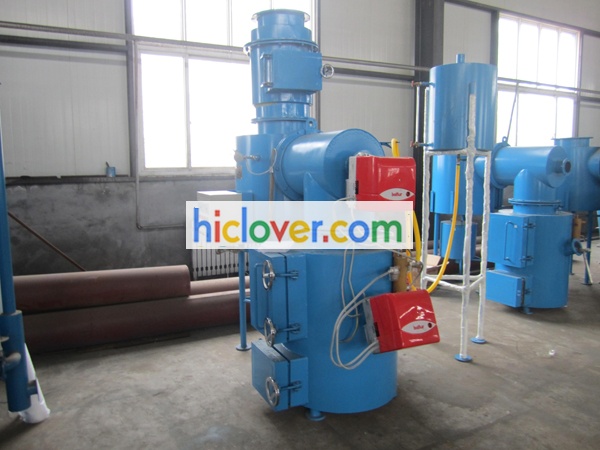
incinerator 500kg per hour, which model is YD500. the fuel type is diesel oil or natual gas or LPG. this model incinerator burning rate is 500kgs per hour and the feeding capacity is average 800kgs per time, accordingly to detail waste material. YD500 is also suit for big animal cremation and we supply custom made incinerator accordingly to different use. incinerator 500kg per hour is average capacity for medical waste and this is also suit for hospital waste, animal cremator and other solid waste management.

Model YD-500
 Burning Rate 500 kgs/hour
Feed Capacity 800 kgs
Primary Combustion Chamber 4000 Liters
Secondary Combustion Chamber 1500 Liters
Mix Combustion Chamber Yes
Smoke Filter Chamber Yes
Feed Mode Manual
Voltage 220V/380V
Power 2.24Kw
Fuel Type Diesel Oil/ Natural Gas/LPG
Burner Italy Original
Oil Consumption (Diesel Oil) 31–59.1 kg/hour
Gas Consumption (Natural Gas) 19.2–64.2 m3/hour
Internal Dimensions 257 x 147 x 108cm (primary chamber)
External Dimensions 320 x 220 x 460cm (without chimney)
Temperature Monitor Yes
Oil Tank Capacity(if oil fuel) 500 Liters
Door Opening 108 x 128cm
Chimney Length 14.0 Meters
Chimney Type Stainless Steel
Equipment Gross Weight 13000 kgs
Operation Technical Specifications
Paimary Chamber Temperature 800℃–1000℃
Secondary Chamber Temperature 1000℃-1200℃
Residency Time 2.0 Sec.
Burning Efficiency >98%
1.       Petrol: diesel
2.       Consumption: 8-10liter/hour
3.       Capacity: to cremate (carrion and spoils) 350-400kg/hour
4.       Temperature: 900-1350?C
5.       Operation temperature: -30~40?C
6.       Incinerator weight: 1800-2000 kg
7.       Volume: 0.70-0.80m/cube
8.       Exterior dimension: 1.4-1.6*1.0-1.15m (L*W)
9.       Trial able
10.   Incinerator mouth size: 50-60cm (W), 65-75cm (L)
Ignition by Diesel
Minimum burning temperature 1200 Celsius
Burning capacity of 20 Tons per day.
Cooling by water
Burn Rate 100Kg/h
Shipping Weight 4000kg
Capacity 300Kg MINIMUM
Max. Burn out time 3.0 hrs.
Avg. Ash Residue 3%
Heavy Duty refracting lining to withstand 15000C
Min. Operating Temperature 8500C
Max. Operating Temperature 14500C
Residency Time in Secondary Chamber 2 sec.
Density Insulation (high) 22mm
Avg. Fuel Consumption p/hr 7 to 9ltr
Fuel Dual, box & Oil/Diesel
Temperature Monitoring YES
Auto ignition YES
Refractory Casting (min.) 65mm
Refractory Casting (min) 65mm
INCINERATORS
Biological waste disposal system (INCINERATOR). 
Incinerator must meet the following specifications:
Combustion Capacity (kW) = 581 ±10% 
Combustion Capacity (kcal/h) = 500,000±10% 
Combustion Capacity – Solid waste IMO spec, (kg/h) = 100 
IMO spec. (I/charge)       Minimum Zero 0 to Maximum = 250 
Combustion Capacity – Sludge oil IMO spec, (l/h) (at 20% water content) -66±10% 
Max. l/h (at approx. 50% water content) = 100 ±10% 
Weight approx. (kg) = 4,850 ±10% 

Aboriginal Affairs and Northern Development Canada (AANDC). Handbook of Reclamation Techniques in the Yukon, (1999).


Alaska Department of Environmental Conservation and Alaska Energy Authority. Burning Garbage and Land Disposal in Rural Alaska, (2004). http://www.akenergyauthority.org/AEAdocuments/BurningGarbage.pdf


Canadian Council of Ministers of the Environment (CCME). Canada-Wide Standards for Dioxins and Furans Emissions from Waste Incinerators and Coastal Pulp and Paper Boilers, (2001). http://www.ccme.ca/assets/pdf/d_and_f_standard_e.pdf


Canadian Council of Ministers of the Environment (CCME). Canada-Wide Standards for Mercury Emissions from Base-Metal Smelters and Waste Incinerators, (2000). http://www.ccme.ca/assets/pdf/mercury_emis_std_e1.pdf


Canadian Council of Ministers of the Environment (CCME). National Guidelines for Hazardous Waste Incineration Facilities – Design and Operating Criteria, (1992). http://www.ccme.ca/assets/pdf/pn_1076_e.pdf


Canadian Council of Ministers of the Environment (CCME). Operating and Emission Guidelines for Municipal Solid Waste Incinerators, (1989).

http://www.ccme.ca/assets/pdf/pn_1085_e.pdf


Canadian Council of Ministers of the Environment (CCME). Provisional Code of Practice for the Management of Post Use Treated Wood, (1996). http://www.ccme.ca/assets/pdf/pn_1227_e.pdf


Environment Canada (EC). Protocols and Performance Specifications for Continuous Monitoring of Gaseous Emissions from Thermal Power Generation. Report EPS 1/PG/7, (1995). http://www.ec.gc.ca/Publications/844D7CF3-2F1D-4CA0-9290- 0A885806F792/ProtocolsandPerformanceSpecs.pdf


Environment Canada (EC). Operation of a Modified Burn Barrel for the Destruction of Food Waste in Remote Locations: Observational Summary. Report ERMS 2011-01.


Environment Canada (EC). Technical Document for Batch Waste Incineration, (2009).

http://www.ec.gc.ca/gdd-mw/default.asp?lang=En&n=F53EDE13-1


Government of Nunavut, Department of Environment. Environmental Guideline for General Management of Hazardous Waste, (2010).

http://env.gov.nu.ca/node/82#Guideline Documents


Government of Nunavut, Department of Environment. Environmental Guideline for Industrial Waste Discharges into Municipal Solid waste and Sewage Treatment Facilities, (2011). http://env.gov.nu.ca/node/82#Guideline Documents

we are waste incinerator manufacturer in china, focus on medical waste, pet animal and other solid waste incineration treatment. waste incinerator design with single combustion chamber, double combustion chambers, three combustion chambers and multi-combustion chambers. standard waste incinerator fixed with italy fuel burner and staninless steel long life time chimney. standard waste incinerator also fixed with dry filter chamber which is alkaline material filter acid smoke.

Full range incinerator with Economized Small Scale incinerator, Standard Small-Large Scale incinerator, General Municipal Solid Waste Incinerator, Pet and Animal Cremation, Containerized Mobile Incinerator, High Efficient Environmental Waste Incinerator.

Items/Model YD-200 YD-300 YD-500 YD-600
Burning Rate (kgs/Hour) 200 kgs/Hr. 300 kgs/Hr. 500 kgs/Hr. 600 kgs/Hr.
Feed Capacity (kgs) 400 kgs 500 kgs 800 kgs 1100 kgs
Equipment Weight 7600 kgs 8300 kgs 13000 kgs 16500 kgs
Primary Chamber (Liters) 2000 2400 4000 5500
Secondary Chamber (Liters) 500 1200 1500 1500
External Dimensions (cm) 270 x 185 x 380 260x220x420 320x220x460 360 x 220 x 475
Internal Dimensions (cm) 180 x 115 x 96 220x110x100 257x147x108 300 x 147 x 125
Oil Tank(Liters) 300 500 500 500
Door Opening (cm) 59 x 81 90 x 110 108 x 128 108 x 128
Chimney (M) 10 10 14 14
Chimney Type Stainless Steel Stainless Steel Stainless Steel Stainless Steel
Secondary Chamber YES YES YES YES
Mix-Combustion Chamber YES YES YES YES
Smoke Filter Chamber YES YES YES YES
Combustion Fuel Oil/Gas Oil/Gas Oil/Gas Oil/Gas
Residency Time 2.0 Sec. 2.0 Sec. 2.0 Sec. 2.0 Sec.
Temperature Monitoring YES YES YES YES
1st. Chmaber Temperature 800℃–1000℃ 800℃–1000℃ 800℃–1000℃ 800℃–1000℃
2nd. Chmaber Temperature 1000℃-1200℃ 1000℃-1200℃ 1000℃-1200℃ 1000℃-1200℃

Hiclover, medical waste incinerator manufacturers, with different model, design,marketing price.We are china incinerator manufacturer, contractor and exporter. Manufacturer make reasonable price for incinerator customer, supply medical incinerator, hospital incinerator, animal incinerators, hog incinerators, pet cremation equipment, small incinerator, pet incinerator, animal incinerator, portable incinerator, small animal incinerator, infectious waste pyrolysis machine, laboratory incinerator. HICLOVER help customer reduce purchase budget, custom made function, quality products and friendly service.

Containerized Mobile Incinerator(CA Model)

HICLOVER now offer a full range of containerized incineration systems, placing us at the forefront of the latest transportation and industrial trends. Containerization enables immediate waste management as the units are pre-assembled and pre-installed.

Containerization is the most feasible and viable option in contrast to the construction of on-site facilities and housing structures, eliminating the man power and costs involved. The system has the added benefit of total mobility (both local and international), and is ideal for military and civil camps and remote locations where infrastructure is scarce. contact with us, medical waste incinerator manufacturers

Main Feature:

— Double Combustion Chamber

— Double Italy Burner

–Burning Rate: 10-100kgs per hour

–Combustion Chamber: 0.1M3-1.2M3

— Mobile Incinerator, Standard shipping containers, Easy to move/transport system

— Free Installation, Pre-installed incinerator, Ideal for camps

— Ultraviolet lamp sterilization inside

The Application of Open Burning and Incineration

The Department of Environment does not promote or endorse the burning and incineration of solid waste. This method of waste management should be implemented only after the owner or operator has made all reasonable and determined efforts to implement sound waste management planning and practices. Opportunities to reduce or eliminate the need for burning and incineration through changes in purchasing practices, reuse, recycling, segregation and diversion, and other changes or emission control upgrades that would result in emission reductions, must be reviewed periodically and implemented where practical.  Refer to section 3 for additional information on best management practices.

This section provides guidance on the application of open burning and incineration of solid waste. In addition to the guidance and direction provided through the Guideline, the burning and incineration of solid waste may also be controlled through permits and licenses issued by Nunavut’s co-management boards, Aboriginal Affairs and Northern Development Canada and other regulatory agencies. These permits and licenses must be complied with at all times.

4.1    Open Burning

Open burning is the burning of solid waste where limited or no control over the combustion process can be exercised by the operator.  For the purposes of the Guideline, open burning includes burning waste that has been piled on the surface of the ground or placed in small open pits, or the use of a burn box, unmodified burn barrel or modified burn barrel. Open burning does not include the destruction of waste using a commercial or manufactured incinerator.

The open burning of unsegregated, or mixed, solid waste must not occur under any circumstances. Today’s household, institutional, commercial and industrial garbage contains many materials which, when burned at low temperature, can result in the release of high levels of particulates, acid gases, heavy metals, carbon monoxide, dioxins, furans and other chemicals, some of which may cause cancer. The only solid wastes that may be disposed of through open burning are paper products, paperboard packing, untreated wood waste and natural fiber textiles (i.e. cotton, wool).  Refer to section 3.2 for further information on what waste can and cannot be burned.

The open burning of solid waste remains a hazardous practice from a fire prevention and environmental management perspective.  Open burning on the ground should not take place within a municipality without first obtaining authority to do so from the local community government. It should never occur at a municipal or industrial landfill because of the proximity of other combustible wastes within the working landfill. Where permission has been obtained and paper, paperboard packing, untreated wood waste and natural fiber textiles are open burned on the ground or in a small open pit, the activity must be attended and carefully monitored by a responsible adult at all times.

The preferred alternative to open burning on the ground is the use of an enclosed burn box or burn cage. These devices should be used when burning a moderate to large quantity of paper, paperboard packing, untreated wood waste and natural fiber textiles. They are designed to contain the waste while it is burning and reduce the likelihood of sparks or burning embers igniting adjacent vegetation and other combustible materials. When using a burn box or cage at a municipal or industrial landfill, extreme caution must be taken to ensure other areas of the working landfill are not ignited. Their

proper operation includes loading the device with dry waste to about half its capacity before igniting the fire.  Additional or wet waste can be added in small batches so as not to dampen the fire once the fire has developed into a good flame and it is safe to do so.

The following general conditions should be met whenever open burning on the ground or burning using an enclosed burn box or burn cage takes place:

Only paper, paperboard packing, untreated wood waste and natural fiber textiles are burned. The waste is burned in a controlled manner and at a site which is separate from combustible vegetation and other materials.
Burning takes place only on days when winds are light and blowing away from people. Waste is burned in manageable volumes so the fire does not get out of control.
The fire is started, attended and monitored at all times by authorized and qualified personnel. The waste is kept dry or covered to the extent practicable prior to burning.
Where applicable, authority is first obtained from the municipality or other regulatory agencies.

Modified or unmodified burn barrels should only be used to burn small quantities of paper, paperboard packing, untreated wood waste and natural fiber textiles at remote locations such as traditional camps and field camps.  Food and food packaging waste, which make up a significant portion of kitchen garbage produced at these camps, should not be burned. These wastes should be segregated daily and stored in wildlife-proof containers for frequent removal to an approved disposal site.

It is important that burn barrels are properly constructed and operated to ensure safety of the operator and the environment. Appendix 2 provides detailed construction drawings for a modified burn barrel. The Department of Environment will consider other designs if they provide an equivalent level of environmental protection.

Below are some easy-to-do actions to ensure unmodified and modified burn barrels are operated safely and waste is burned to the greatest extent possible6.

When locating and constructing a burn barrel:

Locate the burn barrel in a place predominantly downwind of the camp site or burn only on days when the wind is light and blowing away from the camp.
Ensure the burn barrel is located on gravel, rocky outcrop or other area free of combustible materials and vegetation to avoid accidently starting a tundra fire.
Ensure the detailed plans provided in Appendix 2 are carefully followed when constructing a modified burn barrel. The ‘exhaust gas to combustion air’ ratio is particularly important to achieving the maximum burn rate.  A 2:1 ratio of exhaust stack to air intake area consisting of a 6-inch exhaust port and three 2-inch air intake holes positioned equidistantly around the bottom of the barrel a few inches up from the base is preferred.

6 Testing of a modified burn barrel was performed by Environment Canada’s Air Quality Research Division in April 2011 at the request of Nunavut’s Department of Environment. Ten trial burns were completed prior to emissions testing in order to optimize and standardize barrel design and operational procedures. Following the trial burns, four test runs were performed and air emission samples collected for analysis. Results of the emission testing program will be available from Nunavut’s Department of Environment.  This list of recommended practices reflects the operational observations and measurements made during the testing program.

When operating a burn barrel:

Inspect the barrel for any signs of leakage, corrosion or other physical defects before each burn cycle. Any necessary repairs must be completed before the equipment is used.
Burn only dry waste. If wet waste must be burned, mix or batch the waste with other waste that has a low moisture content and high heating value (i.e. dry wood). This will help ensure the slow-burning wet waste is completely burned.
Burn only paper, paperboard packing, untreated wood waste and natural fiber textiles. Food and food packaging waste should not be burned. Burning non-combustible waste (i.e. metal
and glass)
will rob the fire of valuable heat and should also be avoided.  Food and food packaging, non-combustible and other waste that cannot be burned should be segregated and removed from the site for disposal on a regular basis.
Do not overfill or densely pack waste into the burn barrel as air will be prevented from properly mixing with the waste. This will result in a smouldering, low temperature burn and smoke.
Layering wet or slow burning waste with dry fast burning waste will help ensure more complete combustion of all waste.
The burn barrel should not be used unless a responsible adult is available to monitor and watch over it until the fire has completely cooled.
When using a modified burn barrel, the exhaust port on the ‘metal basket insert’ should be aligned between two of the 2-inch air intake holes in order to avoid short-circuiting of the combustion air directly through to the stack.  Also, the spark arrest screen should be cleaned following each burn to ensure the stack does not become blocked with soot and other debris. If the barrel lid begins to ‘puff’ during a burn, inspect the screen to ensure it is not obstructing the flow of exhaust gases.

Care must be taken by the operator at all times to avoid skin contact with hot surfaces and avoid breathing smoke and other exhaust gases.

Written records of open burning should be kept by the operator. These record what was burned, when and how much, how waste was loaded into the device, how the fire was started, its location, weather conditions at the time and any other information that may help remind the operator of what worked well, and what didn’t. These records are to be made available for review upon request by an Inspector.

Bottom ash from the open burning of paper, paperboard packing, untreated wood waste and natural fiber textiles is suitable for burial in a designated pit or municipal landfill site.  Consent to use a municipal landfill should first be obtained from the local government. Bottom ash must be completely cooled before it can be safely handled and disposed of.  Refer to section 3.6 for further information.
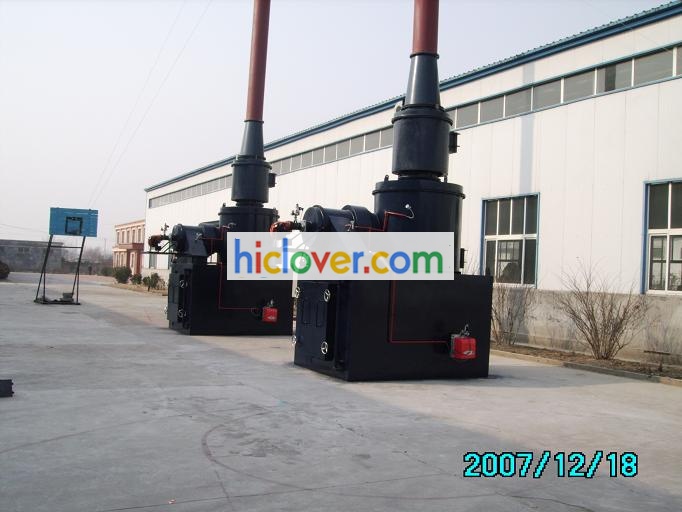
double chamber incinerator designed for completed combustion for waste, the first(primary) combustion chamber burn the waste directly by oil or gas burner. the secondary combustion chamber burn the smoke from the first(primary) combustion chamber. high temperature combustion will completed destroy waste and made the smoke cleaner.

double chamber incinerator fit with two burner in each chamber, but for some large incinerator, we made two or three burner for the first(primary) combustion chamber, this will made the waste burn more completed and also made high burning rate.

Items/Model YD-200 YD-300 YD-500 YD-600
Burning Rate (kgs/Hour) 200 kgs/Hr. 300 kgs/Hr. 500 kgs/Hr. 600 kgs/Hr.
Feed Capacity (kgs) 400 kgs 500 kgs 800 kgs 1100 kgs
Equipment Weight 7600 kgs 8300 kgs 13000 kgs 16500 kgs
Primary Chamber (Liters) 2000 2400 4000 5500
Secondary Chamber (Liters) 500 1200 1500 1500
External Dimensions (cm) 270 x 185 x 380 260x220x420 320x220x460 360 x 220 x 475
Internal Dimensions (cm) 180 x 115 x 96 220x110x100 257x147x108 300 x 147 x 125
Oil Tank(Liters) 300 500 500 500
Door Opening (cm) 59 x 81 90 x 110 108 x 128 108 x 128
Chimney (M) 10 10 14 14
Chimney Type Stainless Steel Stainless Steel Stainless Steel Stainless Steel
Secondary Chamber YES YES YES YES
Mix-Combustion Chamber YES YES YES YES
Smoke Filter Chamber YES YES YES YES
Combustion Fuel Oil/Gas Oil/Gas Oil/Gas Oil/Gas
Residency Time 2.0 Sec. 2.0 Sec. 2.0 Sec. 2.0 Sec.
Temperature Monitoring YES YES YES YES
1st. Chmaber Temperature 800℃–1000℃ 800℃–1000℃ 800℃–1000℃ 800℃–1000℃
2nd. Chmaber Temperature 1000℃-1200℃ 1000℃-1200℃ 1000℃-1200℃ 1000℃-1200℃

I    INCINERATOR
1.    Type    Air Oil Fired Incinerator
2.    Type of Waste    Medical Waste
3.    Burning Capacity    (As per 250 beds hospital Bio Wast Desposal)
4.    Auxiliary Fuel    Diesel
5.    Type of Burner Operation    Monoblock fully automatic burners
6.    Temperature

Primary Chamber Secondary Chamber    8000±500C

1050±500C
II    PRIMARY CHAMBER
1.    Type    Static Solid Hearth
2.    Material of Construction    Mild Steel, 5mm thick
3.    Refractorythickness    115mm thick
4.    Material    Refractory bricks confirming to IS-8
5.    Temperatureresistance    14000C
6.    Insulation thickness    115mm thick
7.    Material    Insulation bricks confirming to IS-2042
8.    Waste Charging    Automatic
9.    Ash Removal    Manual
III    SECONDARY  CHAMBER
1.    Type    Static Solid Hearth
2.    Material of Construction    Mild Steel, 5mm thick
3.    Refractorythickness    115mm thick
4.    Material    Refractory bricks confirming to IS-8
5.    Temperatureresistance    14000C
6.    Insulation thickness    115mm
7.    Material    Insulation bricks confirming to IS-2042
IV    EMERGENCY STACK
1.    MOC    Mild Steel, 3mm thick
2.    Refractory    75mm thick castable
3.    Insulation    25mm thick castable
V    QUENCHER
1    MOC of outer body    Mild Steel refractory lined from inside
2    Water Circulation system    Provided with centrifugal pump
3    Purpose    To reduce flue gas temperature before venturi scrubber
4    Pump motor    Suitable capacity provided as per our design
VI    AIR POLLUTION CONTROL DEVICE – VENTURI SCRUBBER
1    Type    High Pressure Jet Type
2    MOC    Stainless steel – 316L
3    Temperature at the outlet    78-800C
4    Scrubbing Media    Water with 5% caustic
VII    RE- CIRCULATION PUMP FOR VENTURI SCRUBBER
1    Type    Centrifugal
2    Application    PP/SS
3    Piping    PPR
VIII    DROPLET SEPARATOR & RE-CIRCULATION TANK (INTEGREL)
1    Type    Cyclonic
2    Application    To separate water droplets from flue gases
3    MOC    Mild Steel Rubber lined 3mm thick
IX    I.D. FAN
1    Type    High Pressure Centrifugal type
2    MOC    Stainless Steel Impeller and Mild Steel Rubber lined casting
3    Drive    Belt Driven
X    COMBUSTION FAN
1    Type    Centrifugal
2    Modulation    Manual damper control
3    MOC    Mild Steel
4    Drive    Direct drive
XI    BURNERS
1    No. of burners    2 Nos. (1 No. in Primary Chamber and 1 No. in Secondary Chamber)
2    Type    Monoblock fully automatic
3    Fuel    Diesel
XII    FUEL OIL STORAGE TANK
1    MOC & Capacity    Mild Steel, suitable capacity
2    Other Standard Accessories    Diesel Oil level indicator, piping with valves
& N.R. Valve
3    Visual checking of Fuel    To be Provided
XIII    CONTROL PANEL
1    Type    PLC based with printer & recording device having both Manual and Auto Operation
2    MOC    CRCA Sheet
3    Type of temperature controller    Digital
4    Finish & Painting type    Powder coated
5    Audio-visual alarm system    To be Provided
XIV    CHIMNEY OF 30 MTRS HEIGHT
1    MOC    Mild Steel
2    Type    Self supporting
3    Height    30 mtrs from ground level
4    Other Standard Accessories    Aviation lamp, lightening arrestor, stack, drain, inspection platform, sampling port
5    Paint    The chimney is painted externally with two coats of heat resistant aluminium paint
6    Ladder    To be Provided till the top
7    Inside Protection    3mm thick rubber lining from inside
XV    CERTIFICATION
1    Approval    PCB approved machine
2    Mandatory approvals for operation    All mandatory approvals (if any) required for the installation and operation of incinerator shall be done by the successful bidder.
XVI    TRAINING
1    Training    The successful bidder shall train the hospital staff to the satisfaction of the authorities.
XVII    TURNKEY
1.    Equipment to be installed a t s i t e a s d i re c t e d b y p r o j e c t d i r e c t o r . The civil works required to install the new machine has to be  included in the offer.

portable incinerator means a small incinerator so end user can move it to other place. we made portable incinerator and the weight under 2000 kgs, the burning rate from 5kgs per hour to 20kgs per hour. all designed with three combustion chamber and two oil or gas burner. this kind of portable incinerator is cheap cost for small waste out put.

Items/Model YD-10C YD-20C
Burning Rate (kgs/Hour) 10 kgs/Hr. 20 kgs/Hr.
Feed Capacity (kgs) 40 kgs 40 kgs
Equipment Weight 2100 kgs 2100 kgs
Primary Chamber (Liters) 200 200
Secondary Chamber (Liters) 140 140
External Dimensions (cm) 170x140x160 170x140x160
Internal Dimensions (cm) 55x55x65 55x55x65
Oil Tank(Liters) 50 100
Door Opening (cm) 38 x 48 38 x 48
Chimney (M) 5 5
Chimney Type Stainless Steel Stainless Steel
Secondary Chamber YES YES
Mix-Combustion Chamber YES YES
Smoke Filter Chamber YES YES
Combustion Fuel Oil/Gas Oil/Gas
Residency Time 2.0 Sec. 2.0 Sec.
Temperature Monitoring YES YES
1st. Chamber Temperature 800℃–1000℃ 800℃–1000℃
2nd. Chamber Temperature 1000℃-1200℃ 1000℃-1200℃