Tag: incineration

MEDICAL WASTE INCINERATOR


Phone: +86-13813931455(whatsapp/wechat)
Website: http://www.hiclover.com/ 

Nanjing Clover Medical Technology Co.,Ltd.
1. Incinerator 10kg per hr
2. Incinerator 20kg per hr
3. Incinerator 50kg per hr
4. Incinerator 100kg per hr
5. INDOOR INCINERATOR

2021-02-23

Three Combustion Chambers(Optional)

3 Chambers for high risk waste

Pet Cremation Equipment

For Pet(small/big) Cremation Business

Animal Incineration Equipment

For other creature incineration

medical waste disposal methods

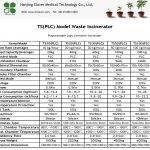
Items/Model

TS100(PLC)

TS150(PLC)

TS300(PLC)


TS500(PLC)

Burn Rate (Average)

100 kg/hour

150 kg/hour

300 kg/hour

500 kg/hour

Control Mode

PLC Auto.

PLC Auto.

PLC Auto.

PLC Auto.

Combustion Chamber

1200L

1500L

2000L

3000L

Internal Dimensions

120x100x100cm

150x100x100cm

170x120x100cm

210x120x120cm

Secondary Chamber

600L

750L

1000L

1500L

Smoke Filter Chamber

Dry Scrubber

Dry Scrubber

Dry Scrubber

Dry Scrubber

Feed Mode

Manual

Manual

Manual

Manual

Voltage

220V

220V

220V

220V

Power

1.38Kw

1.69Kw

2.57Kw

4.88Kw

Diesel Oil Consumption (kg/hour)

Ave.20.4

Ave.24.2

Ave.33

Ave.44

Natural Gas Consumption (m3n/hour)

Ave.24.5

Ave.29

Ave.39.6

Ave.52.8

Temperature Monitor

Yes

Yes

Yes

Yes

Temperature Protection

Yes

Yes

Yes

Yes

Oil Tank

200L

300L

500L

500L

Chimney

10Meter

10Meter

14Meter

14Meter

Chimney Type

Stainless Steel

Stainless Steel

Stainless Steel

Stainless Steel

1st. Chamber Temperature

800℃–1000℃

800℃–1000℃

800℃–1000℃

800℃–1000℃

2nd. Chamber Temperature

1000℃-1200℃

1000℃-1200℃

1000℃-1200℃

1000℃-1200℃

Residency Time

2.0 Sec.

2.0 Sec.

2.0 Sec.

2.0 Sec.

Gross Weight

6000kg

8500kg

11000kg

16000kg

External Dimensions

260x150x180cm

300x160x190cm

400x210x300cm

450x210x300cm

The manufacturer should permanently mark on the incinerator signaling: (I) manufacturer’s name or trademark (ii) design, type, model or, date of manufacture of the incinerator (iii) capacity concerning net designed heat discharge in heat units per timed period (i.e., British Thermal Units per hour, mega joules per hour, kilocalories per hour).
All electric connections attached with all the incinerator and other machines ought to be provided with appropriate and necessary security devices and be protected by metal conduits, cable fittings, and also supports.
• A first aid kit, appropriate for addressing the hazards presented by the device.
• Any other consumables considered necessary from the Supplier.
• Lubricants as suitable.
• Operating logbooks.

450x210x300cm

PORT SUDAN


 CE Certification Pass

HICLOVER Solution for Fighting COVID-19 with CE Certification.
 
1. Medical Waste Incinerator(Containerized Mobile Incinerator|Top Loading Incinerator)
 
2. Auto Roll Air Filter for Clean Room

All electrical connections attached with the incinerator and other machinery should be provided with suitable and necessary safety devices and be protected by steel conduits, cable trays, and supports.
The manufacturer should permanently mark on the incinerator indicating: (i) manufacturer’s name or trademark (ii) style, type, model or, date of manufacture of the incinerator (iii) capacity in terms of net designed heat release in heat units per timed period (i.e., British Thermal Units per hour, mega joules per hour, kilocalories per hour).
“The unit shall be supplied with a lockable operations store, that shall be initially supplied with the following consumables:
• A first aid kit, suitable for addressing the hazards presented by the unit.
• 5 full sets of personal protective clothing and equipment.
• Operating logbooks.
• Unit cleaning equipment.
• Unit routine maintenance equipment and associated spare parts.
• Lubricants as appropriate.
• 3 Fire extinguishers.
• Any other consumables considered necessary by the Supplier.


2021-02-23


What are the key products of incineration process


Items/Model

TS800

Picture


Principle

Animal Waste Incineration Treatment

Burn Rate

Average 300-450 kg/hour

Feed Capacity

Average 1200kg/feeding

Control Mode

Electric Control

Combustion Chamber

3000Liter

Internal Dimensions

300*100*100 cm

Secondary Chamber

***

Feed Mode

Manual/Forklift

Voltage

220V/380V

Power

5.0Kw

Oil Consumption (kg/hour)

***waste to Power plants cost

Gas Consumption (m3/hour)

Ave.22.8m3n/hr

Temperature Monitor

Digital Display

Temperature Protection

Yes

Oil Tank

***

Feed Door

200x100cm(Electric Opening)

Chimney

3Meter

Chimney Sort

Stainless Steel

1st.

Three Combustion Chambers(Optional)

3 Ranked for high risk waste

Pet Cremation Equipment

For Pet(small/big) Cremation Business

Animal Incineration Equipment

For additional creature incineration

what would be the main products of incineration process

Maximum load of the camera (kg)


Phone: +86-13813931455(whatsapp/wechat)
Website: http://www.hiclover.com/ 

1200

Nanjing Clover Medical Technology Co.,Ltd.

1200kgs

Overall dimensions (without burner), (mm)

2823x1970x1724

500x220x190cm(without chimney)

2823x1970x1724 room Volume, m3

2.5 m3

300*100*100 cm, 3.0m3

EXT.main camera size

(d)2392x (b)1140

???

Size of loading opening, (mm)

(W)1152x (l)1425

W.1000*L.2000mm

Combustion temperature (C0)

650° – 1100°

800℃–1200℃

Weight (kg)

4500

7000kg

Weight of residues after combustion (kg)

no more than 5 percent

no more than 5 percent

Opening the hatch using a winch

accessibility

power-driven

The method of loading

the vertical

Top Feeding Door

Burners

Gas burners

Gas burners

Fire-resistant gasket,why is medical waste an issue

Z-blok fire-resistant gasket

Fire Brick and Refractory castable

Pipe dimensions (diameter, length) (mm)

1420×3000

???

Benefits of fire-resistant gaskets

Yes

yes

Temperature properties of the gasket (C0)

1650°

1700°C

Lining layer (fireclay brick)(mm)

114

114mm

Temperature properties of the liner (C0)

1650°

1700°C

burner gas (m3 / h)

9.9-17 m3 / h

22.8m3n/h max.

Burn rate (kg / h)

300-450

300-450

Electricity (volts/Hz)

220/50 Hz

220/50 Hz

Auto-ignition

Auto-ignition Yes

Auto-ignitio

Temperature sensor

accessibility

accessibility

Automatic control panel

the presence of

yes

Burn time at full load (hour)

4-8h

yes

Compliance of MPV and MPC emissions

contrasts to

China Standard

Painting

heat-resistant enamel

yes

Items/Model

TS100(PLC)

TS150(PLC)

TS300(PLC)

TS500(PLC)

Burn Rate (Typical )

100 kg/hour

150 kg/hour

300 kg/hour

500 kg/hour

Control Mode

PLC Auto.

PLC Auto.

PLC Auto.

PLC Auto.


Combustion Chamber

1200L

1500L

2000L

3000L

Internal Dimensions

120x100x100cm

150x100x100cm

170x120x100cm

210x120x120cm

Secondary Chamber

600L

750L

1000L

1500L

Smoke Filter Chamber

Dry Scrubber

Dry Scrubber

Dry Scrubber

Dry Scrubber

Feed Mode

Manual

Manual

Manual

Manual

Voltage

220V

220V

220V

220V

Electricity

1.38Kw

1.69Kw

2.57Kw

4.88Kw

Diesel Oil Consumption (kg/hour)

Ave.20.4

Ave.24.2

Ave.33

Ave.44

Natural Gas Consumption (m3n/hour)

Ave.24.5

Ave.29

Ave.39.6

Ave.52.8

Infection Monitor

Yes

Yes

Yes

Yes

Temperature Protection

Yes

Yes

Yes

Yes

Oil Tank

200L

300L

500L

500L

Chimney

10Meter

10Meter

14Meter

14Meter

Chimney Type

Stainless Steel

Stainless Steel

Stainless Steel

Stainless Steel

1st. Chamber Temperature

800℃–1000℃

800℃–1000℃

800℃–1000℃

800℃–1000℃

2nd. Chamber Temperature

1000℃-1200℃

1000℃-1200℃

1000℃-1200℃

1000℃-1200℃

Residency Time

2.0 Sec.

2.0 Sec.

2.0 Sec.

2.0 Sec.

Gross Weight

6000kg

8500kg

11000kg

16000kg

External Dimensions

260x150x180cm

300x160x190cm

400x210x300cm

450x210x300cm

2021-02-23

Gross Weight

6000kg

8500kg

11000kg

16000kg

External Dimensions

260x150x180cm

300x160x190cm

400x210x300cm

450x210x300cm


A heat exchanger to pre-heat air destined for the primary chamber is not compulsory but recommended.
The combustion air systems and fans shall be designed to ensure high combustion efficiency and avoid a reducing (corrosive) atmosphere, incomplete burnout of the flue gases and related problems. It should also be possible to heat the primary air from 10°C to approximately 145°C, depending on the waste composition and moisture content.
“The incinerator shall be designed and equipped to be installed, commissioned and operated in such a way as to prevent emissions into the air giving rise to significant ground-level air pollution; in particular, exhaust gases shall be discharged in a controlled fashion by means of a stack the height of which is calculated in such a way as to safeguard human health and the environment.
 CE Certification Pass

HICLOVER Solution for Fighting COVID-19 with CE Certification.
 
1. Medical Waste Incinerator(Containerized Mobile Incinerator|Top Loading Incinerator)
 
2. Auto Roll Air Filter for Clean Room


2021-02-23


Steps of waste management


Item

Specification

Model

A1500

Internal Dimensions

150 x 100 x 96cm

Suit for Animal

Cat – yes

Dog – yes

Pig – yes

Cow – Little

Main Product List

Main Combustion Chamber


Secondary Combustion Chamber


Mix-Combustion Chamber


Wet Scrubber( Washing Tower)


Incinerator Control Case


Chimney:10.0Meters *(Update to Stainless Steel, free Price )


Italy oil burner: 03 sets


Phone: +86-13813931455(whatsapp/wechat)
Website: http://www.hiclover.com/ 

Oil Tank: 500Liters

Nanjing Clover Medical Technology Co.,Ltd.

HICLOVER Incinerator/Parts Range

Main Feature

Medical Waste Incinerators

HICLOVER 10-500kgs/Hr.Double Combustion Chambers

Single Combustion Chamber

Small, Cheap,10-20kgs/Hr.

Three Combustion Chambers(Optional)

3 Chambers for high risk waste

Pet Cremation Equipment

For Pet(small/big) Cremation Business

Animal Incineration Equipment

For other animal incineration

hospital waste management ppt 2018


Items/Model

TS100(PLC)

TS150(PLC)

TS300(PLC)

TS500(PLC)

Burn Rate (Average)

100 kg/hour

150 kg/hour

300 kg/hour

500 kg/hour

Control Mode

PLC Auto.

PLC Auto.

PLC Auto.

PLC Auto.

Combustion Chamber

1200L

1500L

2000L

3000L

Internal Dimensions

120x100x100cm

150x100x100cm

170x120x100cm

210x120x120cm

Secondary Chamber

600L

750L

1000L

1500L

Smoke Filter Chamber

Dry Scrubber

Dry Scrubber

Dry Scrubber

Dry Scrubber

Feed Mode

Manual

Manual

Manual

Manual

Voltage

220V

220V

220V

220V

Power

1.38Kw

1.69Kw

2.57Kw

4.88Kw

Diesel Oil Consumption (kg/hour)

Ave.20.4

Ave.24.2

Ave.33

Ave.44

Natural Gas Consumption (m3n/hour)

Ave.24.5

Ave.29

Ave.39.6

Ave.52.8

Temperature Monitor

Yes

Yes

Yes

Yes

Temperature Protection

Yes

Yes

Yes

Yes

Oil Tank

200L

300L

500L

500L

Chimney

10Meter

10Meter

14Meter

14Meter

Chimney Type

Stainless Steel

Stainless Steel

Stainless Steel

Stainless Steel

1st. Chamber Temperature

800℃–1000℃

800℃–1000℃

800℃–1000℃

800℃–1000℃

2nd. Chamber Temperature

1000℃-1200℃

1000℃-1200℃

1000℃-1200℃

1000℃-1200℃

Residency Time

2.0 Sec.

2.0 Sec.

2.0 Sec.

2.0 Sec.

Gross Weight

6000kg

8500kg

11000kg

16000kg

External Dimensions

260x150x180cm

300x160x190cm

400x210x300cm


brick incinerator design,The control system shall include an electronic performance monitoring and logging system. The system shall be capable of monitoring and logging chamber temperatures at regular intervals (not less than once per minute, with the capacity to vary the logging frequency). The system shall include the capacity to download the performance data by USB connection.
All the measuring devices attached with the incinerator should have digital display and should have provision of connecting to the recording system, which should include fuel meter and separate energy meter.
The temperature shall be determined against the inside wall of the combustion chambers. An audible and visible alarm shall be installed to warn the operator when the secondary temperature drops to below the required temperature.
The primary chamber must meet or exceed the following criteria:
“• Heavy steel construction.
• Fixed hearth geometry and starved air gasification operational mode. 
• Hot face refractory concrete-ceramic suitable for thermal shock up to 1400 Celsius and abrasion. Minimum thickness 150mm. 
• Cold face refractory lining of calcium silicate or superior material, minimum thickness 100mm. 
• Refractory lining of all the ducts shall be done with refractory castings. Superior quality ceramic wool shall be used at all hot duct flanges and expansion joints.
• Multiple electric ignition fuel burners designed to use automotive diesel fuel.
• Flame of the primary burner shall be oriented towards the center of the unit which does not impinge directly on the refractory floor or wall. The secondary burner shall be positioned in such a way that the flue gas passes through the flame. 
• The unit shall prevent leakage of the hot flue gas and any backfire. 
• An electrically powered fan forced air supply, with the capacity for variation by the operator.
• Digital thermometers connected to electronic dataloggers. The thermometers shall be located on the chamber walls away from the fuel burner.
• A differential air pressure gauge connected to an electronic datalogger

 CE Certification Pass

HICLOVER Solution for Fighting COVID-19 with CE Certification.
 
1. Medical Waste Incinerator(Containerized Mobile Incinerator|Top Loading Incinerator)
 
2. Auto Roll Air Filter for Clean Room

450x210x300cm


The other day at the waste incineration plant

From waste is made electricity for 250,000 individuals

And this is the highlight. The heat produced during combustion is used. On the one hand, to heat the nearby Ford plant. But this is just a nice side effect. The majority of the heat is converted into electricity by generators. And even that the power consumption of 250,000 individuals can be fulfilled. The waste incineration plant Cologne is hence essentially a power plant also provides a quarter of the town of Cologne with electricity. That sounds amazing. And as you might find the notion it is not too bad when a lot of garbage is produced — as it is used so nicely…

After combustion bottom ash, hot exhaust gas and residue remain. These chemicals are largely used again useful: The ash is chilled with water and stored in an ash bunker before it is processed at a bottom ash treatment plant and then used in road, landfill and landscaping. Residues from sorting and residues from the domestic and tight waste are distributed to the daily waste bunker on separate chambers. The bulky waste is pre-sorted and smashed. Just the non-recoverable parts are processed from the incinerator.

The household waste is sorted in a perforated drum to dimension and then passes on large conveyor belts so-called magnetic seperators. They remove ferrous scrap. Another ferrous metallic deposition in addition to an automatic non-ferrous deposition take place after combustion. They have been processed in external sorting, and therefore they may be used right to the domestic and bulky waste. The various waste streams are mixed completely, because this homogenization ensures a top quality, a uniform as possible burnout and a fantastic quality ash.

Recently a dream came true for me personally. That may seem odd. Sometimes I catch myself when I get stuck on documentary programs about recycling methods from the (rare) zapping through the TV stations. Obviously this subject fascinates me. Because I am also very interested in the subject Generation Y, I could kill two birds with one stone. The hot exhaust gas is used for electricity generation. It heats preheated water , which matches at a temperature of 400 degrees Celsius and a pressure of 40 bar to a turbine. This pushes the downstream generator by which is produced electric power. For own use just a small part of the energy is needed. The greater part is given in external electricity supply networks. The amount of energy created in the incinerator is sufficient to power more than 100,000 families.

In the combustion and the subsequent exhaust gas purification residual substances like salts and dust remain in addition to ashes from the boiler. These substances are collected and used as backfill material for the backfilling of salt mine . Gypsum can also be a waste substance, which is obtained as a reaction product from the exhaust gas purification and contains construction material quality.

Emission control: the exhaust gases are almost completely neutralized from the method used in the Cologne incinerator. There is not any waste water, in addition to the legal requirements are clearly undercut. As a neutral auditor, the county government receives the real exhaust gas readings permanently by direct line.

Rethinking at waste management businesses

After the guided tour, I had the chance to talk to the press officer of AVG. In this conversation it became apparent how much the thinking has changed in the sphere of waste management in recent decades and years. Even during the 1960s into the 1990s crap was piled up completely unsorted in landfills and then abandoned, at the new millennium they’ve recognized the value of the waste. Climate change and CO2 emissions have long pushed as important issues accountable for the residual waste processing. The heat generated during combustion is converted into electricity. Resources are recovered, as far as is technically possible. Notably metal, wood and plastics. The recovered plastic out of residual waste is used such as fuel for cement plants.

Waste incineration plant are now equatable to electricity plants, even when fuel value is not quite equivalent to the traditional fuels like coal, gas and oil. As an increasing number of municipalities have come to generate their own electricity by means of residual waste incineration, the major electricity suppliers get in significant difficulties.

In the conclusion of the tour I was really impressed. That what’s put from the residual waste in private families in addition to the industrial waste is, after all, still god to supply 100,000 families with electricity in Cologne.

And in precisely the same time it’s scary, what incredible tonnes of waste we all produce. Blue and orange ton even come in addition to that.

Consumer society offers garbage

Waste incineration plants producing electricity for us and making us less dependent on fossil fuels, are the logical consequence of our society. But incinerators aren’t built primarily to generate electricity. But to become master of the hills of waste we produce continuously as a society. Luckily, with modern incinerators, a method was shown to constitute the stinking problem a fresh thing. But the cause, our consumption, is the real problem.

for those operators of the incineration plant, so it is essential that enough waste is delivered. Garbage is their merchandise. The more they could get, the better for your machine’s capacity. For then it’ll work cost-effectively, which in turn has a positive influence on the urban garbage fees. Since waste is added from adjoining areas.

But the consumer society provides those masses of garbage. Goods are produced in large quantities, bought, used or consumed and eventually discarded. The 2aste incineration plant gets food — in 2013 there were 707,000 tons in Cologne. And provides us even with electricity (282 million kWh in 2013 in Cologne). Truly an ideal cycle, so one might think. If not with this”but” are. Since our conventional consumption goes at the expense of other countries, to the detriment of the environment, fair working conditions; Resources are wasted, the transportation around the globe has influence on the climate, manufacturing facilities in the Far East poison the local surroundings and so forth.

Well, I reside in Cologne, a huge town, where surely only a small proportion of residents consider trash, disposal or perhaps waste reduction and also practice this. That may be a negative perspective, but I think that it is realistic. The average normal citizen doesn’t necessarily ask the question what’s actually occurring to that which he throws away in the course of a year. My second wish is to pay a visit to a recycling plant for plastics.

Waste incineration and waste seperation versus waste prevention

Waste separation was yesterday. The latest approach is waste prevention. In its most distinct version it is named Zero Waste. No waste. So far there are just a few leaders, whose videos and reports I read and watch with interest. And in precisely the same time I wonder how to implement this at a typical big-city life. It starts with the truth that — even if you use a togo box, which is compostable, then you do not know where to dispose of it along the way. Would everybody do this?

that I think it’s good if it is possible, to be master of the situation (immense amounts of waste) through a nicely organized disposal system and outside actually to convert this residual waste to a large extent into energy, ie heating and electricity. There is at least a massive improvement as against the stinking landfill out of earlier, in which everything has been thrown into a heap and then covered with the cloak of silence. The following step should be, to decrease the amount of waste in total. And this won’t be possible just from the civic society. Here politics and economy are asked to produce the right framework and to set the operational execution in movement. In a small group, we had been led by the spokesman of the AVG through the respective segments of the garbage incineration plant and the procedures were explained in detail. Originally skeptical, because in previous years there has been so much negative about this facility (excessive construction costs, lack of capacity), the disposition among the participants changed slowly into fascination.

To explain: It is Pretty Much waste. Not about recycle materials like paper, plastics, recycled glass or compostable organic waste.

Truth and cleanliness

What I discovered during the excursion: In the plant, each measure is carefully considered, it is worked with great precision. And even if this sounds paradoxical: it is squeaky clean! Just in the hall where different wastes are mixed onto conveyor belts, there is the typical smell of crap, but also not as bad as originally anticipated.

Amazing for me personally: I did not know that by using residual waste a really large amount of electricity is generated. And reassuring for me personally: tools are obtained even from the previous fall: alloy, material for road construction, plaster at good quality. The proportion of what’s factually left and actually not recycled, seems negligible to low.

From waste to electricity — the process in detail

The remaining waste incinerator from Cologne was set into operation in 1998 and is among the most modern and best facilities in the world. It processes what has landed from the residual waste after the individual selection of private families, in addition to the remains of sorting out of mixed building and industrial waste.

Much of the waste is sent by rail. The railroad containers are filled in two waste transfer stations in the city of Cologne and together have a capacity of about 250,000 tons each year. The rest of the waste is brought by truck.

Waste separation was yesterday. The latest approach is waste prevention. In its most distinct version it is called Zero Waste. No waste. So far there are only a few pioneers, whose reports and videos I read and watch with interest. And at the same time I wonder how to implement this in a normal big-city life. It starts with the fact that – even if you use a togo box, which is compostable, then you do not know where to dispose of it along the way. So take it home and put it in the compost bin? Would everybody do that?

I think it’s great if it is possible, to be master of the situation (immense amounts of waste) through a well organized disposal system and beyond even to convert this residual waste to a large extent into energy, ie electricity and heating. There is at least a huge improvement as against the stinking landfill from earlier, in which everything was thrown into a pile and then covered with the cloak of silence. The next step must be, to reduce the amount of waste in total. And this will not be possible just by the civil society. Here politics and economy are asked to create the right framework and to set the practical implementation in motion.

by: http://blog.upcycling-markt.de/en/blog/muellverbrennungsanlange-waste-incineration-plant.html
What is medical waste management


Item

Specification

Model

YD-20C

Main Product List


Primary Combustion Chamber

Secondary Combustion Chamber

Mix-Combustion Chamber

Smoke Filter Chamber

Incinerator Control Case

Chimney:5.0Meters *(upgrade to Stainless Steel, free Price )

Italy oil burner: 02 sets

Oil Tank: 100Liters


Optional:


Phone: +86-13813931455(whatsapp/wechat)
Website: http://www.hiclover.com/ 

Mobile Trailer for Incinerator

Nanjing Clover Medical Technology Co.,Ltd.
bio medical waste management ppt 2020

HICLOVER Incinerator/Parts Range

Main Feature

Medical Waste Incinerators

HICLOVER 10-500kgs/Hr.Double Combustion Chambers

Single Combustion Chamber

Small, Cheap,10-20kgs/Hr.

Three Combustion Chambers(Optional)

3 Chambers for high risk waste

Pet Cremation Equipment

For Pet(small/big) Cremation Business

Animal Incineration Equipment

The secondary chamber must comply with the following minimum criteria:
“• Heavy steel construction
• An excess air and high temperature operational mode.
• Sufficient size and appropriate geometry to achieve a gas temperature of at least 1000 Celsius for a retention time of at least 2 seconds when pre-heated and correctly operated.
• Sufficient forced air inflow and airflow and fuel supply controls to ensure an exhaust gas oxygen content range of 6-12% at all times. 
• Hot face refractory concrete-ceramic suitable for thermal shock up to 1400 Celsius and abrasion. Minimum thickness 150mm. 
• Cold face refractory lining of calcium silicate or superior material, minimum thickness 100mm. 
• Refractory lining of all the ducts shall be done with refractory castings. Superior quality ceramic wool shall be used at all hot duct flanges and expansion joints
• An electrically powered fan forced air supply, with the capacity for variation by the operator.
• One or more fuel burners designed to use diesel fuel type 2 (vehicle standard) equipped with a spark igniter.  
• A digital thermometer with connected to an electronic datalogger. The thermometer shall be located on the chamber wall away from the fuel burner.

For other animal incineration


Items/Model

TS100(PLC)

TS150(PLC)

TS300(PLC)

TS500(PLC)

Burn Speed (Typical )

100 kg/hour

150 kg/hour

300 kg/hour

500 kg/hour

Control Mode

PLC Auto.

PLC Auto.

Combustion Chamber

1200L

1500L

2000L

3000L

Internal Dimensions

120x100x100cm

150x100x100cm

170x120x100cm

210x120x120cm

Secondary Chamber

600L

750L

1000L

1500L

Smoke Filter Chamber

Dry Scrubber

Dry Scrubber

Dry Scrubber

Dry Scrubber

Feed Mode

Manual

Manual

Manual

Manual

Voltage

220V

220V

220V

220V

Power

1.38Kw

1.69Kw

2.57Kw

4.88Kw

Diesel Oil Consumption (kg/hour)

Ave.20.4

Ave.24.2

Ave.33

Ave.44

Natural Gas Consumption (m3n/hour)

Ave.24.5

Ave.29

Ave.39.6

Ave.52.8

Temperature Monitor

Yes

Yes

Yes

Yes

Temperature Protection

Yes

Yes

Yes

Yes

Oil Tank

200L

300L

500L

500L

Chimney

10Meter

10Meter

14Meter

14Meter

Chimney Type

Stainless Steel

Stainless Steel

Stainless Steel

Stainless Steel

1st. Chamber Temperature

800℃–1000℃

800℃–1000℃

800℃–1000℃

800℃–1000℃

2nd. Chamber Temperature

1000℃-1200℃

1000℃-1200℃

1000℃-1200℃

1000℃-1200℃

Residency Time

2.0 Sec.

2.0 Sec.

2.0 Sec.

2.0 Sec.

Gross Weight

6000kg

8500kg

11000kg

16000kg

External Dimensions

260x150x180cm

300x160x190cm

400x210x300cm

450x210x300cm


 CE Certification Pass

HICLOVER Solution for Fighting COVID-19 with CE Certification.
 
1. Medical Waste Incinerator(Containerized Mobile Incinerator|Top Loading Incinerator)
 
2. Auto Roll Air Filter for Clean Room

2021-02-21


2021-02-21


Effect of biomedical waste on human health


Phone: +86-13813931455(whatsapp/wechat)
Website: http://www.hiclover.com/ 

Nanjing Clover Medical Technology Co.,Ltd.

Equipment Technical Specifications

Model

TS30S

Picture


Feed Capacity

78 Liters for Main chamber

Burning Rate

Typical 30 kgs Each hour

Burning Time Each Feed

0.5 hour

Voltage

220V

Power

0.5Kw

Gas

Diesel oil

Burner

Diesel Oil Burner, 2 sets

Feed Mode

Manual

Fuel consumption (Oil)

Typical 8 Kgs/Hour

External Dimensions

90 x 90 x 150cm (main body)

Internal Dimensions

Dia.50 x 40cm(Primary Chamber)

Waste combustion chamber

78Liters

Article Combustion Chamber

50Liters

Oil Tank Capacity

100 Liters

Door Opening

25 x 25cm

Chimney

3.0M

Gross Weight

1200kgs

Chamber Material

Refractory Concrete 

Max.

80,000Kcal/Hr.

Operation Technical Specifications

Chamber fever

8000C -10000C

Chamber Anti-Rate

13500C

Residency time

0.5 Sec.

Burning efficiency

>98 percent

Waste Lower Calorific Power

ways of disposing solid waste

3000Kcal

HICLOVER Incinerator/Parts Range

Main Feature

Medical Waste Incinerators

HICLOVER 10-500kgs/Hr.Double Combustion Chambers

Single Combustion Chamber

Small, Cheap,10-20kgs/Hr.

Three Combustion Chambers(Optional)

3 Ranked for high risk waste

Pet Cremation Equipment

For Pet(small/big) Cremation Business

Animal Incineration Equipment

For additional animal incineration

consequence of biomedical waste on human health


Items/Model

TS100(PLC)

TS150(PLC)

TS300(PLC)

TS500(PLC)

Burn Speed (Average)

100 kg/hour

150 kg/hour

300 kg/hour

500 kg/hour

Control Mode

PLC Auto.

PLC Auto.

PLC Auto.

Combustion Chamber

1200L

1500L

2000L

3000L

Internal Dimensions

120x100x100cm

150x100x100cm

170x120x100cm

210x120x120cm

Secondary Chamber

600L

750L

1000L

1500L

Smoke Filter Chamber

Dry Scrubber

Dry Scrubber

Dry Scrubber

Dry Scrubber

Feed Mode

Manual

Manual

Manual

Manual

Voltage

220V

220V

220V

220V

Power

1.38Kw

1.69Kw

2.57Kw

4.88Kw

Diesel Oil Consumption (kg/hour)

Ave.20.4

Ave.24.2

Ave.33

Ave.44

Natural Gas Consumption (m3n/hour)

Ave.24.5

Ave.29

Ave.39.6

Ave.52.8

Infection Monitor

Yes

Yes

Yes

Yes

Temperature Protection

Yes

Yes

Yes

Yes

Oil Tank

200L

300L

500L

500L

Chimney

10Meter

10Meter

14Meter

14Meter

Chimney Type

Stainless Steel

Stainless Steel

Stainless Steel

Stainless Steel

1st. Chamber Temperature

800℃–1000℃

800℃–1000℃

800℃–1000℃

800℃–1000℃

2nd. Chamber Temperature

1000℃-1200℃

1000℃-1200℃

1000℃-1200℃

1000℃-1200℃

Residency Time

2.0 Sec.

2.0 Sec.

2.0 Sec.

2.0 Sec.

Gross Weight

6000kg

8500kg

11000kg

16000kg

External Dimensions

260x150x180cm

300x160x190cm

400x210x300cm

450x210x300cm


The incinerator units shall include a temperature based electronic combustion control system that utilizes temperature and other data to inform automated or programmed cycling through the standard burn cycle: pre-heat, burn with waste addition, burn completion, cool-down. The system shall be capable of varying auxiliary fuel and air supply in both combustion chambers to achieve optimum combustion conditions. As far as practicable, the incinerator shall be of a plug and play type for ease of installation and commissioning in remote locations.
“The control system shall have a separate push button-based work station, which shall be located adjacent to the loading bay and protected from weather and impact damage. The system shall allow for rapid and straightforward intervention by the operator if the automatic system is not achieving the desired results during a burn cycle. 

 CE Certification Pass

HICLOVER Solution for Fighting COVID-19 with CE Certification.
 
1. Medical Waste Incinerator(Containerized Mobile Incinerator|Top Loading Incinerator)
 
2. Auto Roll Air Filter for Clean Room2021-02-21


Incinerator Main Combustion Chamber

HICLOVER now offer a full range of containerized incineration systems, placing us at the forefront of the latest transportation and industrial 
trends. Containerization enables immediate waste management as the units are pre-assembled and pre-installed.
Containerization is the most feasible and viable option in contrast to the construction of on-site facilities and housing structures, 
eliminating the man power and costs involved. The system has the added benefit of total mobility (both local and international), and is ideal 
for military and civil camps and remote locations where infrastructure is scarce.
Incineration is the most obvious solution for total destruction of municipal waste, avoiding all the direct and indirect risks associated with 
other disposal methods.
Incineration perfectly fits into a trend of treating waste in a safe way, and if possible, at the same place where it was generated to avoid 
cross-contamination risk and to keep waste treatment costs at acceptable level.

WWW.HICLOVER.COM|Waste Incinerators |Auto Roll Air Filters

Nanjing Clover Medical Technology Co.,Ltd..

Treatment and disposal technologies for health care waste


Items/Model

TS75

Picture


Principle

Solid Waste Incineration 

Burn Rate

Average 75 kg/hour

Feed Capacity

Average 100kg

Control Mode

PLC(Programmable Logic Controller Incinerator)

Combustion Chamber

600L

Internal Dimensions

100x60x100cm

Secondary Chamber

300L

Smoke Filter Chamber

Yes

Feed Mode

Manual

Voltage

220V

Power

3.0Kw

Oil Consumption (L/Hour)

15-20

Natural Gas Consumption (m3n/hour)

**

Temperature Monitor

Digital Screen

Temperature Protection

Yes

Oil Tank

250L

Feed Door

Dia.55cm

Chimney

6 Meters

Chimney Sort

Stainless Steel

1st.

800℃–1000℃

2nd.

Gross Weight

2500kg

External Dimensions

2080x1100x3840cm(without chimney)

HICLOVER Incinerator/Parts Range

Main Feature


Medical Waste Incinerators

HICLOVER 10-500kgs/Hr.Double Combustion Chambers

Single Combustion Chamber

Small, Cheap,10-20kgs/Hr.

Three Combustion Chambers(Optional)

3 Ranked for high risk waste

Pet Cremation Equipment

For Pet(small/big) Cremation Business

Animal Incineration Equipment

For additional creature incineration

Items/Model

The forecasted feedstock loads, and daily loading rates are generally summarized as:
• Mixed general, clinical and incinerable hazardous wastes with a wide range of calorific values and densities.   The wastes will consist of 100% biomedical wastes.
• Wastes either small enough to fit within a 60 litre waste sack or broken up or shredded to less than 300mm in size.
• Operation on a daytime shift basis, 5 days per week.

TS100(PLC)


TS150(PLC)

TS300(PLC)

TS500(PLC)

Burn Rate (Typical )

100 kg/hour

150 kg/hour

300 kg/hour

500 kg/hour

Control Mode

PLC Auto.

PLC Auto.

PLC Auto.

PLC Auto.

Combustion Chamber

1200L

1500L

2000L

3000L

Internal Dimensions

120x100x100cm

150x100x100cm

170x120x100cm

210x120x120cm

Secondary Chamber

600L

750L

1000L

1500L

Smoke Filter Chamber

Dry Scrubber

Dry Scrubber

Dry Scrubber

Dry Scrubber

Feed Mode

Manual

Manual

Manual

Manual

Voltage

220V

220V

220V

220V

Power

1.38Kw

1.69Kw

2.57Kw

4.88Kw

Diesel Oil Consumption (kg/hour)

Ave.20.4

Ave.24.2

Ave.33

Ave.44

Natural Gas Consumption (m3n/hour)

Ave.24.5

Ave.29

Ave.39.6

Ave.52.8

Temperature Monitor

Yes

Yes

Yes

Yes

Temperature Protection

Yes

Yes

Yes

Yes

Oil Tank

200L

300L

500L

500L

Chimney

10Meter

10Meter

14Meter

14Meter

Chimney Type

Stainless Steel

Stainless Steel

Stainless Steel

Stainless Steel

1st. Chamber Temperature

800℃–1000℃

800℃–1000℃

800℃–1000℃

800℃–1000℃

2nd. Chamber Temperature

1000℃-1200℃

1000℃-1200℃

1000℃-1200℃

1000℃-1200℃

Residency Time

2.0 Sec.

2.0 Sec.

2.0 Sec.

2.0 Sec.

Gross Weight

6000kg

8500kg

11000kg

16000kg

External Dimensions

260x150x180cm

300x160x190cm

400x210x300cm

450x210x300cm


The proposed incinerators shall be able to be completely packed into a series of 20ft export standard sea containers.
“Warranty will be as per the UNOPS ‘contracts for the provision of goods’ under section 4.5 of the ‘general conditions of contract’                                                                                                                                                            4.5 WARRANTIES: Unless otherwise specified in the Contract, in addition to and without limiting any other warranties, remedies or rights of UNOPS stated in or arising under the Contract, the Contractor warrants and represents that:
4.5.1 The goods, including all packaging and packing thereof, conform to the specifications of the Contract, are fit for the purposes for which such goods are ordinarily used and for any purposes expressly made known in writing in the Contract, and shall be of even quality, free from faults and defects in design, material, manufacturer and workmanship;
4.5.2 If the Contractor is not the original manufacturer of the goods, the Contractor shall provide UNOPS with the benefit of all manufacturers’ warranties in addition to any other warranties required to be provided under the Contract;
4.5.3 The goods are of the quality, quantity and description required by the Contract, including when subjected to conditions prevailing in the place of final destination;
The goods are free from any right of claim by any third-party, including claims of infringement of any 4.5.4intellectual property rights, including, but not limited to, patents, copyright and trade secrets;
4.5.5 The goods are new and unused;
4.5.6 All warranties will remain fully valid following any delivery of the goods and for a period of not less than one (1) year following acceptance of the goods by UNOPS in accordance with the Contract;
4.5.7 During any period in which the Contractor’s warranties are effective, upon notice by UNOPS that the goods do not conform to the requirements of the Contract, the Contractor shall promptly and at its own expense correct such non-conformities or, in case of its inability to do so, replace the defective goods with goods of the same or better quality or, at its own cost, remove the defective goods and fully reimburse UNOPS for the purchase price paid for the defective goods; and,
4.5.8 The Contractor shall remain responsive to the needs of UNOPS for any services that may be required in connection with any of the Contractor’s warranties under the Contract.

 CE Certification Pass

HICLOVER Solution for Fighting COVID-19 with CE Certification.
 
1. Medical Waste Incinerator(Containerized Mobile Incinerator|Top Loading Incinerator)
 
2. Auto Roll Air Filter for Clean Room

2021-02-21


2021-02-21


Medical waste Control pdf


The Incinerator units shall be designed to last in operation in a tropical environment for a minimum period of 10 years if the specified maintenance schedule is followed. All metal surfaces (except combustion chamber internal fittings) shall be either galvanized, enameled, painted or otherwise treated against atmospheric and process induced corrosion,Medical waste management pdf.
The incinerator combustion chamber(s) should be designed for easy maintenance of all internal parts including the refractory and insulation. Materials used in the individual parts of the incinerator shall be heat resistance and also be protected against oxidation, corrosion, etc.
The incinerator shell shall be made of mild steel with an adequate thickness for small units of between 3-6mm and larger units 5-10 mm depending on the construction part and painted externally with heat resistant aluminum paint suitable to withstand 250° C.  The outside surface temperature of the incinerator casing should not exceed 50° C above ambient temperature and shall include a safety mesh around all hot surfaces. Cold face refractory lining of calcium silicate or superior material, minimum thickness 100 mm.

Three Combustion Chambers(Optional)

3 Ranked for high risk waste

Pet Cremation Equipment

For Pet(small/big) Cremation Business

Animal Incineration Equipment

For other animal incineration

Items/Model

TS100(PLC)

TS150(PLC)

TS300(PLC)

TS500(PLC)


Burn Rate (Average)

100 kg/hour

150 kg/hour

300 kg/hour

500 kg/hour

Control Mode

PLC Auto.

PLC Auto.

PLC Auto.

Combustion Chamber

1200L

1500L

2000L

3000L

Internal Dimensions

120x100x100cm

150x100x100cm

170x120x100cm

210x120x120cm

Secondary Chamber

600L

750L

1000L

1500L

Smoke Filter Chamber

Dry Scrubber

Dry Scrubber

Dry Scrubber

Dry Scrubber

Feed Mode

Manual

Manual

Manual

Manual

Voltage

220V

220V

220V

220V

Power

1.38Kw

1.69Kw

2.57Kw

4.88Kw

Diesel Oil Consumption (kg/hour)

Ave.20.4

Ave.24.2

Ave.33

Ave.44

Natural Gas Consumption (m3n/hour)

Ave.24.5

Ave.29

Ave.39.6

Ave.52.8

Infection Monitor

Yes

Yes

Yes

Yes

Temperature Protection

Yes

Yes

Yes

Yes

Oil Tank

200L

300L

500L

500L

Chimney

10Meter

10Meter

14Meter

14Meter

Chimney Type

Stainless Steel

Stainless Steel

Stainless Steel

Stainless Steel

1st. Chamber Temperature

800℃–1000℃

800℃–1000℃

800℃–1000℃

800℃–1000℃

2nd. Chamber Temperature

1000℃-1200℃

1000℃-1200℃

1000℃-1200℃

1000℃-1200℃

Residency Time

2.0 Sec.

2.0 Sec.

2.0 Sec.

2.0 Sec.

Gross Weight

6000kg

8500kg

11000kg

16000kg

External Dimensions

260x150x180cm

300x160x190cm

400x210x300cm

450x210x300cm

2021-02-21

450x210x300cm


All incinerators shall meet the following emission and operating standards:
• Combustion efficiency (C.E.) shall be at least 99.0%
• The combustion efficiency shall be computed as follows:
o C.E = (CO2 X 100) / (%CO2 +%CO)
Suitably designed pollution control devices such as scrubbers, filters or electrostatic precipitators, shall be installed/retrofitted with the incinerator to achieve emission limits.”
“Each unit shall include a complete vertical exhaust and stack system, including the following features:
• Steel construction.
• Refractory lining in the lower section.
• The exit height of the stack shall be not less than a range of 3-12 metres above ground level depending on the capacity of the incinerator unit. 
• The diameter of the stack shall be selected by the Contractor to deliver an exhaust exit velocity of not less than 10 metres per second vertically upwards when at full scale operation.
• An emission stack sampling port shall be included immediately above the secondary chamber.
 CE Certification Pass

HICLOVER Solution for Fighting COVID-19 with CE Certification.
 
1. Medical Waste Incinerator(Containerized Mobile Incinerator|Top Loading Incinerator)
 
2. Auto Roll Air Filter for Clean Room


2021-02-21


Waste Disposal Methods in Hospital


Waste Disposal Methods in Hospital

• An 8 hour daily operating cycle of ash removal, pre-heat and burn with continuous loading if required.  The automated burn completion and cool down cycle will take place overnight.
• The incinerators shall be capable of using diesel fuel as a supplemental fuel while the associated management equipment shall be capable of using electricity as the primary power source.
• Also consider provision for meeting international emission standards.
Able to handle an average waste production of 100kg/day
“• Minimum load capacity: 20 kg
• Maximum load capacity: 40 kg
• Nominal burning rate: 10-30 kg/hr (= 80- 240 kg range per 8hour day)

Phone: +86-13813931455(whatsapp/wechat)
Website: http://www.hiclover.com/ 

Three Combustion Chambers(Optional)

Nanjing Clover Medical Technology Co.,Ltd.

3 Chambers for high risk waste

Pet Cremation Equipment

For Pet(small/big) Cremation Business

Animal Incineration Equipment

For other creature incineration

Items/Model

TS100(PLC)

TS150(PLC)

TS300(PLC)

TS500(PLC)

Burn Rate (Average)

100 kg/hour


150 kg/hour

300 kg/hour

500 kg/hour

Control Mode

PLC Auto.

PLC Auto.

PLC Auto.

PLC Auto.

Combustion Chamber

1200L

1500L

2000L

3000L

Internal Dimensions

120x100x100cm

150x100x100cm

170x120x100cm

210x120x120cm

Secondary Chamber

600L

750L

1000L

1500L

Smoke Filter Chamber

Dry Scrubber

Dry Scrubber

Dry Scrubber

Dry Scrubber

Feed Mode

Manual

Manual

Manual

Manual

Voltage

220V

220V

220V

220V

Electricity

1.38Kw

1.69Kw

2.57Kw

4.88Kw

Diesel Oil Consumption (kg/hour)

Ave.20.4

Ave.24.2

Ave.33

Ave.44

Natural Gas Consumption (m3n/hour)

Ave.24.5

Ave.29

Ave.39.6

Ave.52.8

Infection Monitor

Yes

Yes

Yes

Yes

Temperature Protection

Yes

Yes

Yes

Yes

Oil Tank

200L

300L

500L

500L

Chimney

10Meter

10Meter

14Meter

14Meter

Chimney Type

Stainless Steel

Stainless Steel

Stainless Steel

Stainless Steel

1st. Chamber Temperature

800℃–1000℃

800℃–1000℃

800℃–1000℃

800℃–1000℃

2nd. Chamber Temperature

1000℃-1200℃

1000℃-1200℃

1000℃-1200℃

1000℃-1200℃

Residency Time

2.0 Sec.

2.0 Sec.

2.0 Sec.

2.0 Sec.

Gross Weight

6000kg

8500kg

11000kg

16000kg

External Dimensions

260x150x180cm

300x160x190cm

400x210x300cm

450x210x300cm

2021-02-21

450x210x300cm


Medical waste incinerator  – Small
a. be based on common, well-proven and clean technology – both as a complete unit and in terms of its individual components.
b. be very robust, sturdy and capable of installation in remote locations subject to severe conditions.
d. generate residual incinerator ash conforming to <10% by volume and <25% by weight of the waste incinerated.
e. achieve a Total Organic Carbon (TOC) content in the slag and bottom ashes of less than 3%.
g. include clearly readable system operation panels.
h. include an operator’s manual (in English and French and Spanish).
i. require minimal preprocessing i.e. there shall be no/very limited need for prior sorting, crushing or shredding.
j. be capable of handling mixed solid waste streams and incinerable hazardous wastes as indicated.
k. can accommodate large variations in waste composition and calorific value.
l. allow for batch loading
m. incorporate an Air Pollution Control System suitable for basic emission control
n. have a thermal efficiency of not less than 85%.
o. primary and secondary chambers shall preferably have rounded inside corners to avoid the formation of dead zones or cold pockets
p. have very low levels of unburned material in the slag
q. include a supplement fuel source and storage unit (e.g., diesel tank), 
“r.  proposals shall include the fuel consumption at the rated capacity
be CE Certified, meet relevant British, EU or American Standards, or equivalent.
The proposed incinerator units must be complete and include all of the key features listed below and all of the associated support services and interconnections


 CE Certification Pass

HICLOVER Solution for Fighting COVID-19 with CE Certification.
 
1. Medical Waste Incinerator(Containerized Mobile Incinerator|Top Loading Incinerator)
 
2. Auto Roll Air Filter for Clean Room


2021-02-21