Archive: December 15, 2021

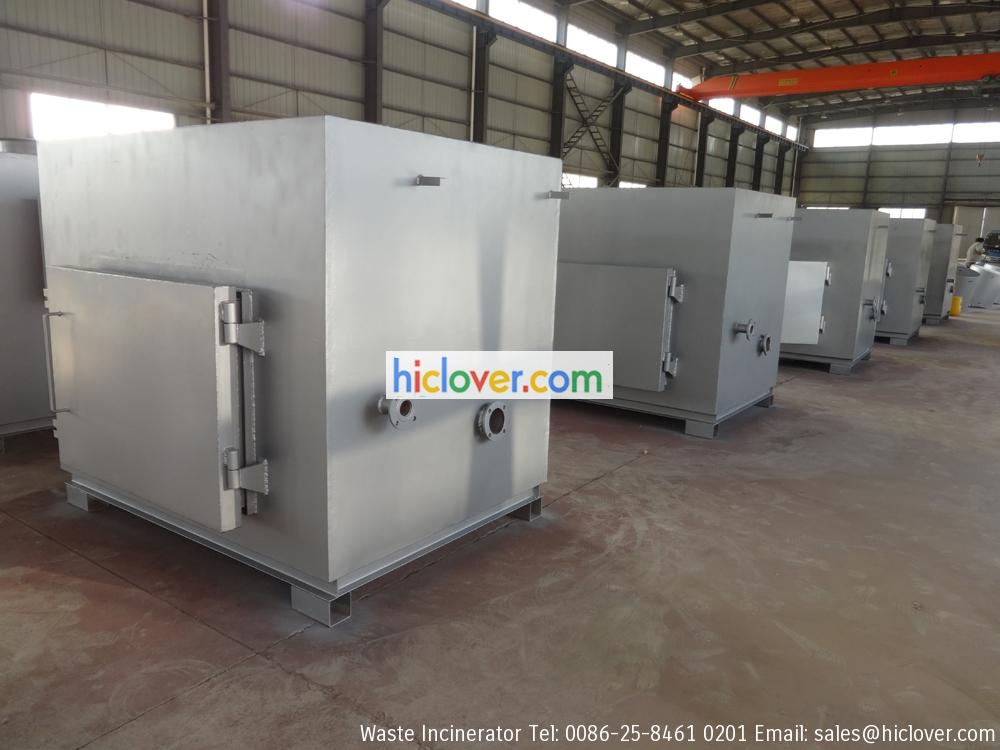
10 Kg Per Hour Incinerator

Basic Info.

Model NO.:pet incinerators
Export Markets:Global

Product Description

Technology Respond(FAQ) 

Q: What is kind of waste can use in this equipment? 
A: This equipment for medical waste, pet animal, Municipal waste, live waste. Prohibit any explosive and radiation material, liquid waste and gas waste. 

Q: Incinerator Smoke Standard 
A: China Government Standard: No. GB18484-2001. 

Q: Treatment capacity 
A: Average Capacity calculated by medical waste(lower calorific power (L. C. P): 3.0TH Kcal/Kg per hour), not mean any waste material. The animal/pet combustion rate around 2/3 of average capacity. 

Clover incinerator use time per day up to 24 hours. Between each feed/combustion time, there are about 0.5-1 hours cooling time and time for feeding waste. Actual combustion time per day is around 16 hours. The lifetime of incinerator between 5-10 year according to use. 

Generally, we proposal small laboratory, small clinic use capacity under 20 kgs per hour. When incinerator use in hospital, please calculate the waste output capacity around 2kgs per people per day. If there are 200 sickbed in the hospital, that’s mean you need one incinerator capacity around 400kgs per day, change to capacity per hour is around 30-40 kgs per hour. According the operation time per day, waste material, budget, development, etc, you can use capacity from 30-50 kgs per hour incinerator. 
*How to calculate Animal Cremation Burn Rate: 2/3 of the medical waste. 

Q: Assembly and Testing 
A: We supply all documents and incinerators easy to installation and operation. Customer can send people come to our factory to learn installation and operation. China incinerator manufacturer and exporter, crematorium manufacturers, double chamber incinerator, incinerator manufacturer in china, incinerator manufacturers china, Generally, We do not send engineer to local site if not request. The dispatch cost is extra according to order. 

Q: Combustion Temperature 
A: The first combustion chamber: 800-1000 centi degree. 
The second combustion chamber: 1000-1200 centi degree. 

Q: Incinerator Control Mode 
A: Default Control mode is common control case. PLC mode according to model and order. 

Q: Operation and maintenance costs 
A: Operation cost according to fuel consumption rate and power/staff, etc. 

Annual around $500-$1000USD per year maintenance according model, use situation. 

One person can service 02 unit incinerators. The staff should have basic electrician knowledge to operate/inspect/maintaince incinerator/burner/blower according to operation user guider, and know risk of medical waste to protect worker self with necessary protection element. 

Q: The Residency time in secondary combustion chamber 
A: 02 sec.

Items/Model TS10(PLC) TS20(PLC) TS30(PLC) TS50(PLC) TS100(PLC)
Burn Rate 10 kg/hour 20 kg/hour 30 kg/hour 50 kg/hour 100 kg/hour
Feed Capacity 20kg 40kg 60kg 100kg 200 kg
Control Mode PLC PLC PLC PLC PLC
Combustion Chamber 100L 210L 330L 560L 1200L
Internal Dimensions 50x50x40cm 65x65x50cm 75x75x60cm 100x80x70cm 120x100x100cm
Secondary Chamber 50L 110L 180L 280L 600L
Smoke Filter Chamber Yes Yes Yes Yes Yes
Feed Mode Manual Manual Manual Manual Manual
Voltage 220V 220V 220V 220V 220V
Power 0.5Kw 0.5Kw 0.5Kw 0.7Kw 0.7Kw
Oil Consumption (kg/hour) 5.4–12.6 7.8–16.3 10.2–20 12.1–24 14–28
Gas Consumption (m3/hour) 6.2–11.4 8–15.7 9.8–20 9.9–26.1 10–32.2
Temperature Monitor Yes Yes Yes Yes Yes
Temperature Protection Yes Yes Yes Yes Yes
Oil Tank 100L 100L 100L 100L 200L
Feed Door 30x30cm 45x40cm 55x50cm 70x55cm 80x60cm
Chimney 3Meter 3Meter 5Meter 5Meter 10Meter
Chimney Type Stainless Steel Stainless Steel Stainless Steel Stainless Steel Stainless Steel
Residency Time 2.0 Sec. 2.0 Sec. 2.0 Sec. 2.0 Sec. 2.0 Sec.
Gross Weight 1500kg 2200kg 3000kg 4500kg 6000kg
External Dimensions 140x90x120cm 160x110x130cm 175x120x140cm 230x130x155cm 260x150x180cm

Incinérateurs de déchets médicaux

Informations de base.

N ° de Modèle: incinérateurs de bétail
Marchés d’exportation: mondiaux

Description du produit

Nanjing Clover Medical Technology Co., Ltd.

Nanjing Clover Medical Technology Co., Ltd. est l’un des principaux fabricants d’incinérateurs de déchets en Chine. Nous sommes un fabricant local et l’un des plus grands exportateurs de Chine. L’équipement technique d’incinérateur pyrolytique est le principal traitement des déchets dans le monde entier, pour les déchets médicaux, la crémation des animaux de compagnie et autres déchets solides. La capacité de 10 kg / h. Jusqu’à 500 kg / heure, jusqu’à 6 tonnes par jour. Incinérateur pour animaux de compagnie, incinérateur pour animaux, prix de l’incinérateur pour animaux, petit incinérateur, fabricant d’incinérateur de déchets en Chine, incinérateur à petite échelle, actuellement, nous fournissons différentes séries pour les besoins des clients locaux et concevons un incinérateur mis à jour avec notre technologie de pointe. La conception mise à jour de notre gamme d’incinérateurs en fait l’un des plus rentables au monde.

Principales caractéristiques:
* Tous les modèles avec double chambre de combustion. * selon commande
* Cheminée / cheminée en acier inoxydable, longue durée de vie. * selon commande
* Haute température, longue durée de vie de l’incinérateur.
* Installation gratuite ou minimale sur site.
* Taux de combustion élevé, de 10 kg à 500 kg par heure, jusqu’à 6 tonnes par jour.
* Plan de contrôle PLC pour un fonctionnement intelligent. * selon commande
* Nouveau design pour les entreprises de crémation d’animaux de compagnie.
* Garantie d’un an sur l’incinérateur et les pièces en stock.

L’atelier d’usine local dans la zone de développement économique de liuhe, la banlieue de Nanjing et le bureau d’affaires local dans le centre-ville. À l’heure actuelle, le marché des produits de la gamme d’incinérateurs couvre la région de l’ancienne Union soviétique, les pays d’Afrique, les pays d’Asie et la région du Moyen-Orient.
Depuis l’année 2010, nous avons négocié avec la technologie mise à jour des fabricants européens et américains et établi des relations de coopération sur le territoire du marché chinois. Malheureusement, la concurrence sur le marché des autres pays, la discrimination des pays et les inquiétudes concernant les droits de propriété intellectuelle provoquent finalement un échec. Actuellement, nous investissons plus d’efforts, de fonds et de développement technologique dans notre propre marque, nous devons être l’un des plus grands équipements d’incinération au monde. Nous avons une société de branche commerciale pour un service professionnel à l’exportation.

Articles / modèle TS10 (API) TS20 (API) TS30 (API) TS50 (API) TS100 (API)
Taux de brûlure 10 kg / heure 20 kg / heure 30 kg / heure 50 kg / heure 100 kg / heure
Capacité d’alimentation 20 kg 40 kg 60 kg 100 kg 200 kilogrammes
Mode de contrôle PLC PLC PLC PLC PLC
Chambre de combustion 100 L 210 L 330 L 560 L 1200 L
Dimensions internes 50x50x40cm 65x65x50cm 75x75x60cm 100x80x70cm 120x100x100 cm
Chambre secondaire 50 L 110 L 180 L 280 L 600 L
Chambre de filtre à fumée Oui Oui Oui Oui Oui
Mode d’alimentation Manuel Manuel Manuel Manuel Manuel
Tension 220V 220V 220V 220V 220V
Pouvoir 0,5 Kw 0,5 Kw 0,5 Kw 0,7 kW 0,7 kW
Consommation d’huile (kg / heure) 5,4–12,6 7,8–16,3 10,2–20 12,1–24 14-28
Consommation de gaz (m3 / heure) 6,2–11,4 8–15,7 9,8–20 9,9–26,1 10–32,2
Moniteur de température Oui Oui Oui Oui Oui
Protection de la température Oui Oui Oui Oui Oui
Cuve à mazout 100 L 100 L 100 L 100 L 200 L
Porte d’alimentation 30x30cm 45 x 40 cm 55 x 50 cm 70 x 55 cm 80x60cm
Cheminée 3 mètres 3 mètres 5 mètres 5 mètres 10 mètres
Type de cheminée Acier inoxydable Acier inoxydable Acier inoxydable Acier inoxydable Acier inoxydable
Temps de résidence 2,0 sec. 2,0 sec. 2,0 sec. 2,0 sec. 2,0 sec.
Poids brut 1 500 kg 2200 kg 3000 kg 4500 kg 6000 kg
Dimensions extérieures 140x90x120cm 160x110x130cm 175x120x140cm 230x130x155cm 260x150x180cm

Incinerator Primary Combustion Chamber

HICLOVER now offer a full range of containerized incineration systems, placing us at the forefront of the latest transportation and industrial 
trends. Containerization enables immediate waste management as the units are pre-assembled and pre-installed.
Containerization is the most feasible and viable option in contrast to the construction of on-site facilities and housing structures, 
eliminating the man power and costs involved. The system has the added benefit of total mobility (both local and international), and is ideal 
for military and civil camps and remote locations where infrastructure is scarce.
Incineration is the most obvious solution for total destruction of municipal waste, avoiding all the direct and indirect risks associated with 
other disposal methods.
Incineration perfectly fits into a trend of treating waste in a safe way, and if possible, at the same place where it was generated to avoid 
cross-contamination risk and to keep waste treatment costs at acceptable level.

WWW.HICLOVER.COM|Waste Incinerators |Auto Roll Air Filters

Nanjing Clover Medical Technology Co.,Ltd.

Tel:  +86-25-8461 0201   
Website: www.hiclover.com  
Email: [email protected]
Email: [email protected]  

Gas Fired Incinerators

Basic Info.

Export Markets:Global

Additional Info.

Trademark:CLOVER

Product Description

Nanjing Clover Medical Technology Co., Ltd. Is a leading waste incinerator manufacturer in China. We are local manufacturer and one of the largest exporter of China. Pyrolytic incinerator equipment technical is main waste treatment all of the world, for Medical Waste, Animal Incineration, non incineration medical waste treatment technologies, oil and gas model images, oil fired incenerator 50 kg, oil fired incinerator, oil fired incinerator manufacturers, Pet cremation and other Solid wste. The capacity from 10kgs/Hr. To 500kgs/Hr., up to 6ton per day. Presently, we supply different series for local customer requirements and design updated incinerator with our leading technology. The updated design feature of our range of incinerators make them one of the most cost effective in the world. 

Application Scope: 
1. Hospital& clinic: Iatric Waste, Infectious Waste, Dressing, Bio-Waste, Medicine. 
2. Slaughter House &Pet Hospital &Farm: Dead Animal, Bio-Waste. 
3. Community & Sea Port & Station: Municipal Solid Waste, etc. 
4. Laboratories, Remote Locations, Disaster Relief Operations, Animal Cremation

Items/Model YD-10C YD-20C YD-30C YD-50C
Burning Rate (kgs/Hour) 10 kgs/Hr. 20 kgs/Hr. 30 kgs/Hr. 50 kgs/Hr.
Feed Capacity (kgs) 40 kgs 40 kgs 50 kgs 80 kgs
Equipment Weight 1200 kgs 1200 kgs 1800 kgs 2200 kgs
Primary Chamber (Liters) 200 200 250 400
Secondary Chamber (Liters) 140 140 140 140
External Dimensions (cm) 170x140x160 170x140x160 170x140x190 180x160x200
Internal Dimensions (cm) 55x55x65 55x55x65 55x55x85 70x70x85
Oil Tank(Liters) 50 100 100 150
Door Opening (cm) 38 x 48 38 x 48 38 x 48 45×55
Chimney (M) 5 5 5 5
Chimney Type Stainless Steel Stainless Steel Stainless Steel Stainless Steel
Secondary Chamber  YES YES YES YES
Mix-Combustion Chamber YES YES YES YES
Smoke Filter Chamber YES YES YES YES
Combustion Fuel Oil/Gas Oil/Gas Oil/Gas Oil/Gas
Residency Time 2.0 Sec. 2.0 Sec. 2.0 Sec. 2.0 Sec.
Temperature Monitoring YES YES YES YES

Programme on Small Scale Medical Waste Incinerators for Primary Health Care Clinics in South Africa

TABLE OF CONTENTS

  1. OBJECTIVE OF THE PROGRAMME 4
  2. STRUCTURE OF THE PROGRAMME 4
  3. COLLABORATORS INVOLVED IN THE PROGRAMME 4
  4. STAKEHOLDERS INVOLVED IN THE PROGRAMME 4
  5. LABORATORY TRIALS 5
  6. FIELD TRIALS 13


1.     OBJECTIVE OF THE PROGRAMME


The objective of the programme is to select technical criteria suitable for tender specification purposes that will enable the South African Department of Health to obtain the services and equipment necessary for the primary health care clinics to carry out small-scale incineration for the disposal of medical waste.


2.     STRUCTURE OF THE PROGRAMME


The test programme is being carried out in phases, as follows:

Phase 1         A scoping study to decide the responsibility of the different parties and

consensus on the test criteria and boundaries of the laboratory tests. The criteria for accepting an incinerator on trial was approved by all parties involved.

Phase 2         Laboratory tests with a ranking of each incinerator and the selection of the incinerators to be used in the field trials.

Phase 3         Completion of field trials, to assess the effectiveness of each incinerator under field conditions.

Phase 4         Preparation of a tender specification and recommendations to the DoH for the implementation of an ongoing incineration programme.


This document provides feedback on phases 2 and 3 of the work.


3.     COLLABORATORS INVOLVED IN THE PROGRAMME


SA Collaborative Centre for Cold Chain Management SA National Department of Health

CSIR

Pharmaceutical Society of SA World Health Organisation UNICEF


4.     STAKEHOLDERS INVOLVED IN THE PROGRAMME


The following stakeholders participated in the steering committee:


  • Dept of Health (National & provincial levels) (DoH)
  • Dept of Occupational Health & Safety (National & provincial levels)
  • Dept of Environmental Affairs & Tourism (National & provincial levels) (DEAT)
  • Dept of Water Affairs & Forestry (National & provincial levels) (DWAF)
  • Dept of Labour (National & provincial levels) (DoL)
  • National Waste Management Strategy Group
  • SA Local Government Association (SALGA)
  • SA National Civics Organisation (SANCO)
  • National Education, Health and Allied Workers Union (NEHAWU)


  • Democratic Nurses Organisation of SA (DENOSA)
  • Medecins Sans Frontieres
  • SA Association of Community Pharmacists
  • Mamelodi Community Health Committee
  • Pharmaceutical Society of SA
  • CSIR
  • UNICEF
  • WHO
  • SA Federation of Hospital Engineers


International visitors:

  • Dr Luiz Diaz – WHO Geneva and International Waste Management , USA
  • Mr Joost van den Noortgate – Medecins Sans Frontieres, Belgium


5.     LABORATORY TRIALS


5.1.   Objective of the laboratory trials


  • Rank the performance of submitted units to the following criteria:

y Occupational safety

y Impact on public health from emissions

y The destruction efficiency

y The usability for the available staff


  • The panel of experts for the ranking consisted of a:

y Professional nurse; Mrs Dorette Kotze from the SA National Department of Health

y Emission specialist; Dr Dave Rogers from the CSIR

y Combustion Engineer; Mr Brian North from the CSIR


5.2.   Incinerators received for evaluation


Name used in report Model no. Description Manufacturer
C&S Marketing

incinerator

SafeWaste Model Turbo

2000Vi

Electrically operated fan supplies combustion air

– no auxiliary fuel

C&S Marketing cc.
Molope Gas incinerator Medcin 400 Medical

Waste Incinerator

Gas-fired incinerator Molope Integrated

Waste Management

Molope Auto incinerator Molope Auto Medical

Waste Incinerator

Auto-combust incinerator – uses wood

or coal as additional fuel to facilitate incineration

Molope Integrated

Waste Management


Name used in report Model no. Description Manufacturer
PaHuOy

incinerator

Turbo Stove Auto-combust unit,

using no additional fuel or forced air supply

Pa-Hu Oy


5.3.   Emission testing: laboratory method


Sampling of emissions followed the US-EPA Method 5G dilution tunnel method for stove emissions. Adjustments to the design were made to account for flames extending up to 0.5 m above the tip of the incinerator and the drop out of large pieces of ash. Emissions were extracted into a duct for isokinetic sampling of particulate emissions. The sampling arrangement is shown by a schematic in Figure 1. A photograph of the operation over the Molope gas fired incinerator unit is shown in Figure 2.


All tests were performed according to specified operating procedures. The instructions provided by the supplier of the equipment were followed in the case of the C&S Marketing Unit. No operating procedures were supplied with the Molope Gas, Molope auto-combustion and PaHuOy units. These procedures were established by the CSIR personnel using their previous experience together with information provided by the supplier.


Test facilities were set up at the CSIR and measurements were carried out under an ISO9001 system using standard EPA test procedures or modifications made at the CSIR.


Figure 1. Schematic diagram of the laboratory set-up


Figure 2:Photograph of air intake sampling hood over Molope gas incinerator


5.4.   RANKING RESULTS OF THE LABORATORY TRIALS


Using the criteria listed under section 4.1 above, the incinerators were ranked as followed:


  Molope gas-fired

unit

Molope wood-fired

unit

C&S electric

unit

PaHuOy wood-fired

unit

Safety 6.8 4.8 5.5 3.3
Health 5.5 3.5 4.3 2.3
Destruction 9 2 6 1
Usability 2 3 3 5
Average 5.8 3.3 4.7 2.9


5.5.   EMISSION RESULTS OF THE LABORATORY TRIALS


Quantitative measurements were used to rank the units in terms of destruction efficiency and the potential to produce hazardous emissions.


Conformance to the South African Department of Environmental Affairs and Tourism’s (DEAT) recommended guidelines on emissions from Large Scale Medical Waste Incinerators is summarized in Table 1. The measurements are listed1 in Table 2.


Table 1: Summary qualitative results


Parameter Measured Units Molope


Gas-fired

Molope


Wood-fired

C&S


Electric

PaHuOy


Wood-fired

SA DEAT

Guidelines

Stack height m × × × × 3 m above

nearest building

Gas velocity m/s × × × × 10
Residence time s × × × × 2
Minimum combustion

temperature

ºC 4 × × × > 850
Gas combustion

efficiency

% × × × × 99.99
Particulate emissions mg/Nm3 4 × 4 × 180
Cl as HCl mg/Nm3 × 4 4 × < 30
F as HF mg/Nm3 4 4 4 4 < 30
Metals mg/Nm3 4 × × 4 < 0.5 and

< 0.05


1 Emission concentrations are reported in accordance with the South African reporting requirements, ie, normalized to Normal Temperature (0

oC) and Pressure (101.3 kPa) and corrected to a nominal concentration of

8 % of CO2 on a dry gas basis. If a measurement fell below the detection limit for the method is it either reported as the detection limit or as N.D., ie, not detectable.


Table 2: Detailed quantitative results


Parameter Measured *


Units


Molope gas


Molope auto


C&S


PaHuOy


SA Process Guide1


Comments


Stack height


m


1.8


1.8


1.9


0.3


3 m above nearest building


None of these unite has a stack. The height of the exhaust vent is taken as the stack height. If it is above the respiration zone of the operator it provides some protection from exposure to smoke.


Gas velocity


m/s


0.8


0.5


1.1


0.5


10


Gas velocities vary across the stack for the Molope gas, Molope auto-combustion, and the PaHuOy units.


Residence time


s


0.4


0.7


0.6


0.4


2


Residence time is taken to be the total combustion time, and the maximum achievable


Minimum combustion zone temperature

oC  

800 -900


400 – 650


600 – 800


500 – 700


> 850


Molope auto-combustion temperatures are expected to be higher as the centre of the combustion zone is not expected to be at the measurement location.


CO2 at the stack tip


% vol


2.64


3.75


4.9


3.25


8.0


Actual emission concentrations are less than the values reported here, which are normalized to 8 % CO2 and Normal temperature and pressure for reporting purposes. They are lower between 4 to 8 times.


Gas


%


99.91-


98.8 -98.4


99.69-


98.9


99.99


Most accurate measurement in

Combustion 99.70 99.03 the duct where mixing of exhaust
efficiency gases is complete. Results of two

trials.


Particulate emissions entrained in exhaust gas

mg/Nm3  

102


197


130


338


180


The total emissions are the sum of the both entrained and un- entrained particulates. Emissions are lower than expected for such units and this is attributed to the absence of raking which is the major source of particulate emissions from incinerators without an emission control

system.


Particulate fall- out

mg/Nm3  

42


105


n.d.


n.d.


Large pieces of paper and cardboard ash rained out of the emissions. Totalling 0.8 to 2 g over a +/- 2 minute period.


Soot in particulates


%


42.2


58.1


48.7


84.8


Correlates directly with gas combustion efficiency


1 Emission concentrations are reported in accordance with the South African reporting requirements, ie, Normalized to Normal Temperature (0

oC) and Pressure (101.3 kPa) and corrected to a nominal concentration of

8 % of CO2 on a dry gas basis. If a measurement fell below the detection limit for the method is it either reported as the detection limit or as N.D., ie, not detectable.


Parameter Measured *


Units


Molope gas


Molope auto


C&S


PaHuOy


SA Process Guide1


Comments


% ash residual from medical waste


%


14.8


12.9


15.6


21.7


Measurement of destruction efficiency of the incinerator. Typical commercial units operate at 85-90 % mass reduction. PaHuOy is lower due to the melting and unburnt plastic.


Cl as HCl

mg/Nm3  

46


13


25


35 & 542


< 30


PaHuOy chloride concentrations varied considerably. This is expected due to the variability of the feed composition.


F as HF

mg/Nm3  

< 6


< 1


<2


< 1


< 30


Fluoride not found in this waste.


Arsenic (As)

mg/Nm3  

< 0.2


< 0.2


< 0.2


< 0.2


0.5


Arsenic is not expected as a solid.


Lead (Pb)

mg/Nm3  

< 0.4


< 0.4


< 0.4


< 0.4


0.5


Lead not expected in waste


Cadmium (Cd)

mg/Nm3  

< 0.2


< 0.2


< 0.2


< 0.2


0.05


Sensitivity of the x-ray method is adequate for ranking. Higher sensitivity not sought for this trial.


Chromium (Cr)

mg/Nm3  

< 0.1


0.7


0.7


< 0.1.


0.5


Chromium relative to iron ranges between 12 and 25% which is consistent with stainless steel needles


Manganese (Mn)

mg/Nm3  

< 0.1


0.3


0.3


< 0.1


0.5


Manganese may be a component in the stainless steel needle.


Nickel (Ni)

mg/Nm3  

< 0.1


0.3


< 0.1


< 0.1


0.5


Nickel may be a component in the needle.


Antimony (Sb)

mg/Nm3  

< 0.2


< 0.2


< 0.2


< 0.2


0.5


Not expected in this waste.


Barium (Ba)

mg/Nm3  

< 0.5


< 0.5


< 0.5


< 0.5


0.5


Lower sensitivity due to presence in the filter material


Silver (Ag)

mg/Nm3  

< 0.2


< 0.2


< 0.2


< 0.2


0.5


Not expected in this waste.


Cobalt (Co)

mg/Nm3  

< 0.1


< 0.1


< 0.1


< 0.1


0.5


Cobalt might be present in stainless steel.


Copper (Cu)

mg/Nm3  

< 0.5


< 0.5


< 0.5


< 0.5


0.5


Lower sensitivity due to copper in the sample blanks. May be background in the analytical equipment.


Tin (Sn)

mg/Nm3  

< 0.2


< 0.2


< 0.2


< 0.2


0.5


Tin not expected in this waste.


Vanadium (V)

mg/Nm3  

< 0.1


< 0.1


0.4


< 0.1


0.5


Vanadium might be present in stainless steel.


Thallium (Tl)

mg/Nm3  

< 0.4


< 0.4


< 0.4


< 0.4


0.05


Not expected in this waste. Sensitivity of the x-ray method is adequate for ranking. Higher sensitivity not sought for this trial.


5.6.   MAIN FINDINGS OF THE LABORATORY TRIALS


The main conclusions drawn from the trials are as follows:


:::          All four units can be used to render medical waste non-infectious, and to destroy syringes or render needles unsuitable for reuse.

:::                           The largest potential health hazard arises from the emissions of smoke and soot.              (the combustion efficiency of all units lies outside the

regulatory standards). The risk to health can be reduced by training operators to avoid the smoke or by installation of a chimney at the site.

:::          The emissions from small scale incinerators are expected to be lower than those from a wood fire, but higher than a conventional fire-brick-

lined multi-chambered incinerator.

:::          Incomplete combustion, and the substantial formation of smoke at low height rendered the PaHuOy unit unacceptable for field trials. Figure 3

below shows this unit during a trial burn. Molten plastic flowed out of

the incinerator, blocked the primary combustion air feed vents, and burnt outside of the unit.


Figure 3: Photo of PaHuOy incinerator during trial burn


5.7.   COMPARISON OF THE FIELDS TRIALS WITH THE LABORATORY TRIALS


The CSIR performed a quantitative trial in the field for gas combustion efficiency, temperature profiles and mass destruction rate on the Molope Auto wood-fired unit at the Mogale Clinic.


The results of this trial are compared to the laboratory trial results below:


  • Waste loading: Disposable rubber gloves were observed in addition to needles syringes, glass vials, bandages, dressings, and paper w
  • Temperatures and combustion efficiency: The same performance in gas combustion        efficiency   was    obtained    for    wood    .

Temperatures were higher but for a shorter time and this was

correlated with the type of wood available to the clinic. The fuel was burnt out before the medical waste was destroyed completely and this resulted in lower temperatures, lower combustion efficiency and higher emissions while burning the waste.

  • Emissions: Large amounts of black smoke were observed and this was correlated directly to cooling of the unit as the wood fuel was exhausted

prior to full ignition of the waste.

  • Destruction efficiency: The destruction efficiency was similar to that in the laboratory measurem
  • Usability: The unit is difficult to control as the result of the variability of the quality of wood
  • Acceptability: the smoke was not acceptable to the clinic, the community, or the local


It was concluded that:

  • The performance with fuel alone indicates that laboratory trial data can be used to predict emissions in the
  • The Molope Auto unit is too difficult to control for the available staff and fuel at the


5.8.   RECOMMENDATIONS FROM THE LABORATORY TRIALS


The following recommendations are made as the result of the laboratory trials:

:::     A comprehensive operating manual must be supplied with each unit.

Adequate training in the operation of the units must be provided, especially focussed on safety issues.

:::     It is recommended that the height of the exhaust vent on all units be

addressed.     In order to facilitate the dispersion of emissions and reduce the exposure risk of the operators.

:::     The suppliers of the incinerators must provide instructions for the safe handling and disposal of ash.


5.9.   RECOMMENDATIONS FROM THE STEERING COMMITTEE


After completion of the laboratory trials, the project steering committee recommended that the Molope Gas and C&S Marketing units be submitted for field testing. The Molope Auto was recommended for field testing on the condition that the manufacturer modified the ash grate so as to prevent the spillage of partially burnt needles and syringes.


6.     FIELD TRIALS


6.1.   OBJECTIVE OF THE FIELD TRIALS


The objective of the field trials was to obtain information in the field and assess the strengths and weaknesses of each of the incinerators during use at primary health care clinics.


A participative decision making process was used for the trials. It was based on expert technical evaluation by the CSIR and the National Department of Health as well as participation in the trials by experienced end users and participating advisors. All decisions were made by the Steering Committee, which consisted of representatives of stakeholders in the clinical and medical waste disposal process. These included representatives from the National, Provincial, and Local Government departments of Health, Safety and the Environment, as well as Professional Associations, Unions, NGOs, UNICEF, the WHO and local community representatives.


6.2.   CLINIC SELECTION


The Provinces in which the trials were done selected clinics for the field trials. The criteria set by the Steering Committee for the selection of the clinics were the following:


  • Location must be rural or under-serviced with

y No medical waste removal

y No existing incineration

y No transport

  • It must be in a high-density population area
  • Acceptable environmental conditions must prevail
  • Community acceptance must be obtained
  • Operator skill level to be used must be at a level of illiteracy


The clinics that were selected were as follows:


  • Steinkopf Clinic – Northern Cape Province – Gas incinerator


  • Marydale Clinic – Northern Cape Province – Gas incinerator
  • Mogale Clinic – Gauteng Province             – Auto combustion

incinerator, wood-fired.

  • Chwezi Clinic – KwaZulu-Natal Province – Gas incinerator
  • Ethembeni Clinic- KwaZulu-Natal Province – Auto-combustion electrical

incinerator


MAP OF SOUTH AFRICA INDICATING WHERE THE CLINICS ARE SITUATED


NORTHERN PROVINCE


GAUTENG PROVINCE


NORTH WEST PROVINCE

MPUMALANGA PROVINCE


FREE STATE PROVINCE


NORTHERN CAPE PROVINCE


KWAZULU-NATAL PROVINCE


I:/UnitPublic/Valerie/Technet 99/Working papers/Session 3/rogers.doc


EASTERN CAPE PROVINCE


WESTERN CAPE PROVINCE


6.3.   COORDINATION OF THE TRIALS


The criteria for the ranking of the incinerators in accordance with performance in the field were:


  • Safety (occupational and public health)
  • Destruction capability
  • Usability
  • Community acceptability


The South African National Department of Health coordinated the field trials.


Information regarding the field trials as well as questionnaires were supplied to the coordinators in the participating provinces.


The team in the field consisted of the operator, supervisor and inspector (coordinator). The manufacturer of the incinerators did the training of the operators.


The questionnaires used during the trials were set so as to obtain information with regard to the criteria set for the ranking of the incinerators in accordance with performance in the field. The questionnaires were received from the clinics at two-weekly intervals.


Questions with regard to the criteria were the following:


A.  SAFETY (occupational and public health)


  • Smoke Emission

y Volume and thickness

y Colour

y Odour

  • Ash Content
  • Are the filled sharps boxes and soiled dressings stored in a locked location while waiting to be incinerated?


B.  DESTRUCTION CAPABILITY


  • Destruction Rate

y Complete

y Partial

y Minimal

y Residue content


C.  USABILITY (for the available staff)

  • Can the incinerator be used easily?


  • Is the process of incineration safe?
  • Has training been successful?
  • Is protective clothing such as gloves, goggles, dust masks and safety boots available?


D.  COMMUNITY ACCEPTABILITY


  • What is the opinion of the following persons on the use of the incinerator?

y Operator

y Nurse

y Head of the clinic

y Local Authority representative

y Community leader


During the trials the clinics were visited and the incinerators evaluated by members of the Steering Committee and the CSIR as well as Dr L Diaz from WHO, Mr M Lainejoki from UNICEF and the coordinator from the National Department of Health.


6.4.   QUESTIONNAIRE RESULTS


6.4.1.      MOGALE CLINIC


Type of incinerator at the clinic: Molope Auto-Combustion (Fired with wood)


Figure 4 & 5: Molope Auto wood-fired incinerator during field trials at Mogale clinic


A.               SAFETY (occupational and public health)


  1. The process of incineration with this unit was considered by the operator, supervisor and the inspector as unsafe because there is no protective cage around the During the process the incinerator becomes very hot and this could result in injury to the operator.


  1. The smoke emission of this incinerator had a volume and thickness which was heavy and black, with a distinct unpleasant odour, and was considered This could cause a pollution problem.


B.               DESTRUCTION CAPABILITY


  1. The needles and vials were not completely destroyed but were rendered unsuitable for re-use.


  1. The soft medical waste was completely destroy


C.               USABILITY


Difficulty in controlling the operating temperature and avoiding smoke emissions made this incinerator user unfriendly.


D.               COMMUNITY ACCEPTABILITY


As a result of the heavy, black smoke emission the unit was not acceptable to the community.


6.4.2.      ETHEMBENI CLINIC:


Figure 6: C&S Marketing Auto Combust Electrical Incinerator At Ethembeni Clinic


Type Of Incinerator: C&S Auto-Combustion (Uses an electrically actuated fan)


A.               SAFETY (occupational and public health)


  1. The operator, supervisor and inspector considered this incinerator easy to operate with no danger to the Removal of the ash from the drum for disposal in a pit is, however, considered difficult, as the drum is heavy. Removal of the incinerator lid before it has been allowed to cool has been identified as a potential danger to the operator.


  1. Emission of smoke from this incinerator was not considered ex The volume and thickness was evaluated as moderate with no pollution experienced.


B.               DESTRUCTION CAPABILITY


  1. The needles and vials were not completely destroyed but were rendered unsuitable for re-use.
  2. The soft medical waste was completely destroy


C.               USABILITY


Considered user friendly by operator, supervisor and inspector.


D.               COMMUNITY ACCEPTABILITY


The incinerator was accepted by the community and was not considered to be harmful.


6.4.3.      CHWEZI CLINIC, MARYDALE CLINIC AND STEINKOPF CLINIC:


Type of incinerator: Molope Gas incinerator


Figure 7:       Molope Gas incinerator during field trials at Marydale clinic


A.               SAFETY (occupational and public health)


  1. The operator, supervisor and inspector considered this incinerator easy to operate with minimal danger to the
  2. Smoke emissions were not excessive and were reported to be minim


B.               DESTRUCTION CAPABILITY


  1. Sharps not completely destroyed but were rendered unsuitable for re-use.


  1. Soft medical waste completely destroy


C.               USABILITY


This incinerator was considered user friendly.


D.               COMMUNITY ACCEPTABILITY


The incinerator was accepted by the community and was not considered to be harmful.


6.5.   RANKING


INCINERATOR RANKING
Molope Gas 1
C&S Auto-Combustion (Uses electrical fan)  

2

Molope Auto- Combustion (Fired with

wood, coal also an option)


3


6.6.   OUTCOME OF THE FIELD TRIALS


Incinerator Safety Destruction Capability Usability Community Acceptability
Molope Gas Good Good Good Good
C&S Auto- Combustion

(Uses Electricity)


Good


Good


Good


Good

Molope Auto-

Combust Incinerator

Un-Acceptable Good Un-Acceptable Un-Acceptable


Как выбрать качественный рулонный воздушный фильтр

22 мая 2019 г. Индустрия новостей 210 просмотров

В настоящее время проблема качества воздуха становится все более серьезной, поэтому для многих семей очень важно покупать воздушные фильтры. Существует много типов воздушных фильтров, которые можно условно разделить на намоточные, складывающиеся, плоские, мешочные и так далее. Что ж, можно ответственно сказать, что воздушный фильтр рольставни – это относительно высококлассный воздушный фильтр с продуманной конструкцией, а также отличный фильтрующий эффект во время работы.

Стоит отметить, что качество воздушных фильтров для рольставен, представленных на рынке, сейчас варьируется от хорошего до плохого, и мы действительно нуждаемся в тщательной проверке. Так как же нам выбрать высококачественные воздушные фильтры, чтобы избежать покупки некачественных и неэффективных фильтров?

Тактико-технические характеристики спирального воздушного фильтра

Внутреннюю базовую операционную систему вращающегося воздушного фильтра можно разделить на две части: первая – это система фильтрации, а вторая – система очистки. Разница между спиральным воздушным фильтром и другими типами воздушных фильтров заключается в том, что он имеет строгий контроль перепада давления, который может контролировать необходимость замены фильтрующего материала и лучше контролировать время замены фильтрующего материала, чтобы обеспечить наилучшую фильтрацию эффективность, позволяющая избежать ненужной траты ресурсов.

Как выбрать качественный рулонный воздушный фильтр

1. Чтобы увидеть, хорошее или плохое качество фильтра, самое главное – посмотреть на эффективность работы, потому что он может наиболее четко определить разницу между хорошим и плохим качеством. Чем выше эффективность, тем больше доказательств того, что система фильтрации более совершенная и качественная, и может решить проблему качества воздуха во всех аспектах.

2. Недостаточно просто посмотреть на эффективность работы, необходимо также обратить внимание на влияние сопротивления. Сопротивление – это необходимое вложение средств в воздушный фильтр, и его роль в нем напрямую влияет на фильтрующий эффект фильтра, так что это неизбежно. Но мы можем выбрать фильтр с меньшим сопротивлением, и мы можем снизить часть общих затрат. Это не только для экономии денег, но, что еще более важно, для экономии энергии.

3. Обратите внимание на запыленность. Очевидно, что можно увидеть, что фильтр с большим содержанием пыли имеет большую площадь фильтрации, более высокую эффективность работы и может достигать высококачественных и идеальных эффектов.

Из вышесказанного мы можем знать, что при выборе спирального воздушного фильтра мы должны выбирать воздушный фильтр с высокой эффективностью, низким сопротивлением и большим количеством пыли, чтобы мы могли выбрать высококачественный воздушный фильтр для достижения хорошего качества воздуха. качество Выполняют роль очищения.

URL с дополнительным содержанием: www.ecolead.cn Тел: 025-57138032

DROPPING AND ALSO INCINERATION OF SOLID WASTE

Biomedical Waste Any sort of type of fluid or robust waste which may supply a danger of infection to individuals composed of non-liquid tissue, body parts, blood or blood products as well as body fluids, research laboratory and also veterinary waste including human disease- setting off representatives, as well as disposed of sharps (i.e. syringes, needles, scalpel blades).

Base Ash The program also unburned and non-combustible product that stays at the shed website after burning is complete. This is composed of products remaining to stay in the living room, exhaust piping as well as air pollution control tools where these tools are utilized.

Burn Box A significant metal box used to lose solid waste. Burning air is often offered passively by means of openings or vents cut over lowest level of package. An exhaust pipeline or pile might or might not be attached.

Industrial Camp A short term, seasonal or multi-year center with a capability greater than 15 individuals as well as likewise which has in fact been established for research study, commercial or business purposes. An industrial camp doesn’t have a normal camp or area camp.

Commissioner’s Land Lands that have in fact been relocated by Order-in-Council into the Federal Government of Nunavut. This consists of roads as well as land subject to block land transports. The majority of Commissioner’s Land is located within districts.

Contamination Any sort of sound, warmth, substance or vibration and also includes such numerous additional material since the Priest could prescribe that, where launched right into the ambience,

  • endangers the health, safety or welfare of persons,
  • interferes or is likely to interfere with the normal enjoyment of life or property,
  • endangers the health of animal life, or
  • causes or is likely to cause damage to plant life or to propert

Developed Initiative The reoccuring examination of possibilities for declines as well as the application of adjustments or discharge control upgrades that are practically and also financially useful along with which lead to on-going reductions in exhausts. Identified campaigns include the increase and implementation of waste management preparation that’s focused on air pollution avoidance.

De Novo Synthesis The production of complex particles from simple particles.

Setting The aspects of earth as well as includes

  • air, land and water,
  • all layers of the atmosphere,
  • all organic and inorganic matter and living organisms, and
  • the interacting natural systems that include components referred to in paragraphs (a) to (c) above.

Field Camp A temporary, seasonal or multi-year facility composed of outdoors tents or various other similar short-term frameworks with a capacity of 15 people or less as well as which has been created for research study, business or commercial objectives. An area camp doesn’t include a traditional camp or industrial camp.

Fly Ash Unburned product that is sent right into the air in the sort of smoke or superb bit concern during the burning procedure.

Hazardous Waste An impurity that is a poisonous great and is no longer desired or is pointless because of its preliminary assigned purpose as well as additionally is meant for storage area, reusing, therapy or disposal.

Incineration A treatment technology including the damage of waste by controlled burning .

Changed Burn Barrel A metal drum taken advantage of to shed waste that’s been fastened with gadgets or functions which supply minimal boosted warm production, warm retention in addition to holding time.

Certified Person An individual that has a proper level of experience and also experience in all vital aspects of waste management.

Accountable Party The proprietor or person in charge, control or administration of the waste.

Smoke The gases, bit issue along with all other items of combustion generated right into the setting when a chemical or product is thawed comprising dirt, causes, ash, residue, cinders and also fumes.

Strong Waste Unwanted strong products dropped from a home (i.e. single or many construction residences, various other similar irreversible or short-lived homes), institutional (i.e. associations, government centers, healthcare facilities along with health and health and health centres), business (i.e. stores, eating facilities) or commercial (i.e. mineral, oil as well as gas exploration and expansion ) facility.

Average Camp A seasonal or brief camp utilized primarily for camping, hunting, angling or various other regular or societal jobs. A regular camp doesn’t include a field camp or commercial camp.

Unmodified Burn Barrel A steel drum made use of to shed waste that has not yet been attached with functions or tools which offer enhanced heat generation, warmth retention together with holding time.

Ignored Timber Hardwood that has actually been fertilized, repainted or similarly altered to improve resistance to pests or weathering.

Waste Audit A supply or study of the quantity along with type of waste that is generated at an area.

Unmodified Burn Barrel A steel drum made use of to shed waste that has not been attached with tools or functions which offer enhanced warm generation, warmth retention along with holding time.

Ignored Timber Hardwood that has actually not been chemically fertilized, repainted or likewise altered to increase resistance to pests or weathering.

Waste Audit A supply or study of the quantity in addition to type of waste that is generated at an area.

Пиролитический мусоросжигатель

Базовая информация.

для животных: все
Лекарственная форма: сжигание
Тип: Кремация
Функция: кремация
Экспортные рынки: глобальный

Дополнительная информация.

Торговая марка: нанкинский клевер.
Происхождение: Нанкинский клевер

описание продукта

Исследования и рынки: отходы: руководство по управлению

Обширная информация, включенная в этот единственный том, сделает его наиболее полным охватом отходов на рынке. Он фокусируется на всех основных областях, включая бытовые отходы (компостируемые материалы, бумага, стекло, текстиль, бытовая химия, пластик, вода, электронные отходы), установки для сжигания промышленных и домашних отходов, домашние животные. Крематорий, оборудование для кремации домашних животных, крематорий для домашних животных, печь для сжигания фармацевтических препаратов, этикетка для фармацевтических> отходов, отходы фармацевтических препаратов, общественные отходы (металлы, здания, шины, медицинские батареи, опасные горнодобывающие, ядерные, океанские, военные и космические) и будущее свалки и мусоросжигательные заводы. Включение всех вопросов, связанных с отходами, в один том поможет привести к сравнениям, синергетическим решениям и более информированному обществу. В дополнение к исчерпывающему описанию отходов в этой книге будут предложены лучшие способы решения проблем с помощью переработки, сжигания, захоронения отходов и других процессов.

Cause analysis and troubleshooting of the continuous alarm of the automatic winding air filter buzzer

May 16, 2019 Industry News 208 views

The standard control system of Nanjing Ecolead wrap-up filter is PLC automatic control. During the operation of the actual filter, the buzzer on the electric control cabinet has been alarming. What causes the above problems? What should I do? Deal with the solution:

The buzzer is when the entire roll of filter material is used up, the travel switch will act, and the PLC will send a warning signal when receiving the signal to remind the filter material to be replaced. The filter material alarm remote dry contact (A3, A4) in the electric control box is also The same function, the main difference between the two is an on-site alarm and a remote alarm. When the alarm signal appears, replace the filter material. Because the alarm signal only appears when the travel switch is activated, check the travel switch at the upper right corner of the front of the device to see if it is normal.
The most common reason is that the silk thread on the filter material wraps the travel switch, and the travel switch is always in the closed state (the line is connected to the normally open contact), and a signal is always sent to the PLC. At this time, just remove these threads. Another possibility is that the limit switch has failed. The identification method is to observe whether there is a red number 1 in the row of X input terminal above the PLC. If there is and always exists, it means that the travel switch is malfunctioning, and you can replace it.

More content URL: www.ecolead.cn Tel: 025-57138032

Debaye sur les émissions de dioxines provenant de l'incinération des déchets

Informations de base.

N ° de modèle: incinérateur double chambre 100 kg par heure de fabrication
Sources de pullution: traitement des déchets solides
Méthodes de traitement: combustion
Marchés d’exportation: mondiaux

Description du produit

Nanjing Clover Medical Technology Co., Ltd. est l’un des principaux fabricants d’incinérateurs de déchets en Chine. Nous sommes un fabricant local et l’un des plus grands exportateurs de Chine. L’équipement d’incinérateur pyrolytique est le principal traitement des déchets dans le monde entier, pour les déchets médicaux, l’incinération animale, la crémation d’animaux de compagnie et le petit incinérateur portable, le petit incinérateur rotatif, l’équipement de crématorium pour animaux à petite échelle, les prix des équipements de crématorium pour animaux à petite échelle, les incinérateurs diesel à petite échelle, autres Solide wste. La capacité de 10 kg / h. Jusqu’à 500 kg / heure, jusqu’à 6 tonnes par jour. Actuellement, nous fournissons différentes séries pour les besoins des clients locaux et concevons un incinérateur mis à jour avec notre technologie de pointe. La conception mise à jour de notre gamme d’incinérateurs en fait l’un des plus rentables au monde.

Articles / modèle YD-200 YD-300 YD-500 YD-600
Taux de combustion (kg / heure) 200 kg / heure 300 kg / heure. 500 kg / heure 600 kg / heure
Capacité d’alimentation (kg) 400 kilogrammes 500 kilogrammes 800 kilogrammes 1100 kilogrammes
Poids de l’équipement 7600 kilogrammes 8300 kilogrammes 13000 kilogrammes 16500 kilogrammes
Chambre primaire (litres) 2000 2400 4000 5500
Chambre secondaire (litres) 500 1200 1500 1500
Dimensions extérieures (cm) 270 x 185 x 380 260 x 220 x 420 320 x 220 x 460 360 x 220 x 475
Dimensions internes (cm) 180 x 115 x 96 220 x 110 x 100 257 x 147 x 108 300 x 147 x 125
Réservoir d’huile (litres) 300 500 500 500
Ouverture de porte (cm) 59 x 81 90 x 110 108 x 128 108 x 128
Cheminée (M) dix dix 14 14
Type de cheminée Acier inoxydable Acier inoxydable Acier inoxydable Acier inoxydable
Chambre secondaire OUI OUI OUI OUI
Chambre de mélange-combustion OUI OUI OUI OUI
Chambre de filtre à fumée OUI OUI OUI OUI
Combustible de combustion Gaz de pétrole Gaz de pétrole Gaz de pétrole Gaz de pétrole
Temps de résidence 2,0 sec. 2,0 sec. 2,0 sec. 2,0 sec.
Surveillance de la température OUI OUI OUI OUI