Archive: December 4, 2021

Another challenge: disposing of waste

A single Ebola patient treated in a U.S. hospital will generate eight 55-gallon barrels of medical waste each day.

Protective gloves, gowns, masks and booties are donned and doffed by all who approach the patient’s bedside and then discarded. Disposable medical instruments, packaging, bed linens, cups, plates, tissues, towels, pillowcases and anything that is used to clean up after the patient must be thrown away.

Even curtains, privacy screens and mattresses eventually must be treated as contaminated medical waste and disposed of.

Dealing with this collection of pathogen-filled debris without triggering new infections is a legal and logistical challenge for every U.S. hospital now preparing for a potential visit by the virus.

In California and other states, it is an even worse waste-management nightmare.

While the U.S. Centers for Disease Control and Prevention recommends autoclaving (a form of sterilizing) or incinerating the waste as a surefire means of destroying the microbes, burning infected waste is effectively prohibited in California, and banned in several other states.

“Storage, transportation and disposal of this waste will be a major problem,” California Hospital Association President C. Duane Dauner warned Sen. Barbara Boxer, D-Calif., in a letter last week.

Even some states that normally permit incineration are throwing up barriers to Ebola waste.

In Missouri, the state attorney general has sought to bar Ebola-contaminated debris from a St. Louis incinerator operated by Stericycle Inc., the nation’s largest medical waste disposal company.

Due to restrictions on burning, California hospital representatives say their only option appears to be trucking the waste over public highways and incinerating it in another state — a prospect that makes some environmental advocates uneasy.

Rules for transport

Under federal transportation guidelines, the material would be designated a Class A infectious substance, or one that is capable of causing death or permanent disability, and would require special approval from the Department of Transportation, hospital representatives say.

“These are some pretty big issues and they need some quick attention,” said Jennifer Bayer, spokeswoman for the Hospital Association of Southern California.

“We fully expect that it’s coming our way,” Bayer said of the virus. “Not to create any sort of scare, but just given the makeup of our population and the hub that we are. It’s very likely.”

The Ebola virus is essentially a string of genetic material wrapped in a protein jacket. It cannot survive a 1,500-degree scorching within an incinerator, or the prolonged, pressurized steam of an autoclave.

“The Ebola virus itself is not particularly hardy,” CDC Director Dr. Thomas Frieden said under questioning on Capitol Hill recently. “It’s killed by bleach, by autoclaving, by a variety of chemicals.”

However, CDC guidelines note that “chemical inactivation” has yet to be standardized and could trigger worker safety regulations.

Getting ready

California health officials recently tried to reassure residents that the state’s private and public hospitals were up to the task and were actively training for the possible arrival of Ebola.

“Ebola does not pose a significant public health risk to California communities at the present time,” said Dr. Gil Chavez, an epidemiologist and deputy director at the California Department of Public Health. “Let me tell you why: Current scientific evidence specifies that people cannot get Ebola through the air, food or water. … The Ebola virus does not survive more than a few hours on impervious surfaces.”

It was unclear whether California officials viewed the waste issue as a potential problem.

Although one-third of the state’s private hospitals and “a few” of its public hospitals reported to Boxer’s office that there would be problems complying with the CDC’s incineration recommendation, and others, a state public health official told reporters he was not aware of any conflicts.

Dr. David Perrott, chief medical officer for the California Hospital Association, said there was also confusion about whether infected human waste could be flushed down the toilet.

“Here’s what we’ve heard from the CDC: It’s OK,” Perrott said. “But then we’ve heard from some sources, that maybe we need to sterilize it somehow and then flush it down the toilet or you have to check with local authorities. It sounds maybe a little gross, but there is a real question about what to do with that waste.”

Overreaction?

Dr. Thomas Ksiazek, a professor of microbiology and immunology of the University of Texas Medical Branch, has said he believes there’s been a lot of overreaction about Ebola medical waste.

“There are other ways to deal with the waste; autoclaving would be chief among them,” Ksiazek said. “The problem is, most hospitals don’t use it for most disposable items. They’re quite happy to bag them up and send them to a regular medical disposal company.”

But Allen Hershkowitz, a senior scientist at the Natural Resources Defense Council, said incineration is simple and effective, and should be available to hospitals to help dispose of the mountain of waste.

Hershkowitz said states began to crack down on medical waste incineration years ago because materials that didn’t need to be burned were being sent to combustors and were emitting dangerous pollutants.

In this case of Ebola medical waste, he said California should reconsider its restrictions.

“There’s no pollutant that’s going to come out of a waste incinerator that’s more dangerous than the Ebola virus,” Hershkowitz said. “When you’re dealing with pathogenic and biological hazards, sometimes the safest thing to do is combustion.”

by: http://www.sfgate.com/news/article/Another-challenge-disposing-of-waste-5909413.php
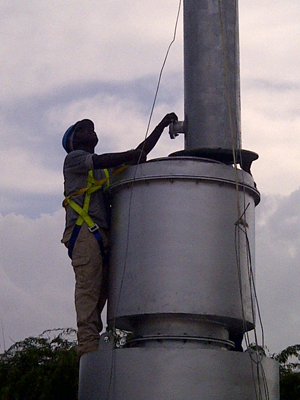
Animal waste management plant inaugurated in Marsa

The new plant would help in reducing energy losses in the incineration process as well as reducing harmful emissions

Wasteserv inaugurated a €12 million animal waste management in Marsa earlier today.

Speaking at the inauguration of the new Wateserv EU-funded autoclave rendering plant for the treatment of animal waste, Wasteserv CEO Tonio Montebello said that the project was part of its drive to improve the country’s waste treatment infrastructure.

Montebello also explained that the plant would result in substantial savings made in the incineration plant, which processes some 6,000 tonnes of waste a year.

Projects manager Jean Luke Zarb said that the problem with the current system was that a lot of energy was being wasted in incinerating water or fats on the carcasses.

“This plant will work essentially as an industrial pressure cooker in that it will dry up the carcasses beforehand,” he said, adding that this would ultimately result in less energy required by the incinerator.

He added that the fats would also be used as fuel for the plant itself, therefore reducing its fuel consumption.

Stressing that the plant would also be used to treat materials coming from Gozo, Montebello said that the new plant would also banish issues that normally rose when the incinerator was under maintenance, ensuring a seamless transition and operation.

Environment minister Leo Brincat said that the drop in fuel consumption would also ultimately lead to less harmful greenhouse gas emissions.

“Another novelty the plant will introduce, is in expired foodstuffs containing animal by products, which would normally have to be incinerated,” he said using a pizza with meat as an example.

“The plant will allow us to treat these foods and then forward them to other treatments plants to turn them into biofuels,” he added.

Brincat said that the project would also increase Wasteserv’s overall operation, and that the company was also looking forward to the inauguration of the Malta North MBT in the coming months.

EU funds parliamentary secretary Ian Borg added that the project, 85% of which was funded by the EU, was also completed in record time – about a year.

“The government is also currently evaluating projects for the latest €200 million fund package under the European Regional Development Fund,” he said.

From: http://www.maltatoday.com.mt/news/national/61095/animal_waste_management_plant_inaugurated_in_marsa#.VqX95lK-LmK

Инсинератор 50 кг в час

Базовая информация.

Экспортные рынки: глобальный

Дополнительная информация.

Торговая марка: клевер.

описание продукта

Компания Nanjing Clover Medical Technology Co., Ltd. является ведущим производителем мусоросжигательных установок в Китае. Мы – местный производитель и один из крупнейших экспортеров Китая. Техническое оборудование пиролитических инсинераторов является основной обработкой отходов во всем мире, для медицинских отходов, сжигания животных, мусоросжигателя в цепочке, мусоросжигательного завода в Китае, мусоросжигательного завода в лаборатории, мусоросжигательного завода во Вьетнаме, недорогого мусоросжигательного завода, мусоросжигателя инфекционных отходов, кремации домашних животных и других твердых отходов. Емкость от 10кг / час. До 500 кг / час, до 6 тонн в день. В настоящее время мы поставляем различные серии в соответствии с требованиями местных клиентов и проектируем обновленную мусоросжигательную печь с использованием наших передовых технологий. Обновленные конструктивные особенности нашего ассортимента мусоросжигательных печей делают их одними из самых экономичных в мире.

Область применения:
1. Больница и клиника: медицинские отходы, инфекционные отходы, перевязочные материалы, биологические отходы, медицина.
2. Бойня, больница для домашних животных и ферма: трупы животных, биоотходы.
3. Сообщество, морской порт и вокзал: твердые бытовые отходы и т. Д.
4. Лаборатории, удаленные районы, операции по оказанию помощи при стихийных бедствиях, кремация животных

Предметы / Модель Ярд-10С Ярд-20С YD-30C YD-50C
Скорость горения (кг / час) 10 кг / час. 20 кг / час. 30 кг / час. 50 кг / час.
Емкость подачи (кг) 40 кг 40 кг 50 кг 80 кг
Вес оборудования 1200 кг 1200 кг 1800 кг 2200 кг
Первичная камера (литры) 200 200 250 400
Вторичная камера (литры) 140 140 140 140
Внешние размеры (см) 170x140x160 170x140x160 170x140x190 180x160x200
Внутренние размеры (см) 55x55x65 55x55x65 55x55x85 70x70x85
Масляный бак (литры) 50 100 100 150
Дверной проем (см) 38 х 48 38 х 48 38 х 48 45 × 55
Дымоход (M) 5 5 5 5
Тип дымохода Нержавеющая сталь Нержавеющая сталь Нержавеющая сталь Нержавеющая сталь
Вторичная камера ДА ДА ДА ДА
Камера смешанного сгорания ДА ДА ДА ДА
Камера дымового фильтра ДА ДА ДА ДА
Горючее топливо Нефтяной газ Нефтяной газ Нефтяной газ Нефтяной газ
Время проживания 2.0 сек. 2.0 сек. 2.0 сек. 2.0 сек.
Контроль температуры ДА ДА ДА ДА

Incinérateurs conteneurisés

Containerized Incineratorincinerator housemobile incinerator

Modèle CA50
Capacité d’alimentation 60 kg en moyenne par aliment
Taux de combustion 70 kg en moyenne par heure
Durée de combustion par alimentation 1 heure
Tension 220V
Pouvoir 0,7 kW
Le carburant Diesel
Brûleur Brûleur d’Italie
Mode d’alimentation Manuel
Consommation de carburant (huile) Moyenne 18 Kgs / heure
Dimensions internes 100x80x70cm (chambre primaire)
Dimensions extérieures 230 x 130 x 155 cm (corps principal)
Chambre de combustion des déchets 560 litres
Chambre de post-combustion 280 litres
Capacité du réservoir d’huile 100 litres
Ouverture de porte 70 x 50 cm
Cheminée 5,0 M
Poids brut 4500kgs
Matériel de chambre Brique réfractaire, béton réfractaire
Max. Valeur calorifique 240 000Kcal / heure.
Spécifications techniques de fonctionnement
Température de la chambre solide 800 0 C -1000 0 C
Température de la chambre à gaz 1000 0 C -1200 0 C
Chambre anti-taux 1450 0 C
Temps de résidence 2,0 sec.
Efficacité de combustion > 98%
Déchets de puissance calorifique inférieure 3000Kcal

Bộ lọc cuộn dây tự động chống cháy nổ

2019-05-10 Bộ lọc cuộn dây tự động659 lượt xem


Giơi thiệu sản phẩm:

Bộ lọc cuộn dây tự động thực chất là một loại thiết bị lọc không khí mới, là một thiết bị tự động thực hiện việc thay thế bộ lọc bằng cách chuyển đổi chênh lệch áp suất giữa phía trước và phía sau bộ lọc thành tín hiệu cảm biến. Bộ lọc vết thương chống cháy nổ là một thiết bị lọc đặc biệt được sử dụng trong các ngành công nghiệp đặc biệt như nhà máy hóa chất và tiềm ẩn những nguy cơ tiềm ẩn những phương tiện dễ cháy nổ

nguyên tắc làm việc

Nó chủ yếu bao gồm vật liệu lọc, hệ thống truyền động chống cháy nổ và hệ thống điều khiển tự động chống cháy nổ.

Vật liệu lọc mới được lắp vào hộp nạp. Khi khí nạp có nồng độ bụi cao đi qua bộ lọc quanh co, chênh lệch áp suất giữa phía trước và phía sau của bộ lọc tăng dần theo mức tăng của bụi; khi bộ lọc điện trở tăng lên đến điện trở cuối cùng đã đặt Khi giá trị được đặt, công tắc chênh lệch áp suất bắt đầu hoạt động và hệ thống cuộn dây cập nhật vật liệu lọc; khi đạt đến thời gian cuộn, quá trình truyền được dừng lại, quá trình cập nhật vật liệu lọc hoàn thành và bộ lọc được khởi động lại.

Tính năng sản phẩm:

* Tuân theo cấp chống cháy nổ Eexd IIBT4, cấp bảo vệ IP55

* Kết cấu chắc chắn, có thể đáp ứng môi trường làm việc khắc nghiệt nhất

* Hệ thống thay thế vật liệu lọc thông minh, tiết kiệm năng lượng hiệu quả và giảm chi phí * Thiết kế mô-đun có thể đáp ứng bất kỳ loại yêu cầu thiết kế và lắp đặt hệ thống nào

* Các tùy chọn cấu hình và vật liệu khác nhau cho mức thấp, trung bình và cao cấp để đáp ứng nhu cầu khác biệt của khách hàng

Dấu hiệu chung chống cháy nổ Ex về bản chất an toàn cấp ib
II Thiết bị chống cháy nổ nhà máy
B Các trường hợp áp dụng Khí dễ cháy và nổ là khí loại B (bao gồm cả khí loại A)
T4 của thiết bị
không vượt quá nhiệt độ bề mặt tối đa 135 độ

Chất liệu: sơn tấm thép cán nguội chất lượng cao, nhôm định hình hoặc SUS 304

Điều khiển: bằng tay, điều khiển chênh lệch thời gian / áp suất, điều khiển quang điện, điều khiển PLC

Vật liệu lọc: vật liệu lọc lưới chuyên dụng, hiệu quả G3, G4 (EN779)

Lắp đặt: Sản phẩm hoàn chỉnh chỉ có thể được vận hành tại địa điểm giao hàng nếu nó được bật nguồn. Nếu không gian lắp đặt tại chỗ bị hạn chế, các bộ phận có thể được đóng gói và vận chuyển. Hàng hóa có thể được lắp ráp linh hoạt và hình thành tại chỗ.  

Các ứng dụng:

* Lọc hiệu quả không khí trong lành trong phòng sạch với các hạt không khí lớn để cung cấp không khí đủ tiêu chuẩn hơn vào phòng sạch;

* Ngăn chặn hiệu quả sự xuất hiện của các vết bẩn xung quanh cửa gió tươi của máy điều hòa không khí, và tuổi thọ của bộ lọc hiệu suất cao trung bình ở phần sau của cung điện được lâu dài;

* Ngăn chặn hiệu quả sự tích tụ bụi nghiêm trọng trong quạt gió của nhà máy xử lý nước thải, và lắp đặt nó ở đầu phía trước của quạt gió để bảo vệ quạt gió một cách hiệu quả;

* Đối với hệ thống lọc khí của các nhà máy hóa chất, nhà máy dệt, xưởng phun,… thực hiện lọc ban đầu để loại bỏ hầu hết các chất dạng hạt và nâng cao hiệu quả chất lượng khí thải và khí tuần hoàn.

Chi tiết chức năng điều khiển:

Chức năng tiêu chuẩn

Chỉ số sức mạnh

Bảo vệ động cơ

Chỉ báo cảnh báo vật liệu lọc

Điều khiển bằng tay / tự động

Chức năng tùy chọn

Hiển thị chênh lệch áp suất

Đầu ra tín hiệu cảnh báo vật liệu lọc (tiếp điểm khô tín hiệu thụ động)

Động cơ đang chạy / đầu ra tín hiệu lỗi (tiếp điểm khô tín hiệu thụ động)

Bảng thông số kích thước sản phẩm và lượng không khí

Lưu ý: 1. Giá trị thể tích không khí được tính ở tốc độ gió trên @ 2,5m / s

2. Khi chiều rộng> 06ft, nó cần được chia thành nhiều đơn vị và lắp ráp

   3. Có thể cung cấp cho khách hàng nhiều tùy chỉnh kích thước phi tiêu chuẩn

Bản vẽ tiêu chuẩn

URL nội dung khác: www.ecolead.cn Tel: 025-57138032

Pet Cremation Equipment

Basic Info.

Pullution Sources:Solid Waste Processing
Processing Methods:Combustion
Export Markets:Global

Additional Info.

Trademark:CLOVER
Origin:Cn
Production Capacity:1000 Sets Per Year

Product Description

Nanjing Clover Medical Technology Co., Ltd..

Items/Model TS10(PLC) TS20(PLC) TS30(PLC) TS50(PLC) TS100(PLC)
Burn Rate 10 kg/hour 20 kg/hour 30 kg/hour 50 kg/hour 100 kg/hour
Feed Capacity 20kg 40kg 60kg 100kg 200 kg
Control Mode PLC PLC PLC PLC PLC
Combustion Chamber 100L 210L 330L 560L 1200L
Internal Dimensions 50x50x40cm 65x65x50cm 75x75x60cm 100x80x70cm 120x100x100cm
Secondary Chamber 50L 110L 180L 280L 600L
Smoke Filter Chamber Yes Yes Yes Yes Yes
Feed Mode Manual Manual Manual Manual Manual
Voltage 220V 220V 220V 220V 220V
Power 0.5Kw 0.5Kw 0.5Kw 0.7Kw 0.7Kw
Oil Consumption (kg/hour) 5.4–12.6 7.8–16.3 10.2–20 12.1–24 14–28
Gas Consumption (m3/hour) 6.2–11.4 8–15.7 9.8–20 9.9–26.1 10–32.2
Temperature Monitor Yes Yes Yes Yes Yes
Temperature Protection Yes Yes Yes Yes Yes
Oil Tank 100L 100L 100L 100L 200L
Feed Door 30x30cm 45x40cm 55x50cm 70x55cm 80x60cm
Chimney 3Meter 3Meter 5Meter 5Meter 10Meter
Chimney Type Stainless Steel Stainless Steel Stainless Steel Stainless Steel Stainless Steel
1st. Chamber Temperature 800degree–1000degree 800degree–1000degree 800degree–1000degree 800degree–1000degree 800degree–1000degree
2nd. Chamber Temperature 800degree–1000degree 800degree–1000degree 800degree–1000degree 800degree–1000degree 800degree–1000degree
Residency Time 2.0 Sec. 2.0 Sec. 2.0 Sec. 2.0 Sec. 2.0 Sec.
Gross Weight 1500kg 2200kg 3000kg 4500kg 6000kg
External Dimensions 140x90x120cm 160x110x130cm 175x120x140cm 230x130x155cm 260x150x180cm

Medical Incinerator Operations

Basic Info.

Model NO.:medical waste incinerator manufacturer
Pullution Sources:Solid Waste Processing
Processing Methods:Combustion
Export Markets:Global

Product Description

Clover supply medical waste incinerators, pet and animal cremators, other solid waste incinerators to over 30 countries. We have re-designed the incinerators lining configuration. We have also designed and installed our very own PLC computer system into incinerator operation system. China incenirator sale, china infectious waste incinerator, china pet crematorium manufacturer, china waste medical incinerator, china waste to energy suppliers, Clover know it is important that build them better, keep it simple and offer a great service. We make quality products that give excellent payback on investment, our incinerators are the most robust and thermally efficient in the industry. 
The incinerator lines have small scale to large scale, up to 500kgs per hour. The combustion chamber use high strength material, expensive cost but better quality than competitors. Incinerator operation system use PLC program control mode, give up the complicated manual operation. 
YDC incinerator is latest design for waste treatment, include medical waste, animal cremation and other solid waste. This equipment quality structural for kinds of site, like hospital, environmental department, animal cremation agencies, etc. CLOVER Incinerator supply updated models with dual combustion chamber, mix combustion chamber and smoke filter chamber with refractory lines, and the combustion chamber temperature up to 1200 deg C.

Items/Model YD-10C YD-20C YD-30C YD-50C
Burning Rate (kgs/Hour) 10 kgs/Hr. 20 kgs/Hr. 30 kgs/Hr. 50 kgs/Hr.
Feed Capacity (kgs) 40 kgs 40 kgs 50 kgs 80 kgs
Equipment Weight 1200 kgs 1200 kgs 1800 kgs 2200 kgs
Picture  
Primary Chamber (Liters) 200 200 250 400
Secondary Chamber (Liters) 140 140 140 140
External Dimensions (cm) 170x140x160 170x140x160 170x140x190 180x160x200
Internal Dimensions (cm) 55x55x65 55x55x65 55x55x85 70x70x85
Oil Tank(Liters) 50 100 100 150
Door Opening (cm) 38 x 48 38 x 48 38 x 48 45×55
Chimney (M) 5 5 5 5
Chimney Type Stainless Steel Stainless Steel Stainless Steel Stainless Steel
Secondary Chamber  YES YES YES YES
Mix-Combustion Chamber YES YES YES YES
Smoke Filter Chamber YES YES YES YES
Combustion Fuel Oil/Gas Oil/Gas Oil/Gas Oil/Gas
Residency Time 2.0 Sec. 2.0 Sec. 2.0 Sec. 2.0 Sec.
Temperature Monitoring YES YES YES YES