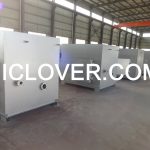
Waste Incineration Treatment Diesel Oil type Model TS150


50 to 60kg/hr and 100 to 120kg/hr diesel powered incinerator.1. Capability to Incinerate the Following Types of Waste:
Household waste, glass, steel, aluminum cans and window extrudes, steel cans (crushed), timber, tires, white goods, plastic bottles, pressure packs, medical waste and quarantine waste.
2. Required Incinerating Capacity:
Approximately 4,500 tons per year. The incinerator must capable of incinerating type of waste mentioned or any combinations thereof at a rate of 3 tons per hour. The system shall be designed to run for at least five consecutive days non-stop if required.
3. Incinerator Design Requirements:
The system should be simple in design and operation, with minimal electronic components.
The incinerator and associated air pollution control technology will be:
a.Low in use of auxiliary fuel;
b.Low in electrical power use;
c.Require minimal pre-processing of Municipal solid waste;
d.The air pollution system shall comply with EU Waste Incineration Directive 2000/76 and forms part of the whole incinerator setup.
3.1 Specific Data that must be Provided with the Design
3.1.1 Incinerator Data:
a.Batch Load Capacity;
b.Primary chamber design (thickness , diameter, length, insulation , lining, volume hearth area, weight); c. Secondary chamber design (thickness , diameter, length, insulation , lining, volume hearth area, weight);
c.Exhaust stack design (thickness , diameter, lining number of sections, total stack length, height above base, weight);
d.Type and number of auxiliary fuel burners;
e.Fuel requirements – type, quantities;
f.Electrical power usage;
g.Electrical services required;
h.Water requirements – quantities;
i.Any other input requirements and consumables ;
j.Temperatures to be achieved to ensure suitable destruction of waste and comply with required air pollution control standards (EU Waste Incineration Directive 2000/76);
k.Residence time to ensure suitable destruction of waste and comply with required air pollution control standards;
l.Potential weight reduction (percentage) of waste;
m.Options to automatically and continuously monitor and record data such as dates, time of day, batch sequential number;
n.A temperature or visual indicator to display heat status of equipment; and
o.Details on graphic displays and / or computer recording devices.
3.1.2 Air Pollution Control System Data
a.The type of air pollution control equipment selected will comply with EU WID Waste Incineration
b.Directive 2000/76;
c.Details on the gas cleaning systems to enhance the removal of fine particles, acid gases and heavy
d.metals;
e.Details on components, such as:
quencher;
condenser / absorber;
venturi scrubber;
entrainment separator and
emissions stack(s).
Electrical power usage;
f.Any other input requirements and consumables (e.g. lime);
g.Details on graphic displays and / or computer recording devices;
h.Environmental requirements – The system would have the capacity / ability to comply with relevant air quality criteria; i.e.EU Waste Incineration Directive 2000/76. (or similar standards and criteria acceptable to the Australian Commonwealth Government Department of the Environment);
i.Specify air pollution parameters that are monitored.
3.1.3 Site Requirements for the Incinerator
a.Total land area dimentions;
b.Infrastructure required ( water supply, electricity supply drainage); and
c.Any specific environmental or climatic/meteorological factors that needs consideration.
3.1.4 Housing Requirements and Design
a.Details on requirements for a secure enclosure for the incinerator and associated air pollution control system. The enclosure will be designed to achieve occupational health and safety requirements such as: a. Free space is available on all sides and heat radiation is kept at a minimum giving the operators an:
b.easy workable environment and ventilation;
c.There are secure storage facilities for waste;
d.There are measures to avoid vermin and pests;
e.The materials will be of sufficient structural thickness for safety and to withstand sea corrosion.
4. Training, Maintenance And Instruction Manuals
4.1 Maintenance Manuals
Provide details on maintenance requirements, such as:
a.General cleaning and maintenance – frequency, skills / technical expertise required;
b.Expected life span of parts and the system as a whole;
c.Expected frequency of the need for replacement of parts;
d.Availability of parts and location of suppliers;
e.Frequency of need for major overhauls; and
f.Estimated down time required for general maintenance and major overhauls.an incinerator for our dead animals in the farm particularly chicken.
Waste is thermally decomposed in the primary chamber at temperatures of 800 °C +. The resulting gaseous products are completely oxidized in the secondary chamber at higher temperatures with sufficient resident time. Other specifications are as follows. A combustion chamber of waste:
* Perfectly tight door for the manual loading of waste. The loading should be Manual, Batch Load
* A burner of lighting which the use is limited to the ignition of waste.
* Frontage of loading with door seals gone up on hinges, wheel of screw plug, flexible joint, and stuffing insulating out of refractory.
* The insulation of the combustion chamber should be composed of refractory bricks, having a high content of aluminum and insulates bricks in order to assure a minimum temperature on the outside sheet metal.
* Composition of the refractory
|
Burning Capacity |
Max. 200kgs/h |
|
|
Auxiliary Fuel |
Diesel |
|
|
Type of Burner |
Monoblock automatic burners |
|
|
Temperatures |
Primary Chamber: 800°C ± 50°C Secondary Chamber: 1300°C ± 50°C |
|
|
Type |
Static solid hearth |
|
|
Material of Construction |
Mild Steel |
|
|
Refractory thickness |
115 mm thick |
|
|
Material |
Refractory bricks |
|
|
Insulation thickness |
50 mm thick |
|
|
Waste Charging |
Manual |
|
|
Ash Removal |
Manual |
|
|
Type |
Static solid hearth |
|
|
Material of Construction |
Mild Steel |
|
|
Refractory thickness |
115 mm thick |
|
|
Material |
Refractory bricks |
|
|
Insulation thickness |
50 mm thick |
|
|
Type |
Centrifugal |
|
|
Modulation |
Manual damper control |
|
|
Material of Construction |
Mild Steel |
|
|
Type of temperature controller |
Digital |
|
|
Finish & painting type |
Double coat |
|
|
Material of construction & capacity |
Mild Steel/ Plastic, suitable capacity |
|
|
Other Standard Accessories |
Diesel oil level indicator, piping with valves & Non-return valve |
|
|
Visual Checking of Fuel |
Provided |
|
|
No. of Burners |
2 one in primary and in secondary chamber) |
|
|
Type & Model |
Monoblock automatic oil fired |
|
|
Make |
Riello |
|
|
Fuel |
Diesel |
|
|
Fuel delivery |
10 C 20 kg/h |
|
|
Firing stage |
1 |
|
|
Thermal power |
118 C 236 kW |
|
|
Motor power |
240 W |
|
|
Pump pressure |
10 C 12 bar (standard calibration), Max. pressure 15 bar |
|
|
Electrical supply |
Single phase 220V, 50Hz. |
|
|
Material of construction |
Burnt bricks |
|
|
Height |
9 meters from ground level |
|
incinerate mainly pharmaceuticals ( all types of dosage forms … syrups, tablets, injectables ) medical consummabables, and also biological fluids …
Capacity around 10 kg/ hour. install a diesel fired incinerator that can accommodate a batch load of up to 100 kg with a daily burning requirement of up to 500kg per 8 hour day. Industrial Incinerator to destroy
the pharmaceuticals waste like Alu, PVC,PVDC etc.Installation for burning of animal waste cost, presence, repayment terms where it is possible to buy in Russia? I am looking to for capacity between 200 -400kg
1.2FIELD PAINTING
Perform painting required for surfaces not otherwise specified, and finish painting of items only primed at the factory
1.3FIELD TRAINING
a. Submit [Six] complete copies of operating instructions outlining the step-by-step procedures required for system startup, operation and shutdown. Include in instructions the manufacturer’s name, model number, service manual, parts list, and brief description of all equipment and their basic operating features. And [Six] complete copies of maintenance instructions listing routine maintenance procedures, possible breakdowns and repairs, troubleshooting guides, and simplified schematic diagrams for the system as installed.
3.6.Performance
Preheat the incinerator for 4 hours to reach the firing temperature of 982degrees C [1800] degrees F. Weigh and record the total charge weight. Charge the incinerator at the rated burning capacity in kg pounds per hour for a period of [4] hours and operate in accordance with the manufacturer’s written instructions. Include in performance testing the operation of the mechanical charging facilities, the incinerator, the air pollution control equipment, the ash
handling equipment, and the operation monitoring facilities. Perform testing full scale for a full- operation cycle, and monitor performance to verify compliance with the contract requirements submit a report on monitoring results. Reduce the waste to a fine ash residue. Follow normal burnout procedure. After the incinerator has cooled, weigh the residue. The weight of the residue shall not exceed 5.0 percent combustible material of the total charge weight.
After clean-out, the incinerator shall not show any evidence of deterioration, such as shagged or spilling refractory, warping of parts, and discolored exterior paint.
•Control
Test the incinerator under actual firing conditions. Verify with testing that all controls function within the maximum and minimum limits for temperature or timing. Simulate actual unsafe conditions such as high temperatures and flame failure by reducing the settings for the activation of limit and safety controls.
•Shell Temperature
Operate the incinerator under normal load conditions for not less than 6 hours. After 6 hours, temperature readings of the outer shell, taken at not less than 5 random locations, shall not exceed the temperature limitation of paragraph furnace construction.
– capacity: 300-400 kg/hour
– Fuel syetem: Dual fuel( both oil and gas)
Medium Unit – to handle an average waste production of 500 kg/day.Minimum load capacity: 600 kg.Maximum load capacity: 1,000 kg.Nominal burning rate: 55-80 kg/hr (= 440 C 640kg range per 8hour day).
Items/Model
TS50(PLC)
Picture
![]()
Principle
Waste Incineration Treatment
Burn Rate
Average 50-100 kg/hour
Feed Capacity
Average 200-300 kg/feeding
Control Mode
PLC(Programmable Logic Controller Incinerator)
Optional Upgrade Containerized Mobile Type Incinerator
ISO 20′ Full Container
Combustion Chamber
560L
Internal Dimensions
1000x800x700mm
Secondary Chamber
280L
Smoke Filter Chamber
Yes
Feed Mode
Manual
Voltage
210/240V 50Hz 1P
Power
1.3Kw
Oil Consumption (kg/hour)
Average 20.4(D.O)
Thermal capacity(kw/hour)
166-332
Gas Consumption (m3/hour)
***
Temperature Monitor
Digital Display
Oil Tank
1000L
Feed Door
60x50cm
Chimney
10Meter
Chimney Type
Stainless Steel
1st. Chamber Temperature
800℃–-1000℃
2nd. Chamber Temperature
1000℃-1200℃
Residency Time
2.0 Sec.
Gross Weight
7500kg
External Dimensions
260x160x250cm(without chimney)

|
Main Product List per 01 set |
Primary Combustion Chamber |
|
Secondary Combustion Chamber |
|
|
Smoke Filter Chamber |
|
|
Incinerator PLC Control Case |
|
|
Chimney:10.0Meters *(upgrade to Stainless Steel, free cost) |
|
|
Italy oil/gas burner: 02 units |
|
|
Oil Tank (if oil fuel): 300Liters |

Items/Model
TS150(PLC)
Principle
Waste Incineration Treatment
Burn Rate
Average 50/100/150/200 kg/hour
Feed Capacity
Average 750kg/feeding
Control Mode
PLC(Programmable Logic Controller Incinerator)
Combustion Chamber
1570L
Internal Dimensions
150x100x105cm
Secondary Chamber
750L
Smoke Filter Chamber
Yes
Feed Mode
Manual
Voltage
210/230V 50/60Hz
Power
0.9Kw
Oil Consumption (kg/hour)
Average 20.4(D.O)
Thermal capacity(kw/hour)
166-332
Gas Consumption (m3/hour)
***
Temperature Monitor
Digital Display
Temperature Protection
Yes
Oil Tank
300L
Feed Door
80x60cm
Chimney
10Meter
Chimney Type
Stainless Steel
1st. Chamber Temperature
800℃–-1000℃
2nd. Chamber Temperature
1000℃-1200℃
Residency Time
2.0 Sec.
Gross Weight
8500kg
External Dimensions
300x160x280cm(without chimney)
BIOHAZARD DISPOSAL: CONTAINER
GENERAL INCINERATOR, IDEAL FOR INCINERATION OF VARIOUS TYPES OF WASTE, FULLY CONTAINERISED IN A 20 FT CONTAINER, TO INCLUDE BUILT-IN FUEL TANK AND GENERATOR.
TECHNICAL SPECIFICATIONS: COMBUSTION CHAMBER VOLUME (M3); 0.54 m3. SUGGESTED BATCH SIZE: 60 KG, BURN RATE: 69 KG PER HOUR, AVERAGE FUEL CONSUMPTION 13 KG PER HOUR, OPERATIONAL TEMPERATURE: 950-1320 CELSIUS, GAS RETENTION IN SECONDARY CHAMBER 0.5 SECS, WITH TEMP. MONITORING , AVERAGE ASH RESIDUE: 3%, THERMOSTATIC DEVICE: YES,
DIMENSIONS: EXTERNAL LENGTH (mm): 1520MM, EXTERNAL WIDTH (mm): 920MM, EXTERNAL HEIGHT (mm): 4020 MM
1. Incinerator for Bio-Medical Waste incineration needed
2. 50 kg/hr
3. 2 chambers must be there
4. temperature of primary chamber should be 850 degrees Celsius
temperature of secondary chamber should be 1200 degrees Celsius
Hiclover supply medical waste incinerators with capacity 10kgs per hour to 500kgs per hour.
The incinerator with dual/double combustion chamber and dry filter chamber, two fuel burner from
Italy manufactured, hot sale model for small scale waste output, the capacity is 30kgs per hour
and 50kgs per hour.
We are famous small scale incinerator manufacturer and brand, dispatch incinerator productsand best services with lower price for customer all around the world.How you can find reasonable incinerator for your local site?
Incinerator is not a cheap equipment, generally the small scale model’s price around $5,000usd per unit
and large scale model’s price more than $50,000usd per unit. So, before purchase one unit incinerator,
you have to make clear following items:
A, burn what? Incinerator is a incineration equipment, function is fire waste. So what kind of
waste you want to treatment?
B, small or large? This according to the waste output every day or the waste volume per
feed time, like animal size.
C, fuel? Incinerator use oil or gas fuel, generally, gas fuel is cheaper than oil and the smoke
cleaner than oil fuel model. But some local site don’t have gas supply system.
And other technology items, like power(220v, 380v), waste feed door type, incinerator structure, etc.
Nanjing Clover Medical Technology Co.,Ltd.Tel: +86-25-8461 0201
Mobile: +86-13813931455(whatsapp/wechat)
Website: www.hiclover.com
Email: [email protected]
Items/Model TS10(PLC) TS20(PLC) TS30(PLC) TS50(PLC) TS100(PLC) Burn Rate (Average) 10 kg/hour 20 kg/hour 30 kg/hour 50 kg/hour 100 kg/hour Feed Capacity(Average) 20kg 40kg 60kg 100kg 200 kg Control Mode PLC PLC PLC PLC PLC Combustion Chamber 100L 210L 330L 560L 1200L Internal Dimensions 50x50x40cm 65x65x50cm 75x75x60cm 100x80x70cm 120x100x100cm Secondary Chamber 50L 110L 180L 280L 600L Smoke Filter Chamber Yes Yes Yes Yes Yes Feed Mode Manual Manual Manual Manual Manual Voltage 220V 220V 220V 220V 220V Power 0.5Kw 0.5Kw 0.5Kw 0.7Kw 0.7Kw Oil Consumption (kg/hour) 5.4–12.6 7.8–16.3 10.2–20 12.1–24 14–28 Gas Consumption (m3/hour) 6.2–11.4 8–15.7 9.8–20 9.9–26.1 10–32.2 Temperature Monitor Yes Yes Yes Yes Yes Temperature Protection Yes Yes Yes Yes Yes Oil Tank 100L 100L 100L 100L 200L Feed Door 30x30cm 45x40cm 55x50cm 70x55cm 80x60cm Chimney 3Meter 3Meter 5Meter 5Meter 10Meter Chimney Type Stainless Steel Stainless Steel Stainless Steel Stainless Steel Stainless Steel 1st. Chamber Temperature 800℃–1000℃ 800℃–1000℃ 800℃–1000℃ 800℃–1000℃ 800℃–1000℃ 2nd. Chamber Temperature 1000℃-1200℃ 1000℃-1200℃ 1000℃-1200℃ 1000℃-1200℃ 1000℃-1200℃ Residency Time 2.0 Sec. 2.0 Sec. 2.0 Sec. 2.0 Sec. 2.0 Sec. Gross Weight 1500kg 2200kg 3000kg 4500kg 6000kg External Dimensions 140x90x120cm 160x110x130cm 175x120x140cm 230x130x155cm 260x150x180cm
an animal cremator for our business in malaysia.currently we are doing individual private cremation and mass cremation for pets as well as medical waste.an incinerator which is capable of burning between 3 to 5 tonnes per day of mixed waste products, plastics, rubber, flammable putrescible waste, medical waste, rubber tyres, paper and cardboard, textiles, green timber waste etc. As some of the waste products will contain non-flammable solids, the incinerator should be capable of extracting those materials probably via a rotary kiln process.
It is not intended to use any fuel, such as oil or diesel, to promote the burning of the waste, as the waste products are required to be incinerated using a free burning process. Hot air however from a downstream process will be available to increase the incinerator temperature and burning rate as required. Very high temperatures in the incinerator are not necessary and are not required.
The burning of the waste products is expected to produce toxic emissions which will be cleaned via other existing downstream processes and a Post Combustion process in the incinerator is therefore not required.
The incinerator should be capable of accommodating an automatic waste feed process.Incinerator Specification
S. No.
Description
1
Feeding Capacity
100 Kg.
2
Burning Capacity
50 Kg. / Hour
3
Feed Mode
Manual
4
Fuel
Diesel Oil
5
Incinerator Type
Dual Combustion Chamber with Built in Smoke Filter ( Dry Scrubber )
6
Chimney Material
Non Corrosive / Corrosion Resistant Preferably Stainless for longer Life (Height 5-7 Meter)
7
Burners
High Quality European CE Certified Oil Burner
8
Control Panel
Standard PLC Control Panel
9
Power Supply
220/380 Volt Ac 50 Hz.
10
Oil Tank Capacity
200~~ 300 Litre
11
Burning Chamber
Fire Brick, Refractoy Brick, Concrete
HICLOVER now offers spare parts including:
— Burners (diesel oil, LPG or natural gas)
— Element for burners
— Fire ropes
— Incinerator chamber maintenance materials
— Air Fan