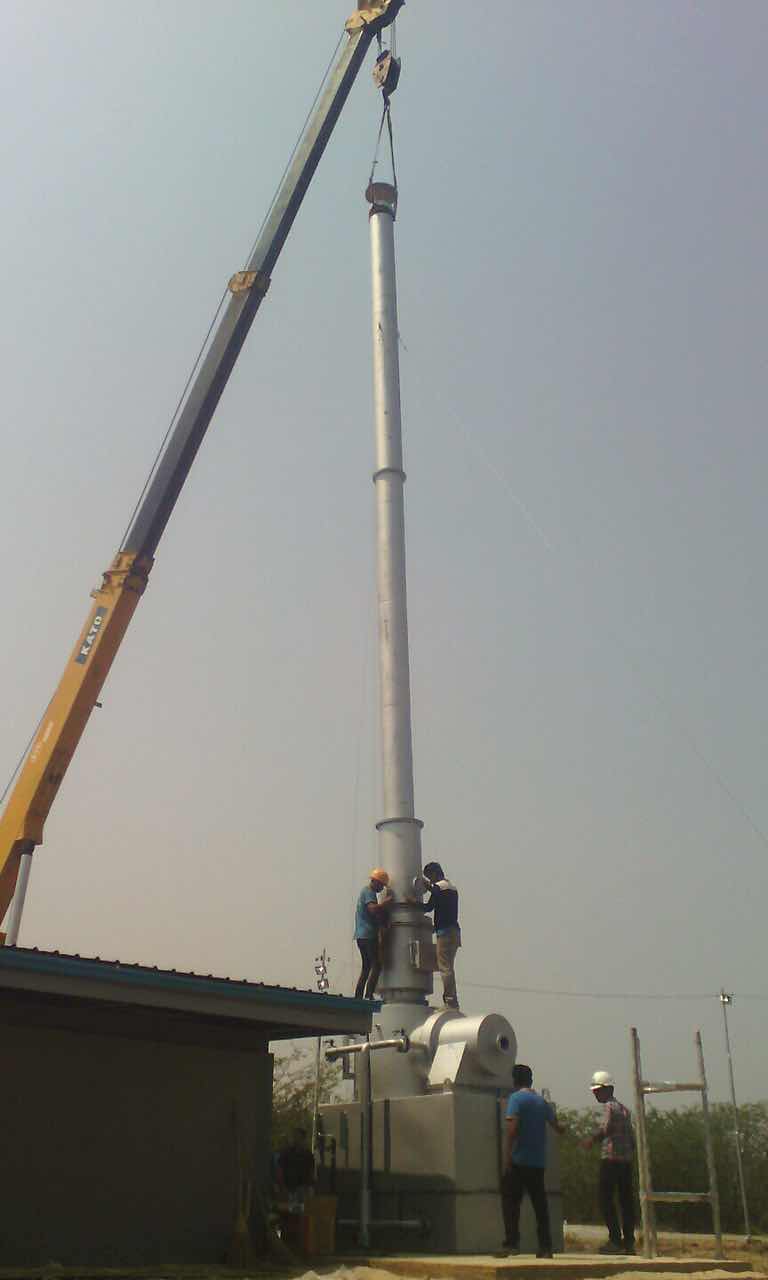
Tag: incinerator

Another challenge: disposing of waste

A single Ebola patient treated in a U.S. hospital will generate eight 55-gallon barrels of medical waste each day.

Protective gloves, gowns, masks and booties are donned and doffed by all who approach the patient’s bedside and then discarded. Disposable medical instruments, packaging, bed linens, cups, plates, tissues, towels, pillowcases and anything that is used to clean up after the patient must be thrown away.

Even curtains, privacy screens and mattresses eventually must be treated as contaminated medical waste and disposed of.

Dealing with this collection of pathogen-filled debris without triggering new infections is a legal and logistical challenge for every U.S. hospital now preparing for a potential visit by the virus.

In California and other states, it is an even worse waste-management nightmare.

While the U.S. Centers for Disease Control and Prevention recommends autoclaving (a form of sterilizing) or incinerating the waste as a surefire means of destroying the microbes, burning infected waste is effectively prohibited in California, and banned in several other states.

“Storage, transportation and disposal of this waste will be a major problem,” California Hospital Association President C. Duane Dauner warned Sen. Barbara Boxer, D-Calif., in a letter last week.

Even some states that normally permit incineration are throwing up barriers to Ebola waste.

In Missouri, the state attorney general has sought to bar Ebola-contaminated debris from a St. Louis incinerator operated by Stericycle Inc., the nation’s largest medical waste disposal company.

Due to restrictions on burning, California hospital representatives say their only option appears to be trucking the waste over public highways and incinerating it in another state — a prospect that makes some environmental advocates uneasy.

Rules for transport

Under federal transportation guidelines, the material would be designated a Class A infectious substance, or one that is capable of causing death or permanent disability, and would require special approval from the Department of Transportation, hospital representatives say.

“These are some pretty big issues and they need some quick attention,” said Jennifer Bayer, spokeswoman for the Hospital Association of Southern California.

“We fully expect that it’s coming our way,” Bayer said of the virus. “Not to create any sort of scare, but just given the makeup of our population and the hub that we are. It’s very likely.”

The Ebola virus is essentially a string of genetic material wrapped in a protein jacket. It cannot survive a 1,500-degree scorching within an incinerator, or the prolonged, pressurized steam of an autoclave.

“The Ebola virus itself is not particularly hardy,” CDC Director Dr. Thomas Frieden said under questioning on Capitol Hill recently. “It’s killed by bleach, by autoclaving, by a variety of chemicals.”

However, CDC guidelines note that “chemical inactivation” has yet to be standardized and could trigger worker safety regulations.

Getting ready

California health officials recently tried to reassure residents that the state’s private and public hospitals were up to the task and were actively training for the possible arrival of Ebola.

“Ebola does not pose a significant public health risk to California communities at the present time,” said Dr. Gil Chavez, an epidemiologist and deputy director at the California Department of Public Health. “Let me tell you why: Current scientific evidence specifies that people cannot get Ebola through the air, food or water. … The Ebola virus does not survive more than a few hours on impervious surfaces.”

It was unclear whether California officials viewed the waste issue as a potential problem.

Although one-third of the state’s private hospitals and “a few” of its public hospitals reported to Boxer’s office that there would be problems complying with the CDC’s incineration recommendation, and others, a state public health official told reporters he was not aware of any conflicts.

Dr. David Perrott, chief medical officer for the California Hospital Association, said there was also confusion about whether infected human waste could be flushed down the toilet.

“Here’s what we’ve heard from the CDC: It’s OK,” Perrott said. “But then we’ve heard from some sources, that maybe we need to sterilize it somehow and then flush it down the toilet or you have to check with local authorities. It sounds maybe a little gross, but there is a real question about what to do with that waste.”

Overreaction?

Dr. Thomas Ksiazek, a professor of microbiology and immunology of the University of Texas Medical Branch, has said he believes there’s been a lot of overreaction about Ebola medical waste.

“There are other ways to deal with the waste; autoclaving would be chief among them,” Ksiazek said. “The problem is, most hospitals don’t use it for most disposable items. They’re quite happy to bag them up and send them to a regular medical disposal company.”

But Allen Hershkowitz, a senior scientist at the Natural Resources Defense Council, said incineration is simple and effective, and should be available to hospitals to help dispose of the mountain of waste.

Hershkowitz said states began to crack down on medical waste incineration years ago because materials that didn’t need to be burned were being sent to combustors and were emitting dangerous pollutants.

In this case of Ebola medical waste, he said California should reconsider its restrictions.

“There’s no pollutant that’s going to come out of a waste incinerator that’s more dangerous than the Ebola virus,” Hershkowitz said. “When you’re dealing with pathogenic and biological hazards, sometimes the safest thing to do is combustion.”

by: http://www.sfgate.com/news/article/Another-challenge-disposing-of-waste-5909413.php
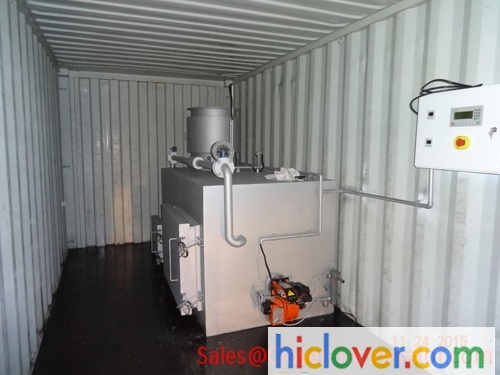
 

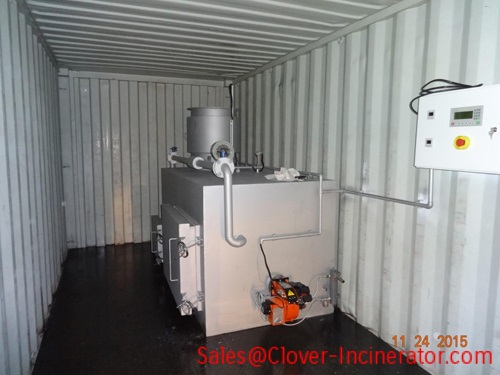
Containerized Mobile Incinerator with buring rate from 10kgs per hour and 20/30/50kgs per hour capacity. We fixed incinerator system inside the container already, local customer fix the electric system and smoke chimney. This product is moveable by truck to other location.

All system completed with diesel oil fired.

Completed with Double combustion chamber.

Fixed with Smoke smoke filter chamber already.

Control case fixed beside for operation easy and safe.

Steel floor for safe, clean operation space.

No incineration house build request.


Containerized-Incinerators

Containerized-mobile-Incinerators

Medical Waste Incinerator, 50 to 60 Kg/hr
Support Health Sector Support Project
Point of Installation (Hospitals) Moi Voi, Makindu, Maragua, Eldama Ravine and Isiolo District Hospitals
1.    General Description
Supply, delivery, installation and commissioning of a medical waste incinerator suitable for disposal of Medical, General and Pathological waste in a safe and clean environment.  The unit shall consist of two chambers and operate on the principal of controlled air and temperature. The unit shall consist a particulate remover (scrubbers) as stipulated in waste management regulations, 2006 (Legal notice NO. 121 of 29th September, 2006).  The Unit shall be fully automatic and controlled by an automatic electronic controlled system except loading system which shall be manual.  The unit shall be capable of incinerating between 50 to 60 kg of solid medical waste per hour.  It shall be constructed from mild or aluminized steel lined with refractory material.
Main unit
Application For incineration, general and pathological
Capacity   50 C 60 kg/h burn rate
Type Two  combustion chambers type; primary  and Secondary, controlled/forced combustion air type with a flue gas emission scrubbing unit
Operating time                Minimum 8 hours daily
Operating temperature     From 850 0C to 1200 0C, Automatic controlled
Residual Ash                    5 to 10%
    3.2     Primary Chamber
Construction Constructed from heavy duty mild or aluminized  steel Or
equal and approved equivalent
Insulation material            Refractory material lining similar or equal to calcium 
Silicate and hot face combination of heavy duty brickwork
Internal Construction        Fixed hearth type complete with gratings, concave bottom
and charging door, lined with refractory material
Charging Door                   Suitable for manual loading of wastes and with smooth 
Dear seal equivalent of Ceramic seals with hinges.
Door Lock                          Automatic, Electric type
Ash removal door    Provided, for removing resultant bottom ash leftovers                              from the Primary chamber
Gratings   Provided
Loading Manual loading of waste
Primary Burner                        Fully automatic, with fuel, temperature and speed controls with ignition system, flame detector, Air fan complete with safety features, flame failure,  Diesel fired fuel injector type and Flange mounted                                                                                                    
Blower Provided. For supplying excess combustion air through the distribution system with speed control system
Temperature Minimum exit 850 0C
Observation port To be provided with protective glass type
Construction   Constructed from heavy duty mild or aluminized steel or equal and approved equivalent
Insulation Refractory material lining
Combustion Temperatures        Above 850 0C, controlled electronically
Gas residue or retention Time       > 2 second at minimum 850 0C
Secondary Burner                    Provided, Diesel fired, fully automatic, with fuel, temperature and speed controls, With ignition system,                  &
nbsp;                                               Flame detector, Air fan, Complete with safety features, flame failure Diesel fired fuel injector type.                                                                  Flange mounted
Ejector Provided, Venturi type, for cooling the flue gases
Combustion Air Fan Provided for supplying combustion and creating a negative drift and turbulences
Temperature Maximum  1600 0C

Medical Waste Incinerator: Essential Medical Waste Disposal Services Provided By Meda Send

Medical Waste Removal Companies Medical Waste Service Suggestions There are different types of wastes that people need to be conscious about in order to avoid exposure to this waste that may cause health illnesses and diseases. One of the most dangerous types of waste that people need to get rid of is hazardous wastes. These are the type of wastes that completely pose potential or substantial threats to people particularly to public health and to the environment. These wastes are also known as special wastes since they cannot be quickly disposed compared to other types of wastes.

Thus, in order to relieve all the worries of the people regarding this matter Meda Send offers hazardous waste disposal that could help medical facilities. They are providing cost-effective as well as safe services that could easily and effective disposed your hazardous waste. They are very consistent in giving safe as well as environmental-friendly services to the people in order to disposed common existing hazardous waste in medical facilities. They are the best company that would lend your medical facility hazardous waste disposal plan that would be effective towards your aim for a healthy and safe environment for the people.
Pathological Waste Definition

Hazardous wastes are those chemicals and medicines that are toxic and infectious that can effectively affect the health of the people upon exposed. These may also be laboratory medicines which are used by doctors in aid for harsh and severe diseases and illnesses of patients. Disposing these hazardous waste would not be a difficult task since Meda Send would be your help in this matter. They are going to provide medical facilities containers in colored red covered by red plastic where they can put their hazardous wastes. They are also giving medical facilities adequate time in collecting all the hazardous wastes that may be found in their place. This is essential before allowing the pickup truck of the company to get your collected hazardous wastes.

They are very much concern on the health of the people inside and outside of their medical facility hence they wanted to make sure that they would not be exposed and be inflicted with the toxins and other harmful chemicals coming from this hazardous waste. Since Meda Send is always available, medical facilities would always have an assurance of a quick disposal of waste particularly when there are already huge quantity of hazardous waste in their place.
medasend.com Sharps

Hazardous waste disposal could be an easy task for all medical facilities particularly if they are going to seek any of the waste management disposal services of Meda Send. Don’t miss the opportunity to avail any of the services offered by Meda Send for a healthy and safe environment. This would always guarantee that you will have a healthy environment that is free elements that pose health risks.

Most people know that there is a large amount of medical wastes that are being produced by most of the medical facilities like hospitals, clinics and many other health facilities each day. These wastes need to be properly collected, transported, segregated, and disposed to its proper places and condition. Although some medical facilities are considered to be proficient and knowledgeable in disposing their wastes, they still need to seek a company that could guide them and help them on how they are going to dispose their waste properly particularly when instances that they can no longer handle proper medical waste in their place.

That is why Meda Send would be an effective answer to what medical facilities are greatly in need of in terms of their wastes and garbage each day. They are one of the highly recognized companies all over the world that is highly specialized when it comes to healthcare and proper medical waste disposal. They are not just aiming to help people in managing their waste sine they also aim to provide a healthy community free from diseases and illnesses that may be due to improper disposal of waste.
medasend.com Posts

Meda Send is very committed and devoted in giving waste services to all the people. They can effectively handle medical disposal needs of medical facilities with their speed as well as accuracy. They are very effective in providing the people waste management services which aims for a healthy environment not only covered by the people who are inside the medical facility but also with all the people in the community. With the help of medical waste disposal services of the company, people are guided with the proper waste management they need to do. This is not only good for nurses and doctors but for all the people as well.

They are given greater chance to be well-equipped with the proper segregation of waste. This is very important to get rid of risk since these wastes are considered to be harmful to people and to the environment. They are taught on the right place where to put their waste. This is through allowing them to segregate their waste in a red plastic. Medical waste disposal of the company is known to be very effective and efficient since they are providing consistent type of truck pickup grid making the people feel at ease in scheduling medical waste pickups. They are also available 24/7 hence they make sure that waste compliance needs of the people are given high importance that the company is not taking for granted.

So, for medical facilities that are rendering services to large or small group of people, Meda Send could be one of the best companies that could give you safe and healthy environment that could cater the needs of the people towards a healthy and safe community to live.

by: http://ourbdspace.com/blog/34552/medical-waste-incinerator-essential-medical-waste-disposal-services-provide/

An Unexpected Ebola Infrastructure Problem: Waste

Patients with this debilitating virus produce 440 gallons of medical waste daily, including instruments, gowns, gloves, body fluids, sheets, mattresses and more. That’s a substantial amount of medical waste in any situation, but it’s especially daunting in this case because it needs to be disposed of extremely cautiously, to avoid the risk of spreading infection. What do you do with a problem like Ebola waste? Because you don’t want to toss it in the garbage.

Somewhat surprisingly, says Bausch, the United States actually faces bigger problems when it comes to safely disposing of Ebola waste, which is simply burned in large pits in Africa: “In the United States, of course, we are somewhat beholden to higher tech solutions, which in some ways are a little bit more problematic in terms of treating all that waste, and we need autoclaves or incinerators that can handle that sort of thing. It’s not the actual inactivation that’s particularly difficult; it’s just the process of getting the waste from, of course, the frontline of care and interaction with the patients safely to the place where it can be incinerated or autoclaved.”

The problem in the United States is ironically compounded by the increased access to medical care, and the higher quality of medical services, available. In the United States, patients are treated by medical teams with access to a huge volume of supplies they use for protection, including masks, gowns, booties, and gloves, along with sanitizers and other tools. Moreover, patients receive extensive medical interventions that generate waste like needles, tubing, medical tape, empty IV bags, and more. The very care that has helped most of the handful of Ebola patients in the United States conquer the disease has contributed to the huge amount of waste generated, highlighting a critical hole in U.S. medical infrastructure — while African hospitals may have lacked the supplies and personnel needed to supply aid to Ebola patients, they’re at least prepared to handle the waste.

The CDC just issued guidelines to help clinicians and administrators decide upon how to handle Ebola waste, but The New York Times notes that many facilities don’t have the autoclave, and incinerator, capacity to handle medical waste on this scale. Some states prohibit the burning of medical waste altogether, or have barred incineration of Ebola waste, leading to the transport of waste across state borders to facilities that can handle it, which poses its own risks; with every mile added to transport, there’s a greater risk of spreading disease to previously unexposed communities.

Surprisingly, defenders of burning the waste come from surprising corners. Environmentals like Allen Hershkowitz, National Resources Defense Council senior scientist, point out that: “There’s no pollutant that’s going to come out of a waste incinerator that’s more dangerous than the Ebola virus. When you’re dealing with pathogenic and biological hazards, sometimes the safest thing to do is combustion.”

The argument in defense of incineration can be bolstered by the fact that medical waste companies specialize in high-efficiency incineration with equipment designed to minimize and trap byproducts of combustion, reducing overall pollution considerably. Fears about Ebola, rather than genuine environmental or public health concerns, are driving the decision to push against incineration of ebola waste in many regions, but eventually, the United States is going to have to face facts: The mounting waste that accumulates in facilities where Ebola patients receive treatments needs to be disposed of safely, and promptly.


by: http://www.care2.com/causes/an-unexpected-ebola-infrastructure-problem-waste.html

Medical Waste Incinerator, 50 to 60 Kg/hr
Support Health Sector Support Project
Point of Installation (Hospitals) Moi Voi, Makindu, Maragua, Eldama Ravine and Isiolo District Hospitals
1.    General Description
Supply, delivery, installation and commissioning of a medical waste incinerator suitable for disposal of Medical, General and Pathological waste in a safe and clean environment.  The unit shall consist of two chambers and operate on the principal of controlled air and temperature. The unit shall consist a particulate remover (scrubbers) as stipulated in waste management regulations, 2006 (Legal notice NO. 121 of 29th September, 2006).  The Unit shall be fully automatic and controlled by an automatic electronic controlled system except loading system which shall be manual.  The unit shall be capable of incinerating between 50 to 60 kg of solid medical waste per hour.  It shall be constructed from mild or aluminized steel lined with refractory material.
Main unit
Application For incineration, general and pathological
Capacity   50 C 60 kg/h burn rate
Type Two  combustion chambers type; primary  and Secondary, controlled/forced combustion air type with a flue gas emission scrubbing unit
Operating time                Minimum 8 hours daily
Operating temperature     From 850 0C to 1200 0C, Automatic controlled
Residual Ash                    5 to 10%
    3.2     Primary Chamber
Construction Constructed from heavy duty mild or aluminized  steel Or
equal and approved equivalent
Insulation material            Refractory material lining similar or equal to calcium 
Silicate and hot face combination of heavy duty brickwork
Internal Construction        Fixed hearth type complete with gratings, concave bottom
and charging door, lined with refractory material
Charging Door                   Suitable for manual loading of wastes and with smooth 
Dear seal equivalent of Ceramic seals with hinges.
Door Lock                          Automatic, Electric type
Ash removal door    Provided, for removing resultant bottom ash leftovers                              from the Primary chamber
Gratings   Provided
Loading Manual loading of waste
Primary Burner                        Fully automatic, with fuel, temperature and speed controls with ignition system, flame detector, Air fan complete with safety features, flame failure,  Diesel fired fuel injector type and Flange mounted                                                                                                    
Blower Provided. For supplying excess combustion air through the distribution system with speed control system
Temperature Minimum exit 850 0C
Observation port To be provided with protective glass type
Construction   Constructed from heavy duty mild or aluminized steel or equal and approved equivalent
Insulation Refractory material lining
Combustion Temperatures        Above 850 0C, controlled electronically
Gas residue or retention Time       > 2 second at minimum 850 0C
Secondary Burner                    Provided, Diesel fired, fully automatic, with fuel, temperature and speed controls, With ignition system,                  &
nbsp;                                               Flame detector, Air fan, Complete with safety features, flame failure Diesel fired fuel injector type.                                                                  Flange mounted
Ejector Provided, Venturi type, for cooling the flue gases
Combustion Air Fan Provided for supplying combustion and creating a negative drift and turbulences
Temperature Maximum  1600 0C

Open tray burning wins out over closed incinerator for M6 propellant at Camp Minden

The first of many public meetings concerning the disposal of more than 15 million pounds of M6 propellant at Camp Minden drew close to 150 concerned citizens and officials to the Minden Civic Center Thursday night.

There, they learned the agreement reached between the Environmental Protection Agency (EPA) and the U.S. Army, which will fund the $28.5 million clean up of the illegally stored material left by Explo Systems, Inc., calls strictly for open air burning.

“Local contractors, the Maddens, designed a device,” Webster Parish Sheriff Gary Sexton, who set up the meeting, said. “For some reason, that device is not being considered in this clean up process.”

“We’re disappointed,” James Madden, owner of Madden Contracting, said. Madden’s son, David spent time and money researching and building a prototype that would’ve allowed closed incineration of the product. “We considered we built a better mousetrap.”

However, Madden may not be out of it yet. The Army must first design a bid package and go through a process required by law to find a company to take on the project.

“The Maddens can throw in a bid on the open tray process,” Sexton said. “They certainly have the right to come in and I think they will do that.”

State Sen. Robert Adley said while discussion concerning responsibility was taking place, the Maddens developed a plan to deal with it. Adley, along with others in the local delegation, attended a demonstration of the incinerator at Camp Minden last January.

“It looked good to us,” Adley said. “We’re not professionals, but under law, by their interpretation, the EPA cannot use that process. I regret that, but it’s where we are at this stage of the game.”

Adley said that under existing law, the Louisiana Military Department and Maj. Gen. Glenn H. Curtis are required to take bids from whoever provides one.

“At the end of the day, he (Curtis) can sit down and decide who’s qualified, who has the experience and if they have the financial backing to do it,” Adley said. “All of those things will be taken into consideration. It would be wonderful if it ended up being someone who, when they finish, will be sitting here breathing this air with us.”

David Madden seemed resigned to the EPA’s decision after attending an informal meeting with officials earlier in the day.

“I’ve studied this process and, yes, I did work for an incinerator,” he said. “I met with EPA officials and other experts not associated with the EPA, and they are going down the right path with the open trays.”

Madden said his change of heart hinged on the haste with which the disposal must take place to avoid more degradation of the product, which makes it more dangerous.

“It is important this get started the first quarter of next year,” he said. “I have looked at the air quality plumes (from open tray burning). Only 10 percent of this fallout will go to Doyline. There’s an equal amount going toward Bossier and going north. Our business is about a mile and a half due east. We’re all going to get some of this.”

District 10 State Rep. Gene Reynolds said, going forward, communication is key.

“On my website and in my office, we will keep all of the completely updated materials,” Reynolds said. “We’re going to keep (the public) informed with everything that comes out from this point forward.”

Sexton stressed the importance of the public’s help.

“Help us calm the fears of the people in the community about what we don’t know is going to happen with the destruction of the M6 propellant,” he said. “We may all speculate on things that may happen, but we don’t need to talk about what we have to worry about. The people who are going to be responsible – whoever the contractor is – the people that are going to be disposing of this product, keep them in your prayers because something could happen to the people who are responsible for going out there and opening those bunkers, picking this product up, moving it and destroying it where we can live in a safer community.”

The next public meeting is tentatively scheduled for Dec. 16. Time and location have not been decided.


by: http://press-herald.com/open-tray-burning-wins-out-over-closed-incinerator-for-m6-propellant-at-camp-minden/

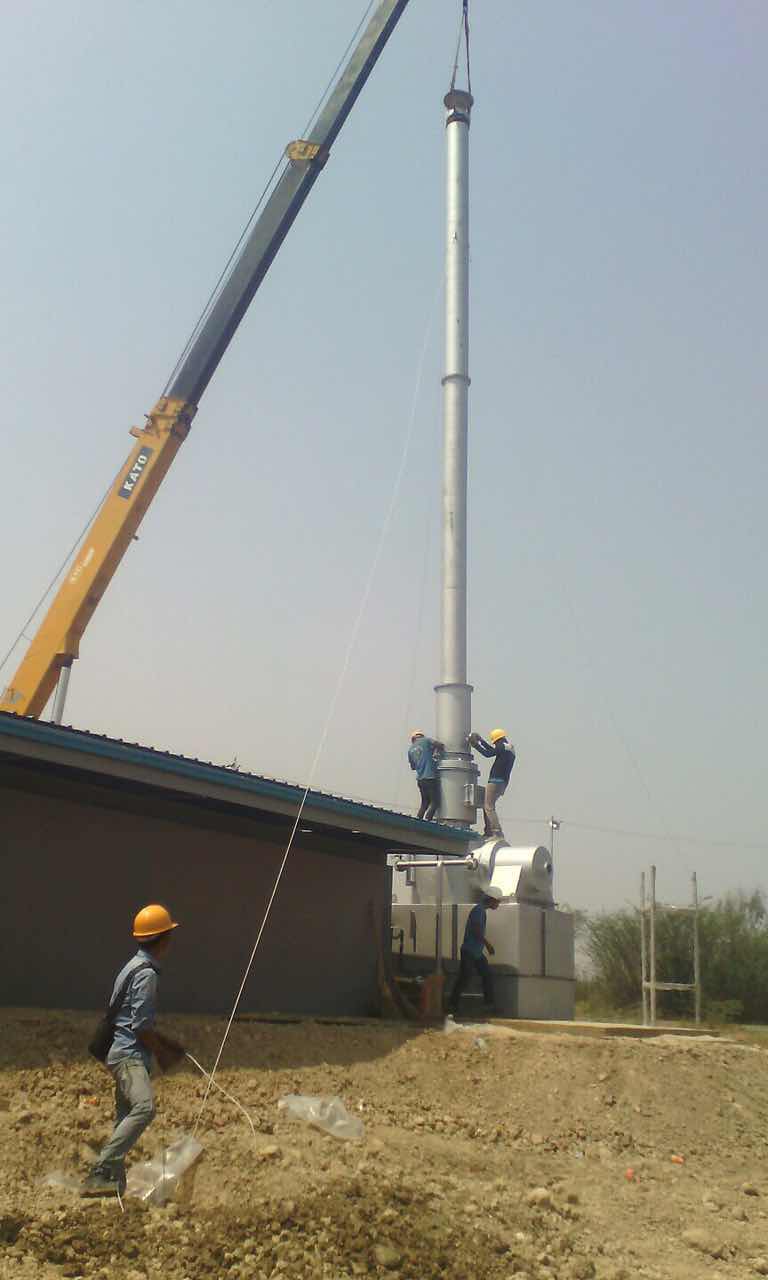
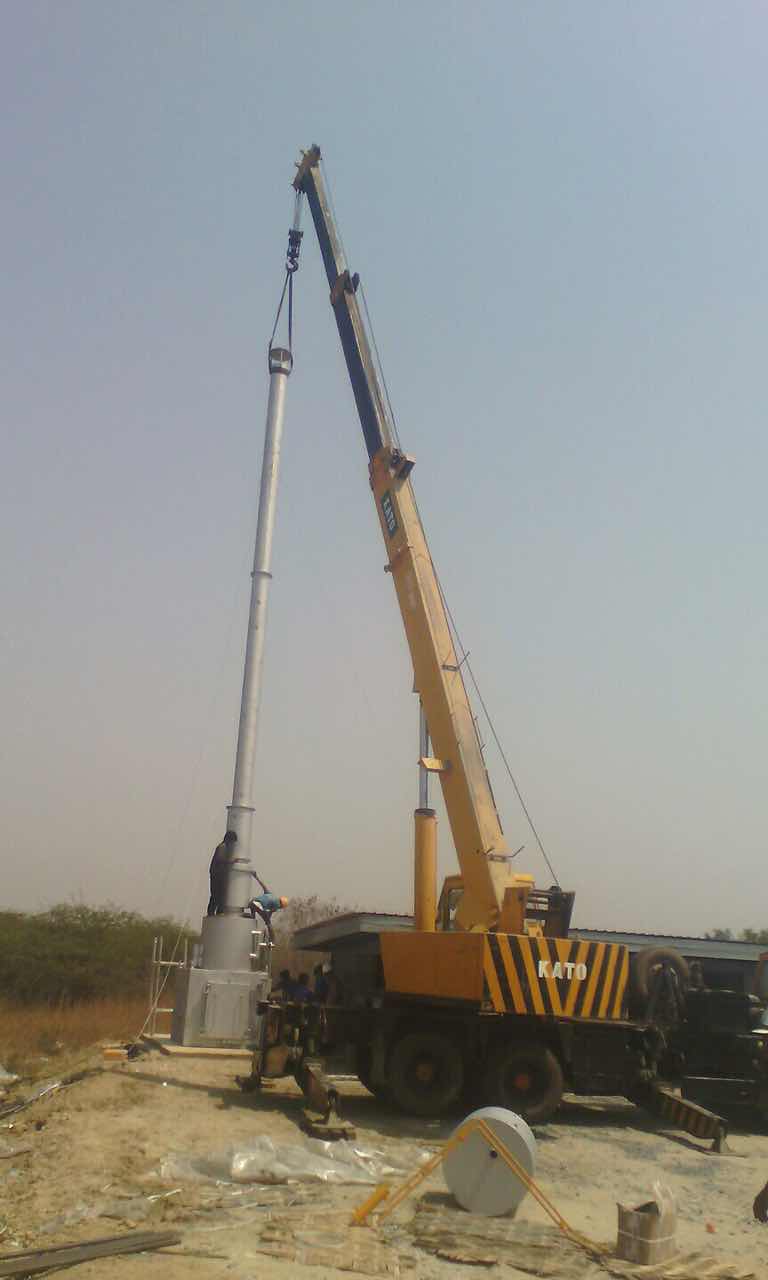
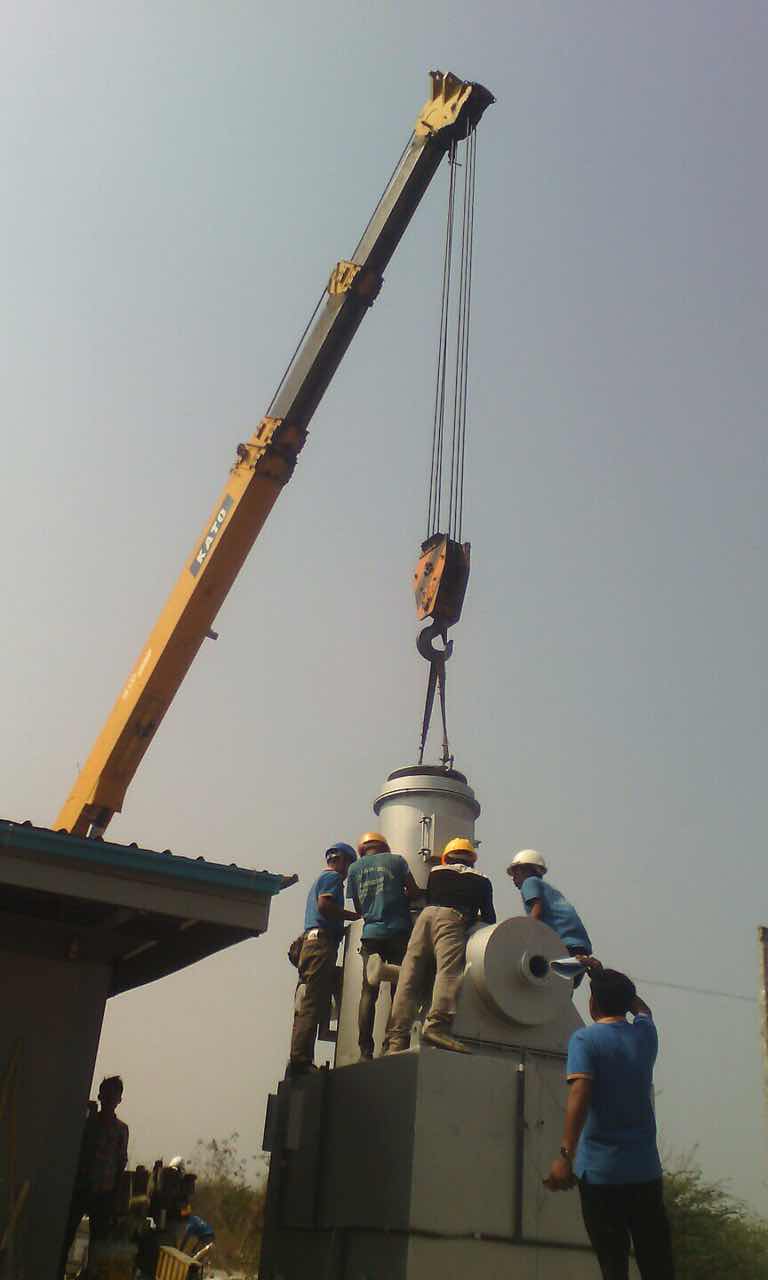
how to instal waste incinerator

Incinerator Installation and Commissioning Services Incinerator Installation Incinerator local Installation instal waste incinerator chimney medical waste Incinerator Installation and Commissioning Services waste incinerator build case waste incinerator chimney and oil tank waste incinerator chimney anti rain cap waste incinerator chimneywaste incinerator installationwaste incinerator overviewwaste incinerator partswaste incinerator smoke chimney overviewwaste incinerator smoke filter chamber installation

Central Australia’s animal graveyard

The figure was revealed in the Alice Springs regional waste management facility report for October.

The dead pet you asked the vet to dispose of will end up buried in landfill, in most places across the country, and Alice Springs is no different.

“It’s a combination of horses, dogs, cats, pigs, any animal that dies,” said Alice Springs council technical services director Greg Buxton. “Road kill, kangaroos and that, the rangers pick them up, and you’ve got to dispose of them somewhere hygienic. So we put them at the back of landfill.”

The facility is on track to exceed last year’s total, with 3.7 tonnes deposited in the first quarter of this financial year.

Mr Buxton said most regional councils across the country dispose of dead animals in landfill.

“In the bigger cities they have an incinerator type setting where they cremate them, whereas we don’t have an incinerator here,” he said.

by: http://www.news.com.au/national/northern-territory/central-australias-animal-graveyard/story-fnn3gfdo-1227123002725

HICLOVER now offer a full range of containerized incineration systems, placing us at the forefront of the latest transportation and industrial 
trends. Containerization enables immediate waste management as the units are pre-assembled and pre-installed.
Containerization is the most feasible and viable option in contrast to the construction of on-site facilities and housing structures, 
eliminating the man power and costs involved. The system has the added benefit of total mobility (both local and international), and is ideal 
for military and civil camps and remote locations where infrastructure is scarce.
Incineration is the most obvious solution for total destruction of municipal waste, avoiding all the direct and indirect risks associated with 
other disposal methods.
Incineration perfectly fits into a trend of treating waste in a safe way, and if possible, at the same place where it was generated to avoid 
cross-contamination risk and to keep waste treatment costs at acceptable level.

WWW.HICLOVER.COM|Waste Incinerators |Auto Roll Air Filters

Nanjing Clover Medical Technology Co.,Ltd.

Tel:  +86-25-8461 0201   
Website: www.hiclover.com  
Email: [email protected]