Archive: December 17, 2025

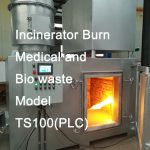
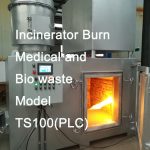
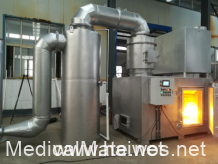
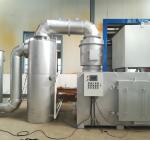
Инсинератор сжигает медицинские и биоотходы

Инсинератор сжигает медицинские и биоотходы

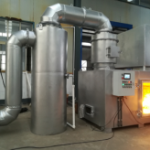
Предметы / Модель

TS100 (ПЛК)

Картина


Принцип

Медицинские отходы Лечение

Скорость сжигания

В среднем 100 кг / час

Режим управления

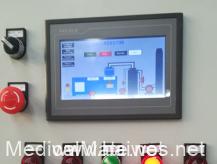
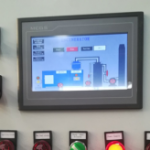
ПЛК (Инсинератор с программируемым логическим контроллером)

Камера сгорания

1200L

Внутренние размеры

120x100x100 см

Вторичная камера

600 л

Камера дымового фильтра

Да (сухой скруббер)

Режим подачи

Руководство по эксплуатации

Напряжение

220В / 380В

Мощность

0,7 кВт

Расход масла (кг / час)

в среднем 20,4

Расход газа (м3 / час)

***

Монитор температуры

Цифровой дисплей

Температурная защита

да

Масляный бак

200л

Дверца подачи

80×60 см

Камин

10 метров

Тип дымохода

Нержавеющая сталь

1-й. Температура камеры

800 –1000

2-й. Температура камеры

1000 -1200

Время проживания

2.0 сек.

Вес брутто

6000кг

Внешние размеры

260x150x180 см

HICLOVER Решение для борьбы с COVID-19, установка для сжигания медицинских отходов
Телефон: + 86-25-8461 0201
Мобильный: + 86-13813931455 (WhatsApp / WeChat)
Веб-сайт: http://www.hiclover.com/  
Электронная почта: [электронная почта защищена]
  
Наньцзин Клевер Медицинские Технологии Лтд.

2020-07-14

For incineration, basic and also pathological incinerators

Main unit
Application    For incineration, general and pathological
Capacity      50 – 60 kg/h burn rate
Type    Two  combustion chambers type; primary  and Secondary, controlled/forced combustion air type with a flue gas emission scrubbing unit
Operating time                   Minimum 8 hours daily
Operating temperature        From 850 0C to 1200 0C, Automatic controlled
Residual Ash                       5 to 10%
3.2     Primary Chamber
Construction    Constructed from heavy duty mild or aluminized  steel Or
equal and approved equivalent
Insulation material               Refractory material lining similar or equal to calcium
Silicate and hot face combination of heavy duty brickwork
Internal Construction           Fixed hearth type complete with gratings, concave bottom
and charging door, lined with refractory material
Charging Door                      Suitable for manual loading of wastes and with smooth
Dear seal equivalent of Ceramic seals with hinges.
Door Lock                             Automatic, Electric type
Ash removal door       Provided, for removing resultant bottom ash leftovers                              from the Primary chamber
Gratings      Provided
Loading    Manual loading of waste
Primary Burner                           Fully automatic, with fuel, temperature and speed controls with ignition system, flame detector, Air fan complete with safety features, flame failure,  Diesel fired fuel injector type and Flange mounted
Blower    Provided. For supplying excess combustion air through the distribution system with speed control system
Temperature    Minimum exit 850 0C
Observation port    To be provided with protective glass type
3.3       Secondary chamber
Construction      Constructed from heavy duty mild or aluminized steel or equal and approved equivalent
Insulation    Refractory material lining
Combustion Temperatures           Above 850 0C, controlled electronically
Gas residue or retention Time          > 2 second at minimum 850 0C
Secondary Burner                       Provided, Diesel fired, fully automatic, with fuel, temperature and speed controls, With ignition system,                                                                  Flame detector, Air fan, Complete with safety features, flame failure Diesel fired fuel injector type.                                                                  Flange mounted
Ejector    Provided, Venturi type, for cooling the flue gases
Combustion Air Fan    Provided for supplying combustion and creating a negative drift and turbulences
Temperature    Maximum  1600 0C
3.4       Chimney
Construction      Constructed from heavy duty mild or aluminized steel  or equal and approved equivalent                                                                 Refractory material lining
Length    10 m above ground
Bore    about 350mm diameter
Discharge temperatures             About 850 0C
Emissions      To comply with standards in section 9 of third schedule of the waste management regulations, 2006.
3.5       Electrical System
Control unit                                    Fully automatic with microprocessor based control                                                                      unit (PLC) automating all operations of the                                                                      incinerator. Capable of monitoring all incinerator parameters With large LCD or similar for display of all progress
Parameters  i.e. temperature of primary and secondary chambers, turbulence and time
With status lamp
With user of defined and differed programmed operating cycles for different type of loads/conditions
With safety interlocks, display of errors and visible and audio alarms.
System for continuous  emission monitoring
Isolator switch                                  Supply and install isolator switch 240V, 100A for the                                                                    incinerator unit, including all necessary cables 10m
Distribution Board    Supply and install distribution board. 100 A, complete with MCBs suitable for the rating of the incinerator unit and associated equipment.  Wiring   to be done according IEE regulations.
Wiring    Make provisions for wiring the isolator switch, Distribution Board control unit to Incinerator and all associated equipment inside to incinerator room.                                                                       Working length 20m.  Wiring to be done using PVC Sheath cable on steel conduits and trucking and in accordance with IEE regulations
Fuel System                                       Supply and install storage fuel tank inside the incinerator room at an elevated position (about 1.5 m above the floor)
Fuel Tank                                            Tank capacity, 400 liters, constructed from preferable suitable metallic material or high temperature resistance material
Fuel type    Diesel
Fuel Lines                                           Supply and install fuel lines, complete with fuel filters, pump, sight glass, fuel level and all other safety devices and connect from fuel tank to incinerator.
Working length , 20m
Fuel pipe material; Special copper pipes or similar                                                                        and approved materials
4             Physical characteristics
Main unit                                           Floor mounted, stand alone, fixed hearth type
Dimensions      About 1.2 x 2.2m (WxD)
5  Operating environment
Power Requirements                       240V,A/C 50Hz, single phase, with PE
Ambient temperature                     10 0C to 40 0C
Relatively humidity                          40% to 90%
6. Accessories
Rack, 2 m long                               1 piece
Waste cart, stainless steel               1 piece
Spare parts
Burner    1 set
Fuel Filters                                         6 sets
All other spare parts                   required for replacement during and after 12 months of operations.    2 pieces of each
8              Quality Standards
Manufacturing standards               NEMA Kenya Act, 1999
Legal Notice No.121 of 29th September 1999 on waste Management Regulations
EU waste incinerator Directive- EC 76/2000
BS 3316
WHO Emission Standards
World Bank Emission Standards
or any other internationally recognized standards
Conformity to standards                      CE marked or any other internationally recognized documents
9          Local back up service
Available    Should be available locally
Capacity to service equipment                                                                         Manufacturer/Agent shall have adequate facilities, spare parts, qualified and skilled technical staff to offer comprehensive maintenance  service and spare parts sales for the lifespan of the incinerator
10       Delivery point
KEMSA    For inspection and verification
Moi Voi, Makindu
Maragua, Eldama Ravine and Isiolo Hospitals      For installation, testing, NEMA Certification and commissioning
Pre installation works
Provide for foundation plinth, necessary plumbing works, Fuel piping works, Elevated Diesel oil storage tank, electrical works including cabling, trunking and switch gears required to install the incinerator and all its accessories to required IEE standards
Installation and testing    Complete installation and set up of the incinerator at designated as per manufacturer’s instructions
Provide fuel and test run the incinerator for 3 hours daily for 7 days
Training
User training                                           On site user training on operation and daily up keep
Maintenance training                            On-site maintenance training on Preventive Maintenance, repair and trouble shooting
Technical Documentations
User manuals                                          2 sets
Service manuals                                     2 sets
Drawings    2 sets
15        Commissioning
Testing and Commissioning of the machine to the satisfaction of the user
Warranty
Equipment      Minimum of one year after commissioning on all parts.
Equipment system                                     Nil
17.    Maintenance contract
Comprehensive preventive & repair         service      Provided a 12 months comprehensive preventive and repair service contract inclusive of spare parts and material from date of commissioning

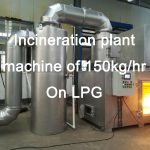
Установка для сжигания 150 кг / час на сжиженном нефтяном газе

Установка для сжигания 150кг / час на сжиженном газе

Предметы / Модель

TS 15 0 (ПЛК)

Картина

Принцип

Медицинские мусоросжигательного Лечение

Скорость сжигания

В среднем 150 кг / час

Режим управления

ПЛК (Инсинератор с программируемым логическим контроллером)

Камера сгорания

1 5 00л

Внутренние размеры

150x100x100 см

Вторичная камера

75

Камера дымового фильтра

да

Режим подачи

Руководство по эксплуатации

Напряжение

220В

Мощность

0. 9 кВт

Расход масла (кг / час)

В среднем 24,2 (DO)

Расход газа (м3 н / час)

В среднем 21,3 (сжиженный нефтяной газ)

Монитор температуры

Цифровой дисплей

Температурная защита

да

Масляный бак

3 00л

Дверца подачи

80×60 см

Камин

10 метров

Тип дымохода

Нержавеющая сталь

1-й. Температура камеры

800 –1000

2-й. Температура камеры

1000 -1200

Время проживания

2.0 сек.

Вес брутто

85 00кг

Внешние размеры

30 0x1 6 0x1 9 0cm


HICLOVER – Медицинская экология, WWW.HICLOVER.COM, Установки для сжигания отходов,
Установка для сжигания медицинских отходов, Кремация домашних животных, Твердые отходы   Инсинераторы

Решение HICLOVER для борьбы с COVID-19, установка для сжигания медицинских отходов (контейнерная мобильная установка для сжигания отходов)
Телефон: + 86-25-8461 0201
Мобильный: + 86-13813931455 (WhatsApp / WeChat)
Веб-сайт: www.hiclover.com  
Электронная почта: [электронная почта защищена]
Наньцзин Клевер Медицинские Технологии Лтд.


2020-07-09

2 combustion chambers type burner

Load Capacity minimum:  1500 kg
Burner fuel type:  Diesel
Burner fuel rate max.:   20-25 Liter diesel/ per hour
Burners minimum: 3
Burning rate minimum: 200-300kg/per hour
Furnace bar area minimum: 2 м3
Fuel tank capacity minimum: 300L
Main chamber burning temperature min. 1100 0C
Afterburner chamber burning temperature min.  1300 0C
Power supply 220V
Incinerator items and electrical appliances should be weather proof
and humidity resistant within the range of 30-90 %
Incinerator should be compliant to the environmental protection rules
in accordance to national legislation
Maximum dimensions – Length – 5m, width – 3.5m, height – 5m.Medical and Biological wastage.
3.1              Main unit
3.1.1
Application      For incineration, general and pathological
3.1.2                                            Capacity       100 – 120 kg/h burn rate
3.1.3
Type    Two  combustion chambers type; primary  and Secondary, controlled/forced combustion air type with a flue gas emission scrubbing unit
3.1.4         Operating time                   Minimum 8 hours daily
3.1.5          Operating temperature        From 850 0C to 1200 0C, Automatic controlled
3.1.6          Residual Ash                       5 to 10%
3.2     Primary Chamber
3.2.1
Construction    Constructed from heavy duty mild or aluminized  steel
Or equal and approved equivalent
3.2.2
Insulation material               Refractory material lining similar or equal to calcium
Silicate and hot face combination of heavy duty brickwork
3.2.3
Internal Construction           Fixed hearth type complete with gratings, concave bottom and charging door, lined with refractory material
3.2.4
Charging Door                      Suitable for manual loading of wastes and with smooth
Dear seal equivalent of Ceramic seals with hinges.
3.2.5          Door Lock                             Automatic, Electric type
3.2.6
Ash removal door       Provided, for removing resultant bottom ash leftovers                              from the Primary chamber
3.2.7                                    Gratings       Provided
3.2.8                                            Loading    Manual loading of waste
3.2.9           Primary Burner                           Fully automatic, with fuel, temperature and speed  controls with ignition system  flame detector                                                         Air fan Complete with safety features, flame failure                                                                    Diesel fired fuel injector type
Flange mounted
3.2.10    Blower      Provided.  3 phase for supplying excess combustion air through the distribution system with speed control system
3.2.11    Temperature    Minimum exit 850 0C
3.2.12                               Observation port    To be provided with protective glass type
3.3    Secondary chamber
3.3.1
Construction    Constructed from heavy duty mild or aluminized steel or equal and approved equivalent
3.3.2                                            Insulation    Refractory material lining
3.3.3             Combustion Temperatures      Above 850 0C, controlled electronically
3.3.4             Gas residue or retention time                                              > 2 second at minimum 850 0C
3.3.5    Secondary Burner    Provided,
Diesel fired,
Fully automatic, with fuel, temperature and speed controls
With ignition system
Flame detector
Air fan
Complete with safety features, flame failure
Diesel fired fuel injector type
Flange mounted
3.3.6    Ejector    Provided, Venturi type, for cooling the flue gases
3.3.7
Combustion Air Fan                      Provided for supplying combustion and creating a
negative drift and turbulences with variable speed control
3.3.8                                         Temperature    Maximum  1600 0C
3.4       Chimney
3.4.1
Construction    Constructed from heavy duty mild or aluminized steel  or equal and approved equivalent
Refractory material lining
3.4.2                                                    Length    10 m above ground
3.4.3                                                        Bore    about 350mm diameter
3.4.4            Discharge temperatures             About 850 0C
3.4.5                                            Emissions    To comply with standards in section 9 of third schedule of the waste management regulations, 2006.
3.5       Electrical System
3.5.1    Control unit                                           Fully automatic with microprocessor based control
unit (PLC) automating all operations of the incinerator
Capable of monitoring all incinerator parameters
With large LCD or similar for display of all progress
Parameters  i.e. temperature of primary and second chambers , turbulence and time
With status lamp
With user of defined and differed programmed operating cycles for different type of loads/conditions
With safety interlocks, display of errors and visible and audio alarms.
System for continuous  emission monitoring
3.5.2    Isolator switch                                  Supply and install isolator switch 100A, 3 phase, 415V, 50Hz, for the incinerator unit , including all necessary cables 10m
3.5.3
Distribution Board           Supply and install distribution board 100 A, 3 phase 415V, 50Hz, complete with MCBs suitable for the rating of the incinerator unit and associated equipment.  Wiring   to be done according IEE regulations.
3.5.4
Wiring       Make provisions for wiring the isolator switch,
Distribution Board control unit to Incinerator and all associated equipment inside to incinerator room.
Working length 20m.
Wiring to be done using PVC Sheath cable on steel conduits and trucking and in accordance with IEE regulations
3.6    Fuel System
3.6.1          Fuel Tank                                            Supply and install storage fuel tank inside the incinerator room at an elevated position (about 1.5 m above the floor)
Tank capacity, 500 liters, constructed from preferable
suitable metallic material or high temperature
resistance material
Fuel type    Diesel
3.6.2
Fuel Lines                                       Supply and install fuel lines, complete with fuel filters, pump, sight glass, fuel level and all other safety devices and connect from fuel tank to incinerator.  Working length , 20m
Fuel pipe material    Special copper pipes or similar and approved materials
4. Physical characteristics
4.1              Main unit                                           Floor mounted, stand alone, fixed hearth type
Dimensions    About 2.5 x 2.8m (WxD)
5.  Operating environment
5.1              Power Requirements                      415V, A/C 50Hz, Three phase, with PE
Ambient temperature                     10 0C to 40 0C
Relatively humidity                          40% to 90%
6             Accessories
6.1             Rack, 2 m long                               1 piece
Waste cart, stainless steel               1 piece
7. Spare parts
7.1                                                      Burner        1 set
7.2              Fuel Filters                                         6 sets
7.3
All other spare parts                 required for replacement during and after 12 months of operations.    2 pieces of each
8              Quality Standards
8.2
Manufacturing standards               Environmental Management and Coordination Act, 1999
Legal Notice No.121 of 29th September 1999 on                                                                         waste Management Regulations
EU waste incinerator Directive- EC 76/2000
BS 3316
WHO Emission Standards
World Bank Emission Standards or any other internationally recognized standards
Conformity to standards                      CE marked or any other internationally recognized documents
9          Local back up service
9.1                                                         Available    Should be available locally
9.2           Capacity to service equipment                                                                         Manufacturer/Agent shall have adequate facilities, spare parts, qualified and skilled technical staff to offer comprehensive maintenance  service and spare parts sales for the lifespan of the incinerator
10       Delivery point
10.1                                                        KEMSA    For inspection and verification
10.2
Moi Voi, Makindu
Maragua, Eldama Ravine and Isiolo Hospitals      For installation, testing, NEMA Certification and commissioning
11    Pre installation works
Provide for foundation plinth, necessary plumbing works, Fuel piping works, Elevated Diesel oil storage tank, electrical works including cabling, trunking and switch gears required to install the incinerator and all its accessories to required IEE standards
12    Installation and testing    Complete installation and setup of the incinerator at designated as per manufacturer’s instructions
Provide fuel and test run the incinerator for 3 hours daily for 7 days
13            Training
13.1
User training                                           On site user training on operation and daily up keep
13.2
Maintenance training                            On-site maintenance training on Preventive Maintenance, repair and trouble shooting
14    Technical Documentations
14.1         User manuals                                          2 sets
14.2         Service manuals                                     2 sets
14.3                                                     Drawings    2 sets
15        Commissioning
15.1    Testing and Commissioning of the machine to the satisfaction of the user
16    Warranty
16.1                                                  Equipment      Minimum of one year after commissioning on all parts.
16.2       Equipment system                                     Nil
17.    Maintenance contract
17.2         Comprehensive preventive & repair         service      Provided a 12 months comprehensive preventive and repair service contract inclusive of spare parts and material from date of commissioning

Capacity per day around 8-10 kg wastage/day.·         Which product do you offer, only incinerator or also compactor, shredder machine, any other equipment related to waste treatment ?

·         For the incinerator, can you propose (and of so please send us specs and price) incinerator for 25 kg/hr, 50 Kg / hr, 100 kg / hr, 200 kg / hr ? what is your minimum and maximum size available ?

·         As we are not so experience in incineration process, can you tell us which type of waste can go into the incinerator and still respecting international environmental regulation ?

·         Do you equipped your incinerator with filters ? if so which one and they are following which standard ?

·         Can you supply exhaust pipe from incinerator to the roof, and then whirly bird to avoid the rain water to go into the pipe ?

·         When we install an incinerator within a building, what are the distance to observe between equipment and wall and roof (as we need to supply also the building to house the incinerator )

Gasified incineration for melting medical wastes incinerator

Gasified incineration for burning clinical wastes.

Gas kind: Natural Gas
Burning Capacity:
–– 30-50 kg/time
–– Daily 3-6 times

Burner size: max 2000x1200x3200 mm
Burning room volume:
–– Gasification space max 0.7 m3,
–– Additional burning area max 0.5 m3 ,

Dimension of the filling up entry: max 650×× 850 mm Air blower: max 0,5 kW Combustion-support burning devices: – Power max 0,2 kW INCINERATOR (WASTE BURNER).
Created to burn disposables that can as well as ought to be ruined on-site. Theses wastes consist of transmittable and also infected “red bag.” Surgical dressings, plastic examination tools as well as various other wastes.
Rapid, total, efficient garbage disposal.
Twin chamber combustion, Chambers insulated and also lined with high temperature refractory. Programmable digital temperature controls, temperature signs and also cost recorder. Modulating control for gas as well as air decreases gas consumption.
Minimum installment and also launch time.
Aluminized steel jacket lined with refractory and firebrick. Screens recorders and also other accessory equipment must be available.
Billing system:.
– Vertical cost door on key chamber.
– Pneumatic or hydraulic ram charging system.
– Auto closed down of the door after billing.
– Main as well as secondary chamber temperature presented and recorded (optional).
Charging price:.
– As much as 100kgs per hour of waste or red bag waste ranked at 2200 BTU’s per kg.
Fuel:- Natural Gas.
Capacity (Cubic Mtr): 1.65 M3 or even more.
Ave Ability: 100kg per hr.
Additional Chamber Capacity (CubicMtr):3.88 or more.
Size (mm): 1880 or far better.
Width (mm): 1280 or better.
Height Incl. Flue (mm): 7700 or far better.
Ash Door Opening (mm): 475×× 900 or much better.
Min. Running temperature level: 90 degree centigrade.
Max, Operating Temperature: 1350 level centigrade.
Residency time in Second Chamber: 2 sec.
Temperature Monitoring: Both for main and secondary chambers.
Filling SystemManual/semi-automatic.
Waste destruction efficiency:> > 90% by weight.
Filter: Ceramic or various other equal filters in order to lower the induction of unsafe air contaminants, particulates, carbon monoxide, dioxin/furane into the environment.
De ashing system: Manual/semi-automatic.
The System needs to be priced estimate total with:-.
– Pipes.
– Electric panels.
– Civil functions.
– Waste collection Trolleys.
Re-burning machine: Power max 0,2 kW Voltage: 220V/ 380V.
Weight: max 5000 kg

Guinea Waste Incinerator Market Report (2026 Outlook) — Focus on Conakry, Boké, Kankan, Kindia, Labé, Nzérékoré

Guinea Waste Incinerator Market Report (2026 Outlook) — Focus on Conakry, Boké, Kankan, Kindia, Labé, Nzérékoré

1) Why Guinea’s incineration demand is rising now

Guinea’s waste treatment market is being pulled in three directions at once:

  • Fast-growing urban pressure in Conakry: municipal collection and disposal constraints typically translate into overflow at transfer points, informal dumping, blocked drainage, and localized flooding risks—patterns widely documented across African cities where collection rates are often around “half” on average.

  • A mining-and-port corridor that generates “non-typical” waste streams: Boké and Kamsar sit at the center of Guinea’s bauxite value chain, with heavy logistics and industrial activity that intensifies demand for controlled waste destruction (oily solids, contaminated packaging, workshop waste, camp waste). Guinea’s bauxite exports hit record levels in 2025 and are still rising, meaning more throughput, more camps, more service waste. (Reuters)

  • Healthcare and laboratory waste needs: medical waste management standards and implementation gaps remain a recurring challenge in many low- and middle-income settings, and WHO continues to emphasize the need for safer segregation and treatment pathways. 

In practice, Guinea buyers (municipal contractors in Conakry, hospital managers in Kindia and Kankan, site operators around Boké/Kamsar, and NGOs working near Nzérékoré) increasingly look for reliable, quickly deployable incineration rather than long construction projects.


2) Market characteristics in Guinea (what buyers actually prioritize)

A. “Deployment speed” beats “perfect infrastructure.”
In Guinea, a solution that can be installed with minimal civil works is often favored—especially outside Conakry (e.g., Labé, Kankan, Nzérékoré). This is why containerized/mobile formats are gaining attention: they reduce site uncertainty and shorten commissioning time.

B. Mixed waste reality (not clean, not consistent).
Even when projects are labeled “MSW,” the real feed often includes plastics, wet organics, contaminated packaging, and occasional healthcare-related items. That variability pushes demand for:

  • stable combustion,

  • secondary burnout,

  • and (in sensitive areas) flue-gas treatment options.

C. A “compliance narrative” matters—especially when donors are present.
When UN agencies, international NGOs, or donor-backed projects are involved, documentation, training, and monitoring expectations rise (even if local enforcement is uneven). This affects specifications (secondary chamber temperature/residence time targets, operator safety, maintenance plans).


3) High-potential demand segments (Guinea-specific scenarios)

Segment 1 — Conakry municipal and peri-urban waste pressure

Conakry concentrates population, commerce, and public services, so the waste challenge is visible and political. Studies focusing on governance and municipal waste in Conakry describe consequences such as blocked drainage and flooding impacts from poor waste handling.
Incineration fit (when properly scoped): priority destruction of selected combustible fractions, “nuisance” waste at controlled points, and institutional waste (markets, compounds, secured facilities).

Segment 2 — Boké & Kamsar mining/port operations

Guinea’s mining expansion is not theoretical. Reuters reporting in 2025 showed record bauxite shipments and continued growth despite seasonal disruption. (Reuters)
Mining activity also brings well-documented environmental and social pressures (dust, land degradation, water impacts), reinforcing stakeholder demand for better site housekeeping and controlled waste management around Boké
Incineration fit: camp waste, workshop waste, controlled destruction of contaminated combustibles, and emergency response capability during outbreaks or incidents.

Segment 3 — Hospitals, labs, and public health networks (Kindia, Kankan, Nzérékoré)

WHO highlights that unsafe healthcare waste practices elevate infection and injury risks and stresses structured management systems. 
Guinea’s health/environment profiles also flag data gaps and uneven service readiness, which typically translates into pragmatic procurement: robust equipment + simple SOPs + operator training. 
Incineration fit: medical waste streams (non-PVC infectious waste, sharps containers where allowed, contaminated packaging), with clear segregation and ash handling.


4) Role of the United Nations and international actors in Guinea’s waste market

In Guinea, UN agencies often shape “how projects buy,” not just “what they buy.” Key impacts include:

  • Funding logic: emphasis on deployable infrastructure and measurable outcomes.

  • Technical framing: risk reduction (public health), climate resilience, and governance improvements—areas where UNDP has active programming in Guinea. (UNDP)

  • Procurement discipline: specification clarity, documentation, spares, training, and after-sales support become decisive differentiators.

This is particularly relevant in Conakry (policy visibility) and in forest-region or border-adjacent operational contexts closer to Nzérékoré (public health and resilience priorities).


5) Product-market fit: why HICLOVER aligns well with Guinea’s needs

For Guinea buyers, the most credible value proposition is “durable combustion + flexible deployment + scalable gas cleaning.” That maps well to HICLOVER’s portfolio:

Practical advantage in Guinea: these configurations support both (1) semi-permanent installations near Conakry and (2) mobile/remote deployments in Boké, Kamsar, Labé, Kankan, and Nzérékoré where site conditions vary.


6) Trends to watch in 2026 (Guinea)

  1. Industrial policy and “local processing” pressure in mining may increase construction of new facilities and camps—raising demand for standardized waste destruction packages around Boké and ports like Kamsar. (Reuters)

  2. Higher scrutiny on environmental monitoring in industrial zones (refineries, logistics) will push more tenders to require clearer emissions-control options.

  3. Municipal-private operator models in Conakry will keep expanding; they tend to favor equipment that is maintainable, not “fragile-high-tech.”


7) Recommended positioning (theme focus): “Mining corridor & port-city waste control”

A strong Guinea-facing message is to anchor around the Boké–Kamsar industrial corridor plus Conakry institutional demand:

  • Conakry: priority institutional waste and controlled destruction at secured sites

  • Boké / Kamsar: industrial camps + port logistics waste + emergency response

  • Kankan / Kindia / Labé / Nzérékoré: hospital networks and regional public services

This positioning sounds local, realistic, and procurement-friendly.


Résumé en français (très bref)

En Guinée, la demande d’incinérateurs progresse surtout à Conakry (pression urbaine), dans le corridor minier Boké–Kamsar (activité industrielle et camps), et dans les villes régionales comme Kankan, Kindia, Labé et Nzérékoré (déchets hospitaliers et services publics). Les projets soutenus par des acteurs internationaux (ONU/ONG) valorisent les solutions robustes, rapidement déployables (containerisées/mobiles) et, lorsque nécessaire, avec traitement des fumées. HICLOVER peut se positionner avec des incinérateurs top-loading, des solutions containerisées, et des options de wet scrubber adaptées aux contextes guinéens.

Mobile: +86-13813931455(WhatsApp)

Email:     [email protected]     
Email:     [email protected] 


2025-12-13/18:00:22

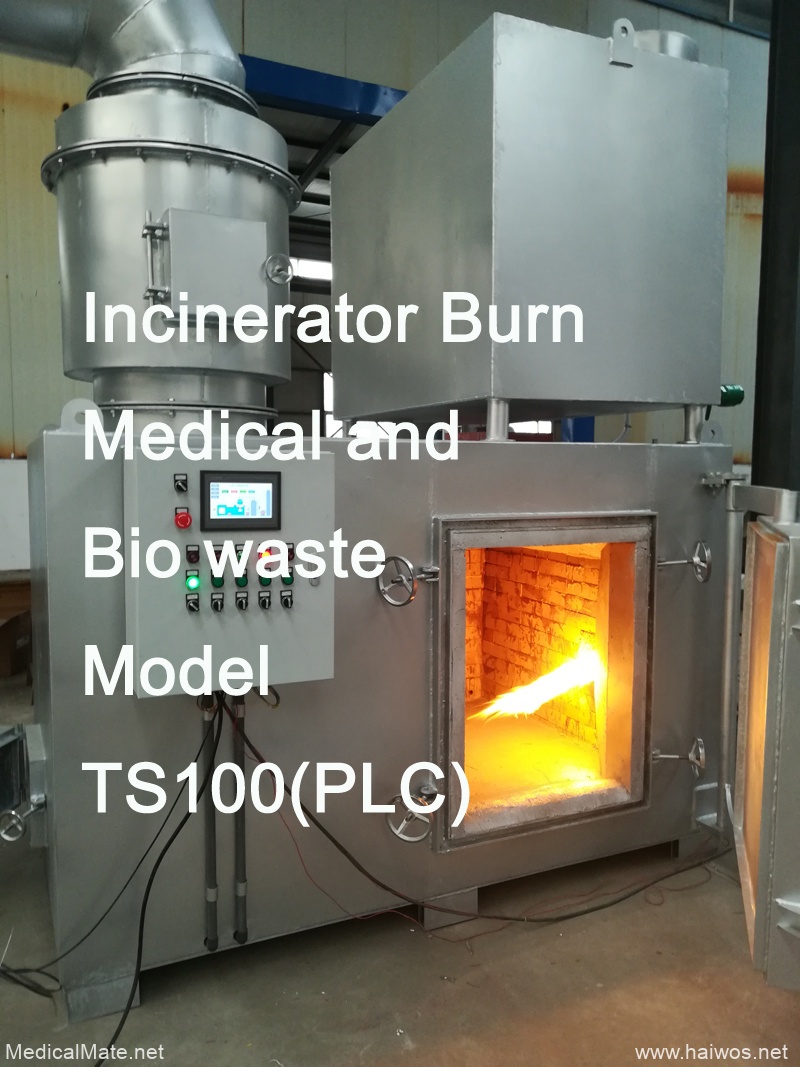
Incinerator Items/Model

HICLOVER TS100(PLC)


Burn Rate (Average)

100kg/hour

Feed Capacity(Average)

150kg/feeding

Control Mode

PLC Automatic

Intelligent Sensor

Continuously Feeding with Worker Protection

High Temperature Retention(HTR)

Yes (Adjustable)

Intelligent Save Fuel Function

Yes

Primary Combustion Chamber

1200Liters(1.2m3)

Internal Dimensions

120x100x100cm

Secondary Chamber

600L

Smoke Filter Chamber

Yes

Feed Mode

Manual

Burner Type

Italy Brand

Temperature Monitor

Yes

Temperature Thermometer

Corundum Probe Tube, 1400℃Rate.

Temperature Protection

Yes

Automatic Cooling

Yes

Automatic False Alarm

Yes

Automatic Protection Operator(APO)

Yes

Time Setting

Yes

Progress Display Bar

3.7 in” LCD Screen

Oil Tank

200L

Chimney Type

 Stainless Steel 304

1st. Chamber Temperature

800℃–1000℃

2nd. Chamber Temperature

1000℃-1300℃

Residency Time

2.0 Sec.

Gross Weight

7000kg

External Dimensions

270x170x190cm(Incinerator Main Body)

Burner operation

Automatic On/Off

Dry Scrubber

Optional

Wet Scrubber

Optional

Top Loading Door

Optional

Asbestos Mercury Material

None

Heat Heart Technology(HHT)

Optional

Dual Fuel Type(Oil&Gas)

Optional

Dual Control Mode(Manual/Automatic)

Optional

Temperature Record

Optional

Enhanced Temperature Thermometer

Optional

Incinerator Operator PPE Kits

Optional

Backup Spare Parts Kits

Optional

Mobile Type

Optional:Containerized/Trailer/Sledge Optional

Zambia Waste Incinerator Market Research Report: Demand, Trends, and Equipment Adaptation

Zambia Waste Incinerator Market Research Report: Demand, Trends, and Equipment Adaptation

Zambia is in the middle of a long-term transition in how it handles solid and medical waste. Rapid urbanization in Lusaka, Ndola, Kitwe, and Livingstone, combined with growing health-care capacity, is putting pressure on old disposal practices such as open dumping and uncontrolled burning. At the same time, regulations and donor-supported projects are pushing hospitals, councils, and private operators toward safer, engineered solutions, including properly designed waste incinerators. (dspace.unza.zm)

This report gives an overview of the waste incinerator market in Zambia, focusing on market characteristics, demand trends, technology fit, and the suitability of robust incinerator solutions such as HICLOVER systems for Zambian conditions.


1. Market Background in Zambia

In Lusaka, Ndola, Kitwe, and Kabwe, solid waste volumes are rising due to population growth, commercial activity, and infrastructure expansion. Studies in urban areas such as Kitwe show that conventional municipal services struggle to collect and properly dispose of all refuse; a significant portion of waste still ends up in informal pits, illegal dumps, or is burned in the open. (Unicaf)

Key drivers shaping the Zambian waste treatment market:

  • Urbanization and density in Lusaka, Kitwe, Ndola, and Chingola

  • Expansion of hospitals and clinics, especially in Lusaka and provincial capitals

  • Donor- and government-funded health projects introducing stricter standards for health-care waste

  • Public pressure for cleaner cities and reduction of illegal dumps

For medical and hazardous waste, the situation is particularly sensitive. The National Health-Care Waste Management Plan highlights challenges in handling, storage, transport, treatment, and final disposal of health-care waste across Zambia, and calls for appropriate treatment technologies at health facility level. (dspace.unza.zm)


2. Market Segments for Waste Incinerators

In Zambia, demand for waste incinerators is not limited to large hospitals in Lusaka. Several distinct buyer groups can be observed:

  1. Public and mission hospitals

    • University Teaching Hospital in Lusaka and provincial hospitals in Ndola, Kitwe, Chipata, and Livingstone generate large quantities of infectious and pathological waste.

    • They need medium- to high-capacity medical waste incinerators with secondary combustion and basic emissions control.

  2. District hospitals and rural health centers

    • Facilities in districts such as Mongu, Mansa, Kasama, and Solwezi often lack engineered treatment equipment.

    • Small and compact incinerators that can handle 10C50 kg/hour of medical waste are in demand, especially units that are easy to operate and maintain.

  3. Private hospitals, clinics, and laboratories

    • Growing private health facilities in Lusaka and Copperbelt cities require on-site or shared incineration solutions to avoid reliance on informal disposal.

  4. Industrial and agricultural operators

    • Abattoirs, poultry farms, and food-processing plants across Zambia generate animal by-products and contaminated waste that need controlled destruction.

  5. Border posts, customs, and enforcement agencies

    • At border points near Kasumbalesa, Nakonde, and Chirundu, there is need for incinerators to destroy seized or rejected goods, expired food products, and sometimes pharmaceuticals.


3. Demand Trends and Regulatory Context

Regulatory developments are a strong underlying driver. Zambia has health-care waste management guidelines aligned with environmental regulations under the Zambia Environmental Management Agency (ZEMA). These frameworks aim to ensure that hazardous health-care waste is treated in a way that minimizes risks to human health and the environment, and they encourage technologies that reduce uncontrolled emissions. (dspace.unza.zm)

Major demand trends include:

  • Shift from open burning to engineered incinerators
    Facilities in Lusaka and Kitwe are gradually replacing crude burn pits and oil-drum incinerators with properly designed units that reach higher temperatures and have secondary chambers.

  • Preference for simple, robust technology
    Many hospitals in Ndola or Livingstone prefer diesel-fired or LPG-fired batch incinerators with manual loading and straightforward controls, rather than very complex systems that are difficult to maintain.

  • Growing interest in containerized and mobile systems
    Provincial health offices and NGOs operating in rural Zambia appreciate containerized and trailer-mounted incinerators that can be deployed quickly for projects or emergency operations and later relocated if needed.

  • Attention to emissions and community acceptance
    Complaints about smoke and odor around health facilities in Lusaka or Ndola are prompting decision-makers to look for units with better combustion control and, where budgets allow, basic flue-gas treatment.


4. Technology Fit: What Kind of Incinerators Work in Zambia?

Zambia’s conditions C variable power supply, high dust environments, and limited service infrastructure in smaller towns C influence the type of equipment that is practical. Successful incinerators for Lusaka, Ndola, and regional centers tend to share several characteristics:

  • High-temperature primary chamber for safe destruction of infectious and mixed waste

  • Secondary combustion chamber with a defined residence time to reduce smoke and odor

  • Refractory lining and insulation designed for frequent cycling and long service life

  • Fuel flexibility, often diesel or LPG, since natural gas is not widely available

  • Straightforward control systems with temperature indication and basic interlocks

  • Compact layout that can be placed in limited space within a hospital compound

For smaller towns like Kasama, Mansa, or Choma, batch-type incinerators in the 20C100 kg/hour range are often sufficient. For major urban hospitals in Lusaka, Ndola, or Kitwe, higher-capacity units (150C300 kg/hour or more) may be required, sometimes in a centralized treatment model where one incinerator serves multiple facilities.


5. HICLOVER Incinerators and Their Suitability for Zambia

HICLOVER provides a family of medical and solid waste incinerators that align well with the technical and operational realities in Zambia. The brand has supplied systems to a range of developing-country markets and international organizations, making its product line relevant for hospitals and institutions in Lusaka, Ndola, and other Zambian cities.

Key features of HICLOVER equipment that match Zambia’s needs:

  • Wide capacity range
    From compact units for rural health posts and mission hospitals to larger systems suitable for university or provincial hospitals. This allows provincial offices to standardize on a few models while serving different waste volumes.

  • Top-loading and side-loading options

    • Top-loading designs are ideal for bulky medical bags and general solid waste.

    • Side-loading doors suit heavier containers and animal by-products.

  • Secondary combustion and better burnout
    HICLOVER units typically include a secondary chamber for complete combustion of flue gases, improving odor control C an important concern in densely populated parts of Lusaka or Kitwe.

  • Containerized and mobile variants
    Containerized HICLOVER incinerators can be shipped and installed as “plug-and-run” units. For example, a 20-foot container-based unit could serve a provincial hospital in Livingstone or Ndola with minimal civil works, mainly flue installation and fuel connection.

  • Adaptable fuel systems
    Diesel and LPG burners allow easy integration into existing fuel supply chains used for generators and boilers in many Zambian facilities.

  • Simple, durable construction
    The focus on heavy-duty steel shells, robust refractory lining, and uncomplicated controls makes HICLOVER systems easier to own and operate in regions where specialized technical support is limited.


6. Highlight Theme: Decentralized Health-Care Waste Treatment for Provincial Zambia

One practical theme for Zambia is the move toward decentralized health-care waste treatment. Instead of relying only on large incinerators in Lusaka, more provincial and district-level facilities in places like Ndola, Kitwe, Chipata, and Livingstone are seeking their own equipment.

A decentralized approach has several benefits:

  • Reduces the need to transport infectious waste over long distances on poor roads

  • Lowers the risk of accidental spillage and informal scavenging during transport

  • Allows each district hospital to manage its own waste cycle, from segregation to final destruction

  • Improves resilience during outbreaks or emergencies, when waste volumes spike in multiple locations at the same time

HICLOVER’s range of small and mid-sized medical waste incinerators fits naturally into this strategy. A health authority or NGO in Zambia can standardize on a few models and roll them out to district hospitals in the Copperbelt, Eastern, Northern, and Southern Provinces. Containerized units can be installed quickly in busy hospitals in Lusaka and Ndola, while smaller skid-mounted units can support remote facilities.


7. Market Outlook for Incinerators in Zambia

Looking ahead, several factors point to continued demand for reliable waste incinerators in Zambia:

  • Ongoing implementation of national health-care waste management plans and local by-laws in cities such as Lusaka and Kitwe

  • Increased awareness about infection risks among health workers and communities

  • Steady expansion of public and private health-care infrastructure

  • Interest from development partners in funding safer health-care waste treatment technologies (undpinzambia.exposure.co)

For suppliers, the most promising opportunities lie in:

  • Turnkey packages for new hospitals in Lusaka, Ndola, and provincial capitals

  • Upgrades of existing facilities, replacing old brick incinerators or open pits

  • Mobile and containerized units for projects in mining towns, border posts, and emergency operations

In this environment, incinerator systems that combine practical design, robust construction, and straightforward operation―such as HICLOVER’s medical and solid waste incinerators―are well positioned to become a standard choice for Zambian institutions seeking a reliable, long-term waste treatment solution.
Mobile: +86-13813931455(WhatsApp)

Email:     [email protected]     
Email:     [email protected] 


2025-12-11/01:02:12

Incinerator Items/Model

HICLOVER TS100(PLC)


Burn Rate (Average)

100kg/hour

Feed Capacity(Average)

150kg/feeding

Control Mode

PLC Automatic

Intelligent Sensor

Continuously Feeding with Worker Protection

High Temperature Retention(HTR)

Yes (Adjustable)

Intelligent Save Fuel Function

Yes

Primary Combustion Chamber

1200Liters(1.2m3)

Internal Dimensions

120x100x100cm

Secondary Chamber

600L

Smoke Filter Chamber

Yes

Feed Mode

Manual

Burner Type

Italy Brand

Temperature Monitor

Yes

Temperature Thermometer

Corundum Probe Tube, 1400℃Rate.

Temperature Protection

Yes

Automatic Cooling

Yes

Automatic False Alarm

Yes

Automatic Protection Operator(APO)

Yes

Time Setting

Yes

Progress Display Bar

3.7 in” LCD Screen

Oil Tank

200L

Chimney Type

 Stainless Steel 304

1st. Chamber Temperature

800℃–1000℃

2nd. Chamber Temperature

1000℃-1300℃

Residency Time

2.0 Sec.

Gross Weight

7000kg

External Dimensions

270x170x190cm(Incinerator Main Body)

Burner operation

Automatic On/Off

Dry Scrubber

Optional

Wet Scrubber

Optional

Top Loading Door

Optional

Asbestos Mercury Material

None

Heat Heart Technology(HHT)

Optional

Dual Fuel Type(Oil&Gas)

Optional

Dual Control Mode(Manual/Automatic)

Optional

Temperature Record

Optional

Enhanced Temperature Thermometer

Optional

Incinerator Operator PPE Kits

Optional

Backup Spare Parts Kits

Optional

Mobile Type

Optional:Containerized/Trailer/Sledge Optional